
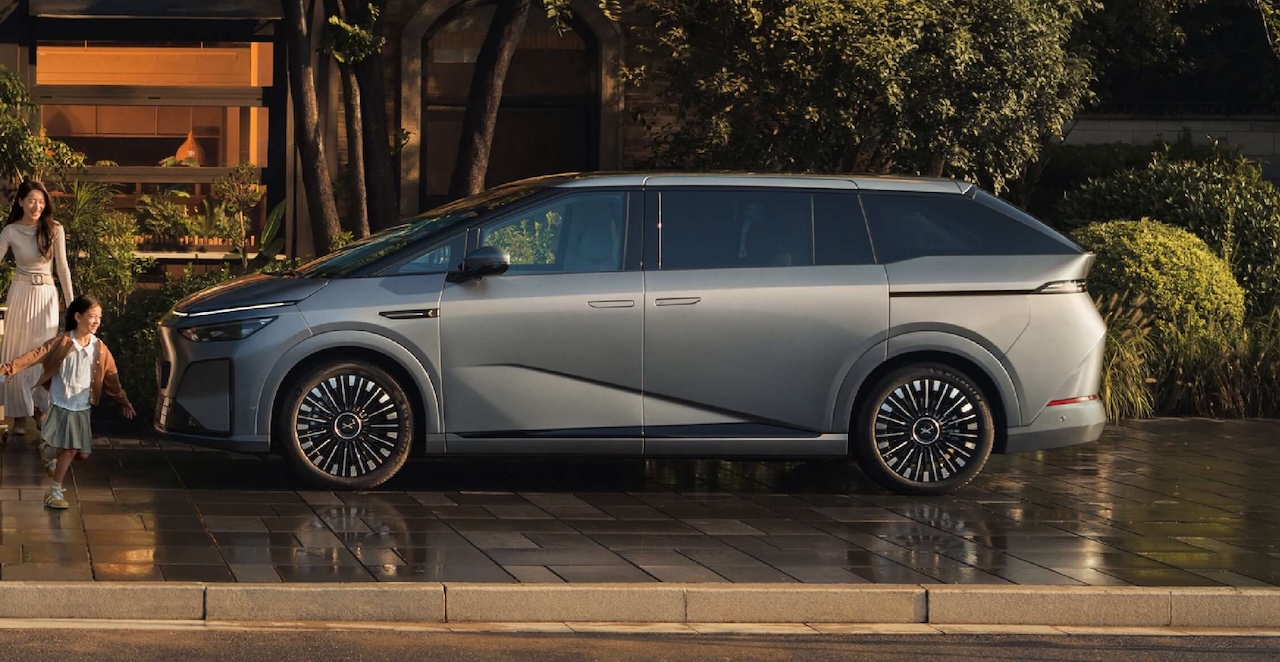
Space invader: Upgraded luxury seven-seat XPeng X9 is now world’s longest-range pure-electric seven-seater vehicle. In Australia soon
Ahead of its launch in Q2 (April–June) in Australia, China’s XPeng has overhauled its 2026 XPeng X9 people-mover with a host of upgrades designed to boost performance, safety, range and onboard technology.
A natural rival for the Zeekr 009, the Denza D9 and the recently announced Hyundai Staria electric, the big news is the XPeng X9 is now available with a larger 110kWh battery that replaces the 89kWh and 105kWh packs previously offered.
On the lenient Chinese CLTC test cycle, XPeng says the X9 can now cover 750km on a single charge – 40km further than the pre-facelift model introduced in China in 2023 when fitted with the more energy-dense battery.
READ MORE: 2026 XPeng G6 range extender hybrid revealed in China: Borrows a petrol engine from Changan and combines it with a big battery for huge range
READ MORE: XPeng edges closer to Aussie takeover: New model rush tipped after deal is completed
READ MORE: Is this the car to replace the iconic Tesla Model S? XPeng P7+ shown in Australia for the first time, sub $90K price promised!
“Nothing with three rows travels further,” says XPeng.
More good news is the new battery, which works with the current people-mover’s 800-volt electrics, gains a 5C charging capability that sees a claimed 450km of range added in just 10 minutes.
The usual 10 to 80 per cent top-up, meanwhile, takes just 11.7 minutes.
Find a high-power DC charger and the XPeng X9 is on track to be among the fastest-charging cars in Australia. The EV start-up says is is the fastest-charging seven-seater globally.
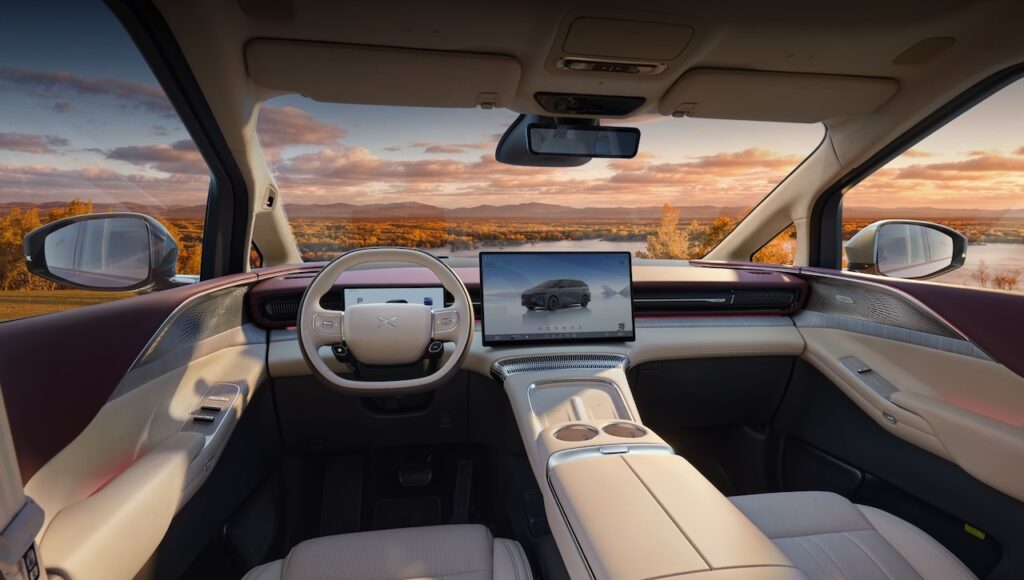
Available with revised electric motors, the single-motor version of the X9 produces 235kW and 450Nm, while the dual-motor variant delivers a more muscular 370kW.
Energy consumption with the single motor has dropped to a claimed 15.9kWh/100km.
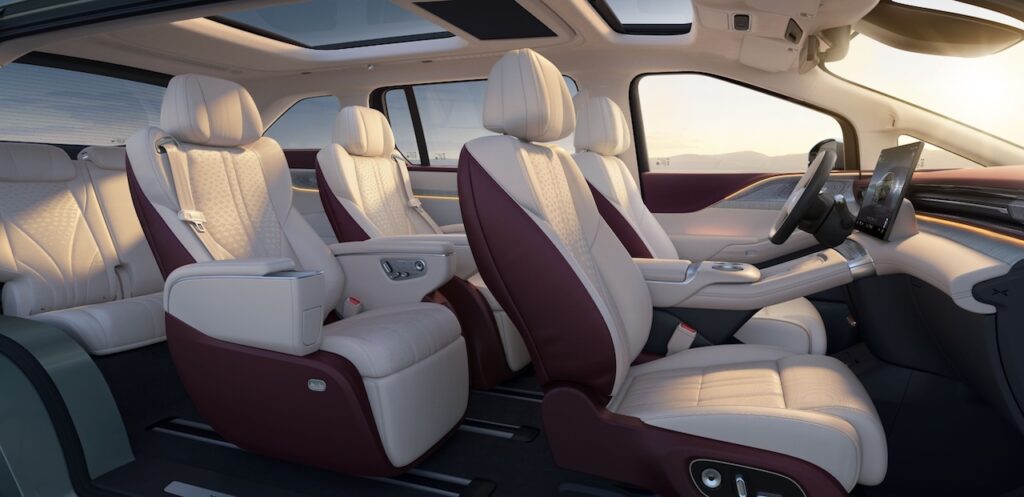
Inside, the X9 now comes with Nappa leather seats, with all three rows boasting power-folding for improved functionality.
Other advances include Emergency Drive Assist, which can brake and steer automatically to help avoid an impact with an obstacle at speeds of up to 130km/h.
The X9’s tyre blowout stability system can now operate on wet roads at up to 160km/h, during heavy rain at speeds of 150km/h and on ice at speeds of up to 120km/h.
Rear-wheel steering, meanwhile, boosts manoeuvrability in town by slashing the turning circle.
Comfort has also been improved thanks to an upgraded dual-chamber air suspension that is claimed to be quicker to adapt to the road surface.
Onboard tech has been improved by the adoption of three Turing AI chips that process data far faster than before.
Available in four-, five-, six- and seven-seat configurations, XPeng says that in four-seat mode, with the third row stowed, there is up to 2514 litres of space.
New tech includes active noise cancellation, the introduction of the brand’s 27-speaker premium sound system and updated zero-gravity comfort seats with integrated airbags.
The latter recline up to 180 degrees and offer a 10-point massage function, along with ventilation, a leg rest and seat cushion heating.
More details will be released in the build-up to the XPeng X9’s launch in the coming months, including pricing that is expected to at least match the Zeekr 009, which is priced from $115,900 plus on-road costs for the front-drive version and stretches to $139,900 plus on-road costs for the most luxurious all-wheel-drive six-seat version.
Originally launching in Australia with the Tesla Model Y-rivalling G6, the emerging Chinese brand has already declared it wants to expand its local line-up with the introduction of the G9 and G7 SUVs, along with the Mona M03 and P7+ passenger cars.
Before the X9 arrives, a facelifted version of the G6 will touch down late in Q1 (January–March) this year, then the X9 will arrive in Q2 (April–June) before the large G9L lands in Q3 (July–September).
The erev version looks to have heads up display. Hopefully, this will also be on these bevs