Move aside Kia Carnival and Zeekr 009! Could the electric 2026 Mercedes-Benz VLE be the most advanced people-mover ever launched?
Competition in the once dormant people-mover segment is about to super-heat with first details of the state-of-the-art 2026 Mercedes-Benz VLE dropping ahead of its launch in the first half of next year.
Created to replace the current V-Class van, the Mercedes VLE will be a natural rival for people-movers like the Zeekr 009 EV, the hybrid Lexus LM and the category’s dominant player in Australia, the Kia Carnival.
To ensure it beats them all, the new all-electric and combustion-powered VLEs will come with pioneering tech.
READ MORE: 1205km on a single charge! Mercedes-Benz solid state battery tech sets a new range record, but it’s still not right for production
READ MORE: Mercedes-Benz GLC EV makes global debut: What’s it got and how does it stack up against arch-rival BMW iX3
READ MORE:
Mercedes-Benz CLA Shooting Brake revealed: The Benz wagon reinvented as an EV, but will SUV-mad Aussie care?
With production about to begin at Benz’s Vitoria plant in northern Spain, the headline news is the VLE will be the first vehicle based on the German brand’s all-new VAN.EA architecture that has been developed to raise the bar for performance, efficiency and comfort.
Drawing plenty of inspiration from the radical Vision V concept that was unveiled earlier this year, the VLE looks like it will have a design dominated by an illuminated Panamericana grille expected to mirror the latest GLC SUV.
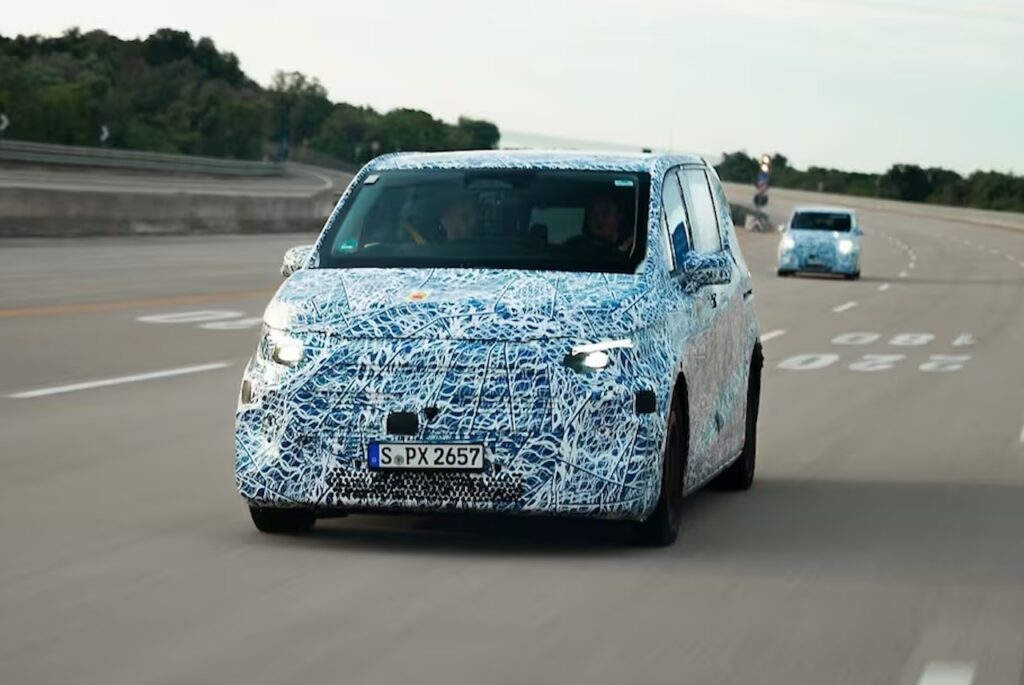
Twin slim headlamps will incorporate the Benz’s logo light signature introduced by cars like the latest CLA.
Look closer and the VLE even reintroduces the bonnet-mounted three-pointed star emblem.
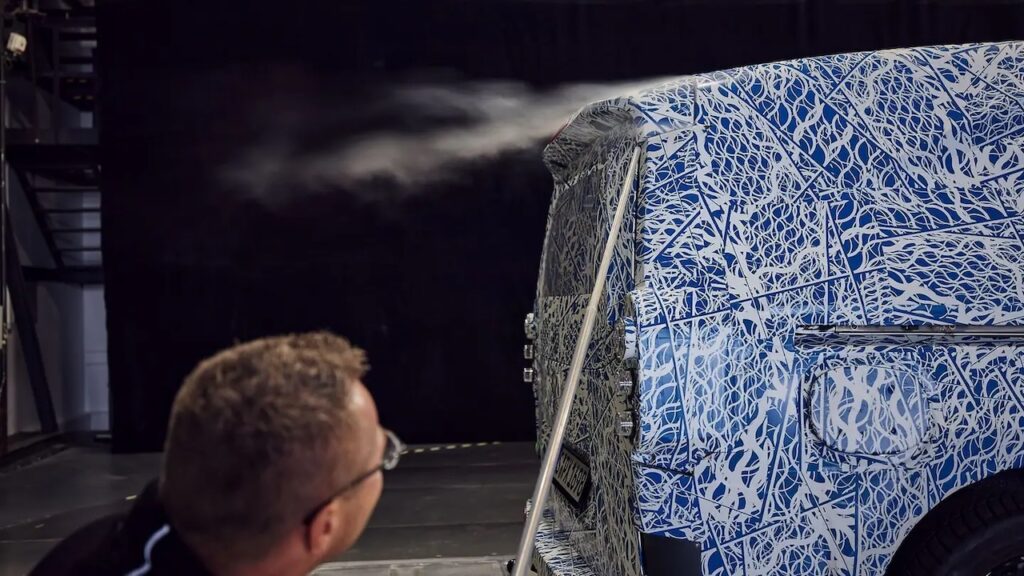
Looking as slippery as the concept, the VLE is promised to arrive with “outstanding efficiency” mainly linked to what’s expected to be a sleek car-like drag coefficient.
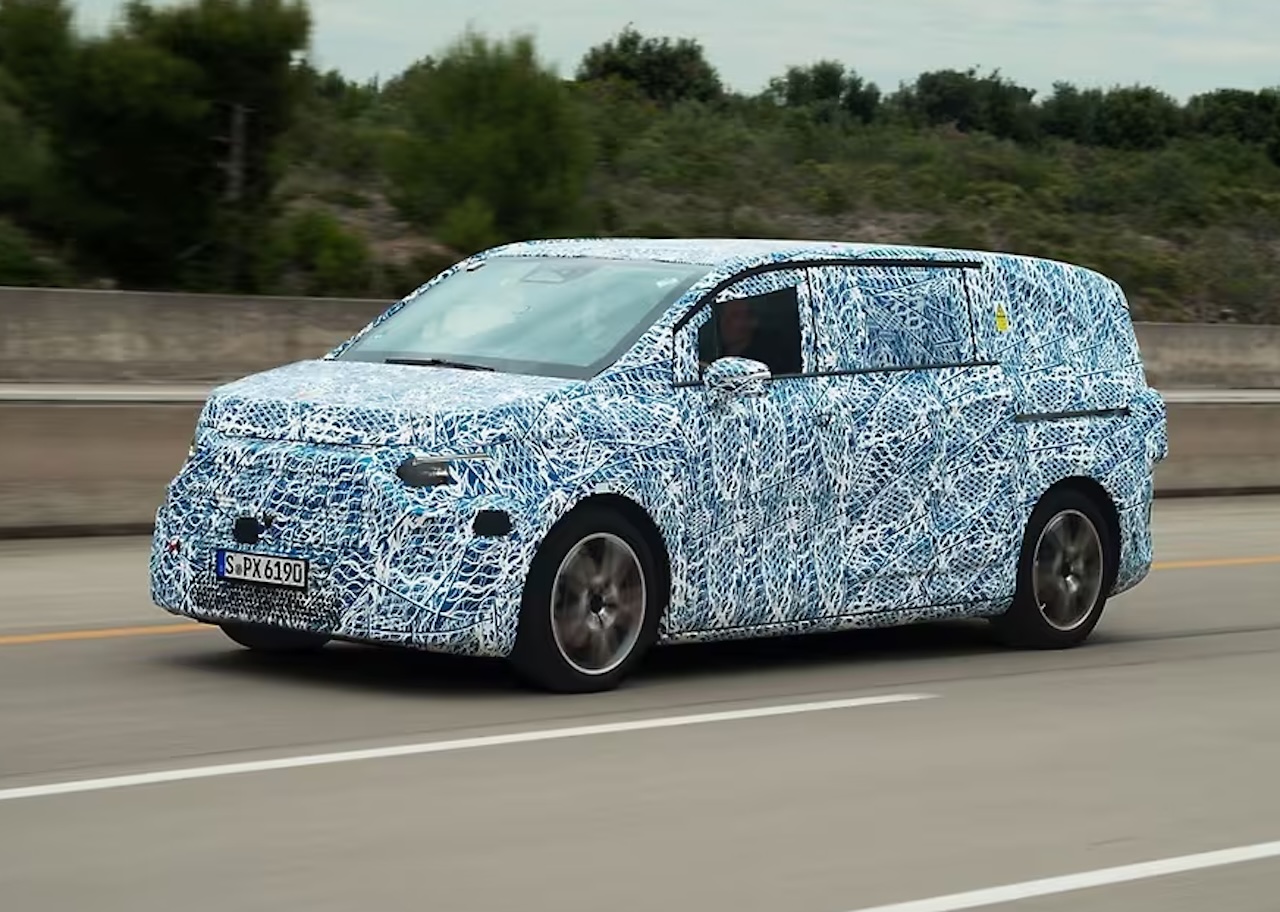
Pictures of it testing at the Nardo proving ground in Italy earlier this year suggest the VLE will come with advanced chassis tech likely to include air springs, adaptive dampers and rear-axle steering.
Ther latter will be able to pivot the rear wheels by up to 10 degrees for small car levels of manoeuvrability in town.
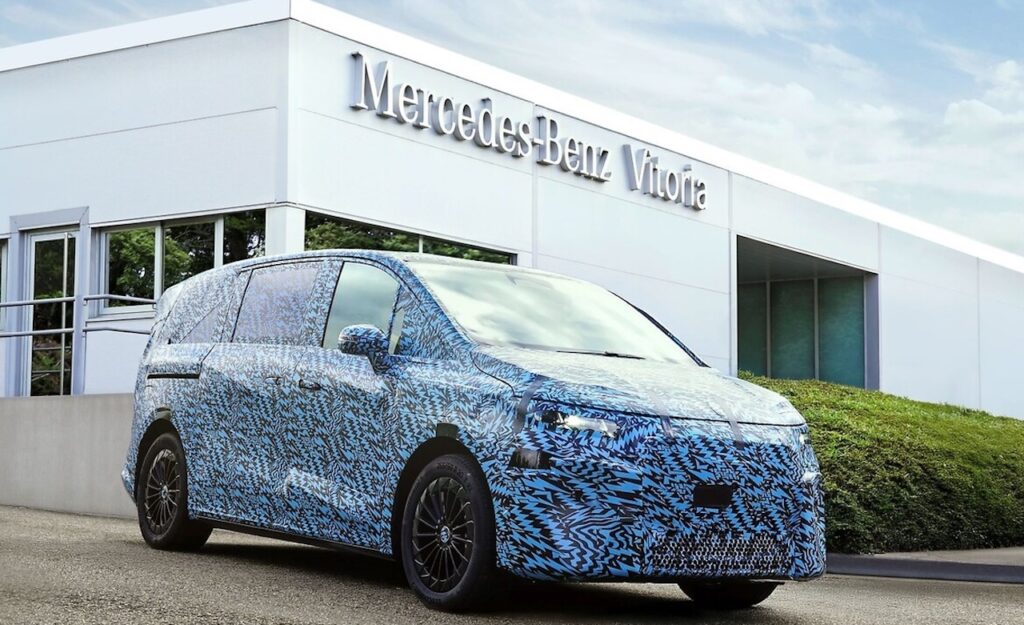
The battery-electric VLE will offer a range of at least 500km – a big step up on the 365km delivered by the current EQV van.
There’s more good news when it comes to charging. The VLE comes equipped with 800-volt electrics that should allow charging at up to 320kW. That equates to as much as 300+ kilometres of range added after little more than 10 minutes.
Both a single e-motor and dual-motor options will be available, with the latter set to produce big power for sports car-like levels of performance.
Once introduced the VLE (‘E’ for E-Class) will be joined by a larger, more luxurious VLS (‘S’ for S-Class) flagship van, with both pitched as VIP shuttles and alternatives to limousines.
Combustion versions will sit on a different VAN.CA platform and are expected to offer a plug-in hybrid option with an EV range of more than 100km.
Benz is expected to provide multiple cabin configurations with the most expensive versions bagging reclining airline-style massage seats.
Benz claims the VLE will match the levels of luxury of the current EQS or S-Class.
Once launched the luxury VLE will spin-off a range of cargo vans that are tipped to come with significantly more conventional styling.
Fresh tech introduced to the Benz van includes the firm’s latest MB.OS operating system and Level 2++ autonomous driving aids that will be upgraded to Level 3 autonomy before the end of the decade.