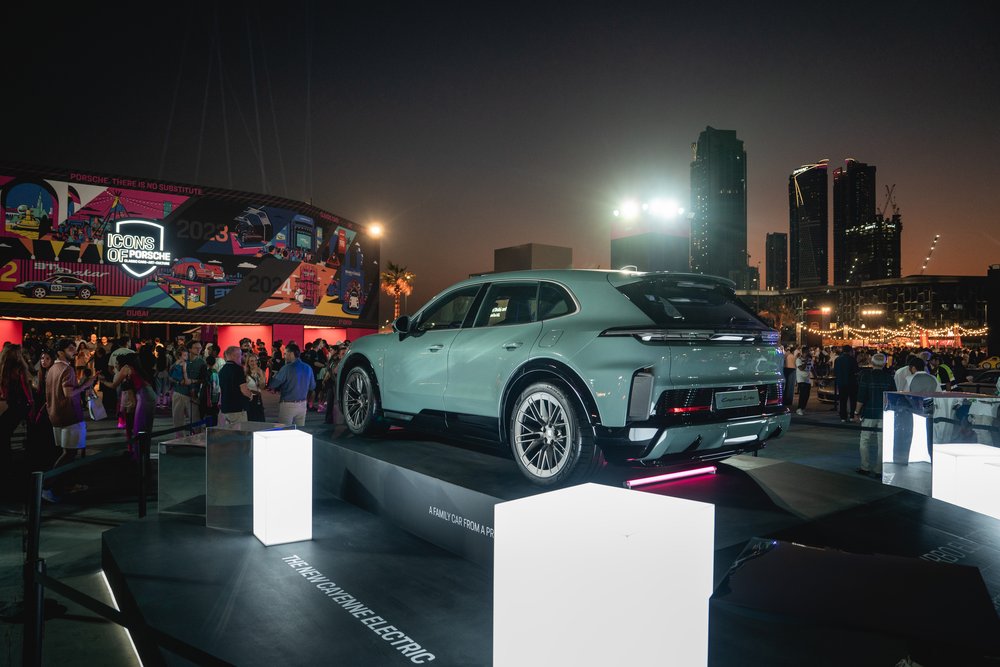
“It’s crazy but it’s great!” We go inside the global launch of the Cayenne Electric to find out why Porsche’s fastest and most powerful production vehicle ever is an EV
Attending the unveiling of Porsche’s most powerful ever production car a decade would have probably meant viewing a hypercar body, two doors, two seats, roll cage, mad aerodynamics and rear wing the size of a dining table.
Driving it all? A combustion engine and a price tag well into seven figures.
But not for 2025. Porsche’s power and torque king unveiled in Dubai last week is a “sensible” five door, five seat SUV with plenty of room for the shopping. It’ll tow a 3.5-tonne caravan, yacht or horse float, no doubt ride beautifully on its air suspension and be whisper quiet on the highway commute. And it’s an EV.
READ MORE: 2026 Porsche Cayenne EV revealed: 850kW luxury performance SUV is a hypercar humbler with 3500kg braked towing!
READ MORE: 2025 Porsche Macan Turbo Review: A drive into the country to decide if an electric Porsche still drives like a Porsche
READ MORE: Porsche EV plan hits the skids! Billions lost, ICE replacements for 718 Boxster and Cayman confirmed, new-gen Taycan and K1 super-SUV delayed
This is the new Cayenne Electric; specifically the range-topping Turbo grade, which shames every production combustion turbocharged Porsche – as well as anything with a GT badge – when it comes to horsepower bragging rights.
For the sake of this article, I’m going to take emotion out of the equation. An EV Porsche – brilliant as it may be – does not have the emotional, visceral experience that only comes with the sounds, smells and vibrations of a petrol-chugging suck, squeeze, bang, blow engine.
But let’s save those for the sports cars. A family SUV like the Cayenne? I reckon that lends itself pretty well to electrification, probably moreso than any other Porsche.
Right, let’s compare.
If I take the new Cayenne Turbo EV, its headline numbers are 850kW and 1500Nm from two electric motors.
The current peak petrol-powered Cayenne on sale in Australia is the Turbo E-Hybrid Coupe. It’s a plug-in hybrid with 4.0L V8 and e-motor, and delivers 544kW and 950Nm.
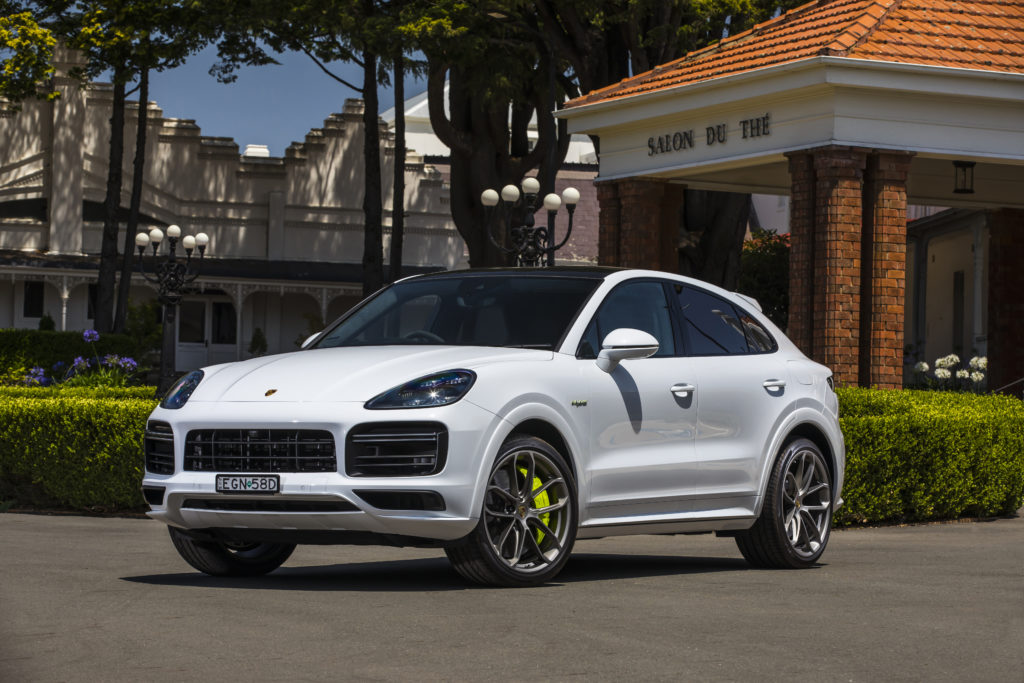
Massive numbers in their own right, but our EV wins by 306kW and 550Nm. That’s night and day.
Acceleration? The EV cracks 100km/h in 2.5 seconds, besting a combustion Porsche 911 Turbo S.
Just think about that. An SUV weighing around 2700kg with driver on board would out-drag every 911 in Porsche’s inventory… plus it’d take down hypercars like an Aston Martin Valkyrie with electrified 6.5-litre V12. It’s bonkers.
The Cayenne Turbo E-Hybrid Coupe takes a still-rapid 3.7 seconds to hit 100km/h, but that’s 1.2 seconds off the Cayenne Turbo Electric.
What about the all-important (if you have a drag strip or autobahn handy) 0-200km/h sprint? The Turbo E-Hybrid Coupe takes 12.2 seconds, but the EV cracks it in (gulp) 7.4 seconds.
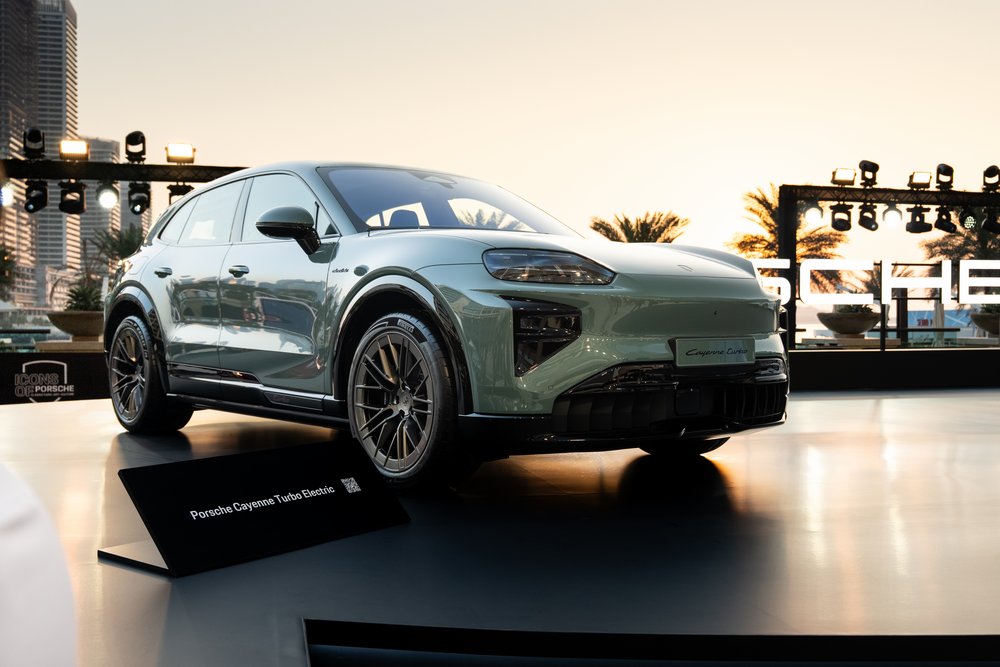
In a rare concession, the top speed win goes to the combustion V8 Cayenne: 295km/h versus the EV’s 260km/h. But really, I always find 260 ample when I’m crossing continents.
What about skills as an all-wheel-drive hauler or mild off-roader?
The Cayenne Electric manages a 3500kg tow rating, trumping the combustion one by 500kg.
It also has a massive 245mm ground clearance – that’s more than a Toyota LandCruiser, as well as the combustion Cayenne.
Our EV has a roomier cabin due to a 130mm longer wheelbase, plus it has a larger boot.
Okay, let’s be fair now. The combustion Cayenne wins on time to refuel.
Once you’re at a fuel station you can brim the 70L tank in a couple of minutes.
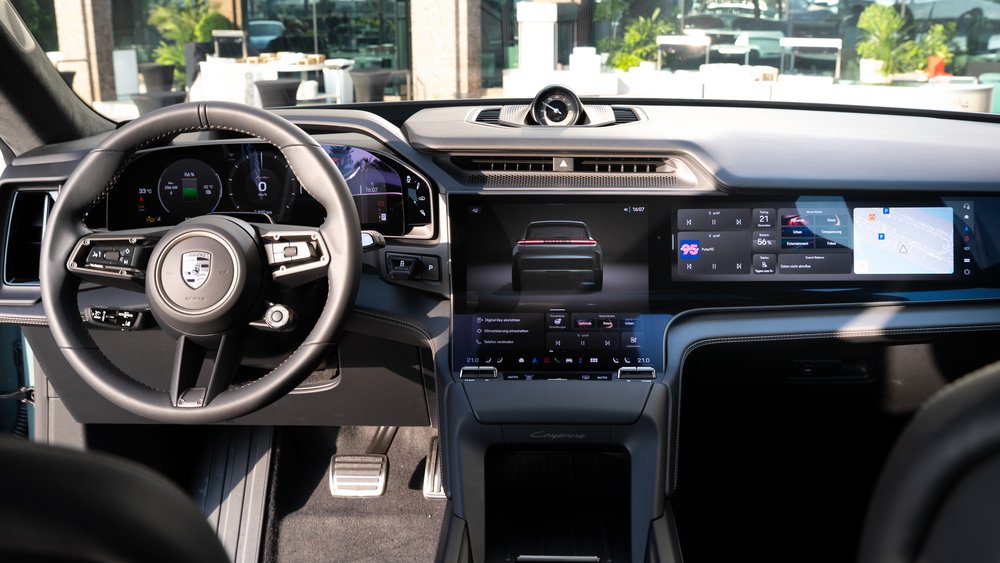
The EV takes far longer to hit maximum due to its hulking 108kW (usable) battery. It supports DC charging up to 400kW, so in ideal circumstances, it’ll go from 10-80 per cent in only 16 minutes.
We who’ve lived with EV’s know this is far from typical reality, but it’s good to know if public charging infrastructure ever becomes awesome, the Cayenne EV has the clout to handle ultra-rapid top-ups.
Range between fill-ups is closer than you may expect.
The plug-in hybrid V8 petrol Cayenne offers 82km pure electric range and 11.6L/100km from a 70L fuel tank. That’s 82km plus 603km, so overall range of 685km.
The Cayenne Turbo Electric has a quoted 623km thanks to that giant Duracell. So the range gulf between the two is really not vast.
Perhaps the most surprising thing, once considering the Cayenne Turbo Electric’s numbers, is the price.
When it lands in Australia in the middle of 2026, it’ll cost $259,900. That’s $50,000 cheaper than the aforementioned $312,300 Cayenne Turbo E-Hybrid Coupe.
It’s also less than an entry-level 911 Carrera… which as we know, would be utterly humiliated on a drag strip by our big Cayenne.
A drag race between a Cayenne Turbo Electric hauling a three-tonne van versus an unladen 911? It’d be an interesting one to see, but I’m not sure it’s the sort of PR Porsche would want to push.
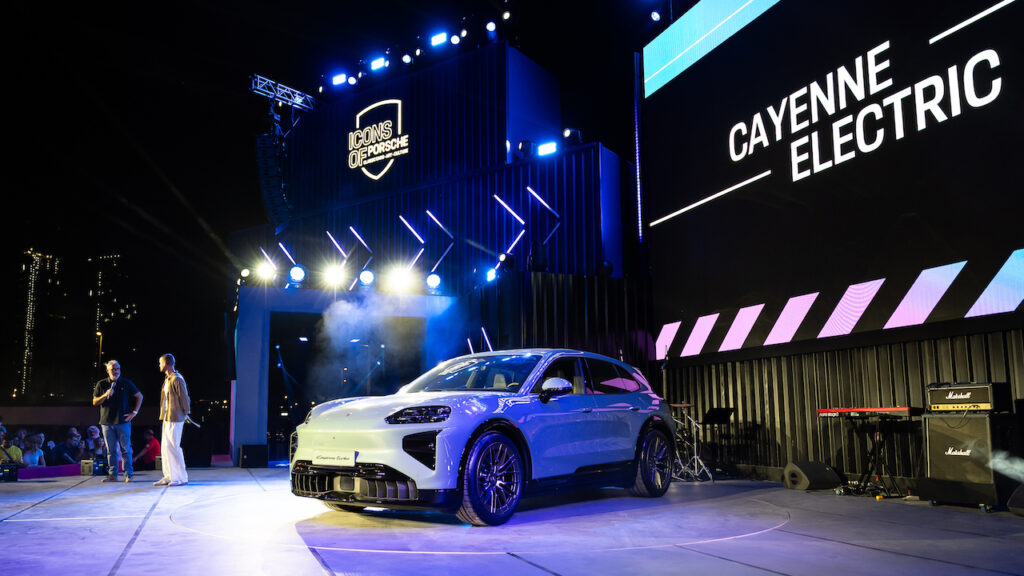
I collared Michael Schaetzle, Vice President of the Cayenne model line, at the Cayenne Electric’s unveiling.
“A lot of people told me I’m crazy to put so much power into this car,” he said.
“We did more than one million kilometres of testing, and not one engineer said it has got too much power. All said it’s crazy but it’s great.”
I questioned was it all too much? Is it something the Cayenne shopper is looking for?
“We didn’t want to give the customer a reason not to buy the car,” he explained.
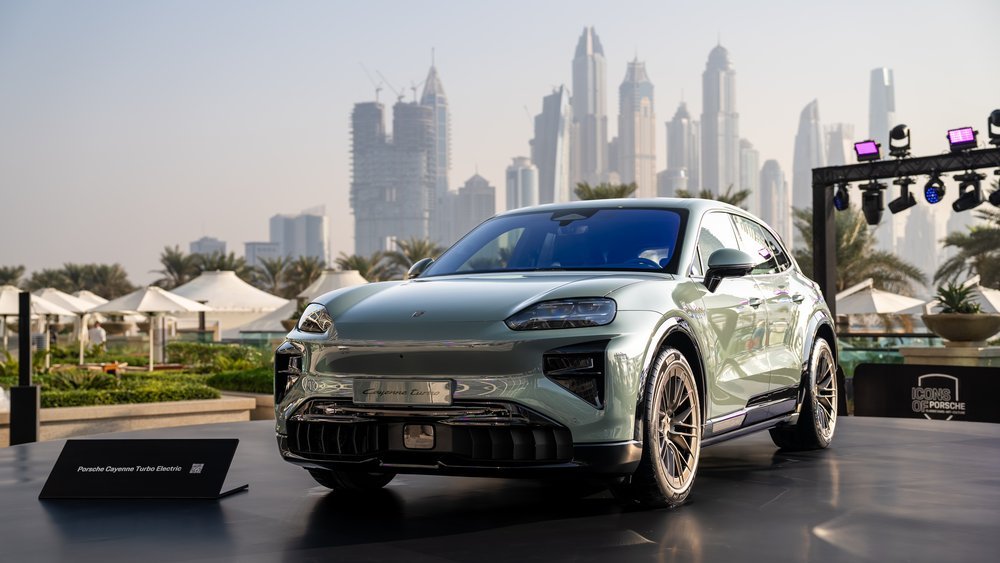
He even suggested the EV was a better off-roader that combustion Cayennes, having conducted some of its testing in the Middle East.
“It’s very easy to go up the dunes, and much better than an ICE (petrol) Cayenne where the engine must work really hard,” he said. “The EV has so much torque, and you can switch on a (fake) V8 sound to hear what’s going on.
“The electronics help you to control it, and the adaptive suspension and traction control as well. The systems are working better in the EV than in the ICE.”
Porsche EVs may not have been universally adopted and loved thus far; the brand a victim of its own success with creating emotionally involving driver’s cars with sublime feeling, sounding and performance combustion engines.
Porsche engineers have a point to prove with their EVs, and for this Cayenne at least, it’s a mighty winner on the numbers front.