EV cancer risks: Real-world study delivers verdict on battery electric electrosmog health threat
Pioneering new German research has revealed the true risks involved with living with an electric car and the good news is that they are much lower than anyone had ever imagined.
Concerns had arisen with the latest trend of larger and larger batteries combined with high-power electronics and processors.
But according to Germany’s ADAC auto club, drivers and passengers are only being exposed to very low levels of radiation that aren’t harmful for humans.
Even more remarkable, researchers discovered during testing that in some cases the levels of electromagnetic radiation emitted were lower than the equivalent combustion-powered car.
Commissioned by Germany’s Federal Office for Radiation Protection, the study involved testing 11 EVS, plus two hybrids and a conventional combustion-powered ‘control’ car to compare the findings.
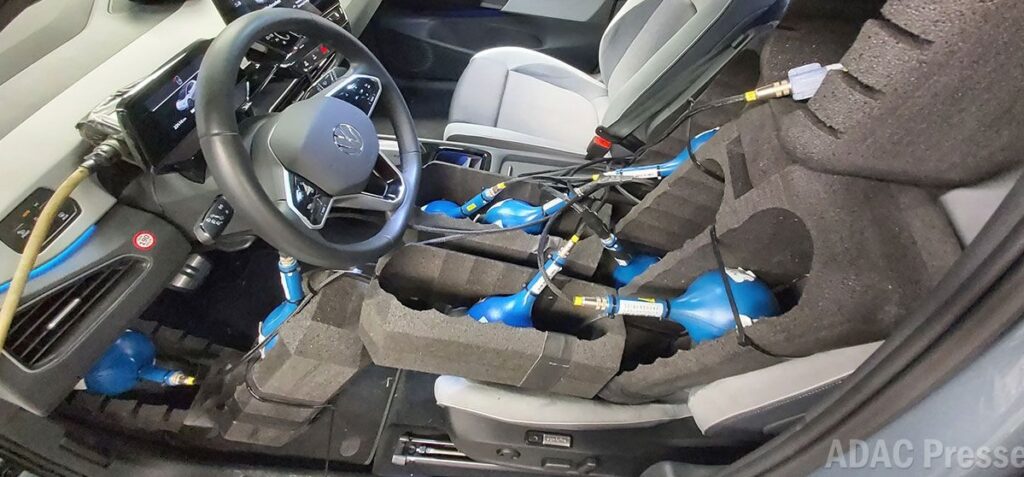
During the tests, the ADAC scientists used seat dummies with ten embedded probes to measure levels of electromagnetic radiation – or ‘electrosmog’ – as researchers referred to it.
Instead of lab testing, the team conducted on-road testing and then measured spikes of electrosmog generated during hard acceleration or heavy braking, or when all electrical components were in operation.
The ADAC said that even in the most extreme circumstances the electric fields and density of the electrosmog remained well below recommended limits, meaning at no point were they harmful to occupants.
Researchers also noted the higher values recorded were measured within the footwell and far away from a driver or passenger’s head, with no levels of radiation ever likely to affect either nerve function or medical aids, like pacemakers.
If you’re wondering what caused the highest peaks of radiation it was neither the massive on-board high-voltage battery, motors or inverters. Instead, peak electrosmog was caused by firing up the heated seats.
Even then, levels were far from dangerous to humans. Scientist also noted that the biggest variations in electrosmog were triggered by electric drive units and their cabling in the footwell, but even under maximum loads the motors did not produce enough radiation to be measured in either the head or torso.
Both the hybrids and single combustion-powered vehicles all produced similar or slightly higher levels of electrosmog once their heated seats were in operation.
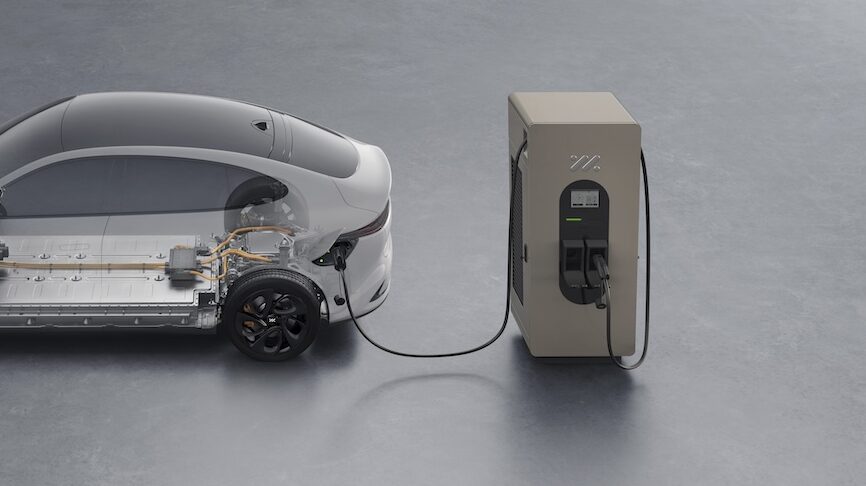
Finally, charging was also deemed safe by the ADAC, with the strongest reading recorded around the plug at the beginning of an AC charging session.
But all levels fell safely within guidelines measurements as soon as charging began.
High power DC fast-charging produced much lower levels of electrosmog.