
Electric utes won’t work without battery breakthrough: Ford global boss delivers his verdict during Aussie visit
Ford CEO Jim Farley says a major leap in battery technology will be required before fully electric utes become practical for mainstream buyers, warning that current battery-electric vehicles struggle to meet the demands of towing and heavy-duty work.
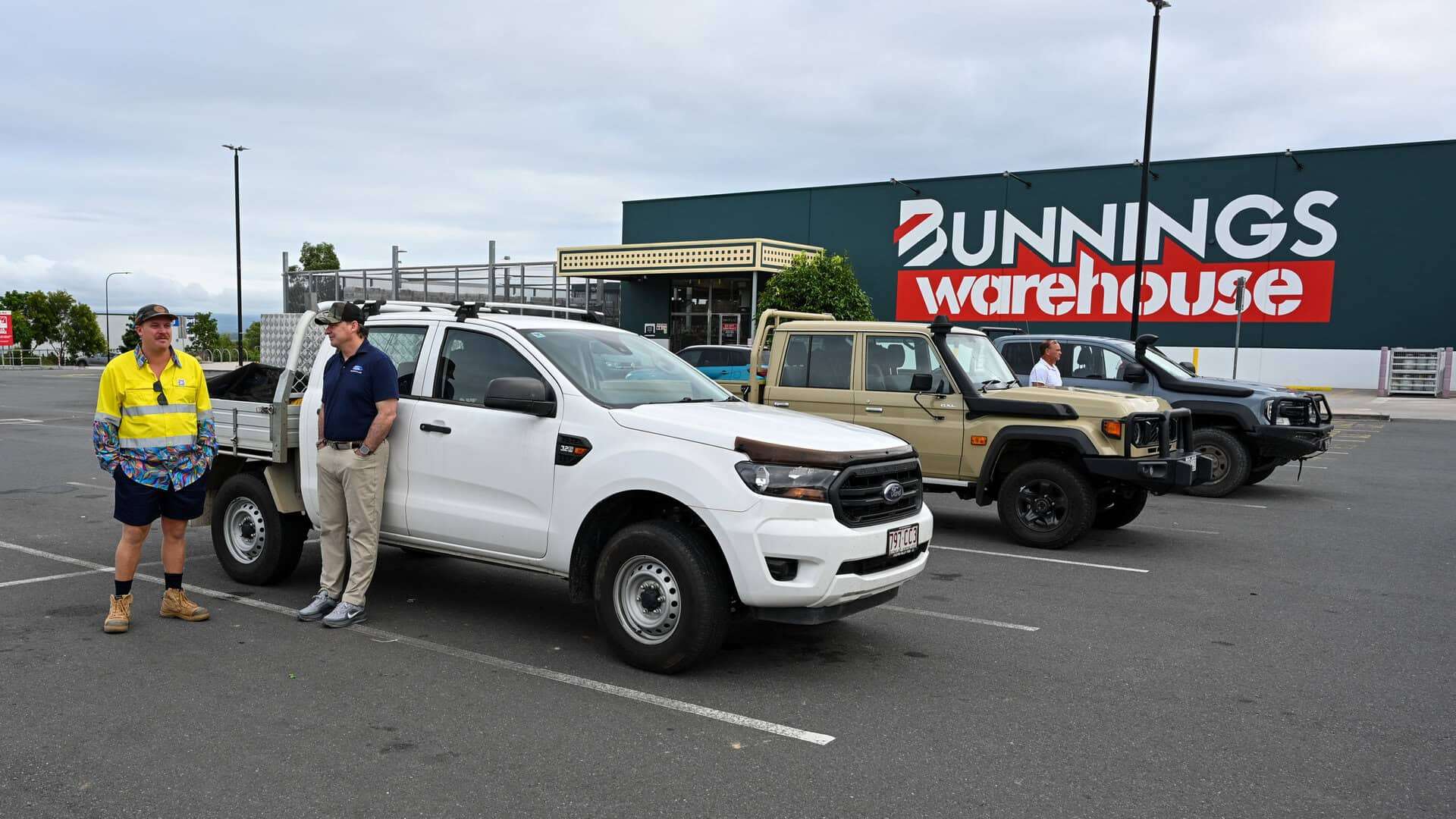
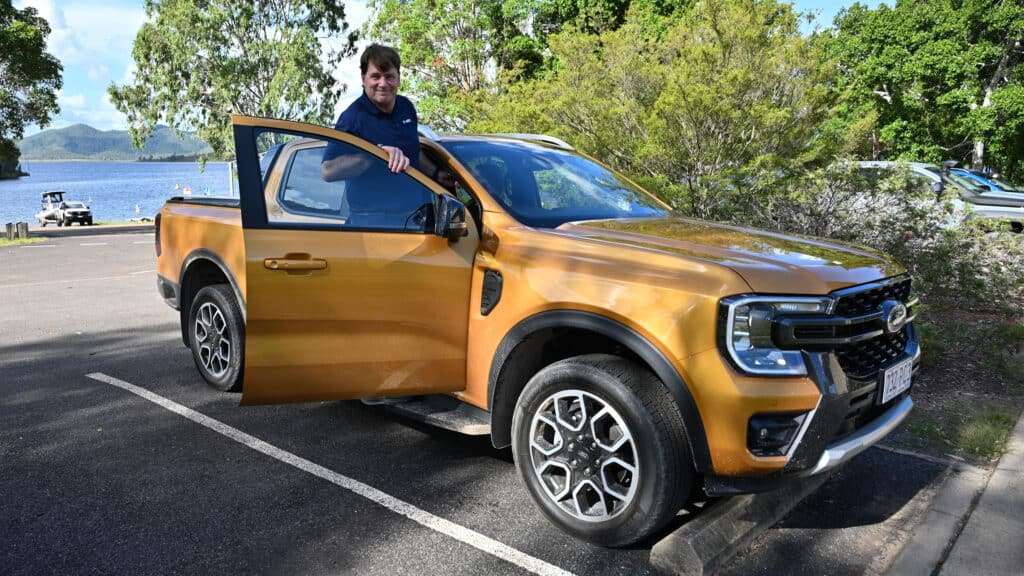
Speaking during a visit to Australia last week — where he caught up with customers, suppliers and even visited Bunnings (see pic above) — Farley suggested the limitations of today’s battery chemistry mean pure battery-electric pick-ups remain some way off for traditional ute buyers, particularly in markets such as Australia where towing and long-distance driving are common.
“A pure EV with a large battery is going to be a really bad tow vehicle,” he said.
READ MORE: Ford plans high-performance pivot to hybrids: Fancy a petrol-electric V8 Ranger Raptor?
READ MORE: 2025 Ford Ranger PHEV review
READ MORE: Ford teases radical $40,000 mid-size electric ute to smash BYD Shark 6, Toyota Hilux EV
READ MORE: USA versus China: Ford’s revolutionary EV rollout takes key step towards Australian launch
“So, if you tow things, the heavier they are, the worse it is – you should not buy a BEV.”
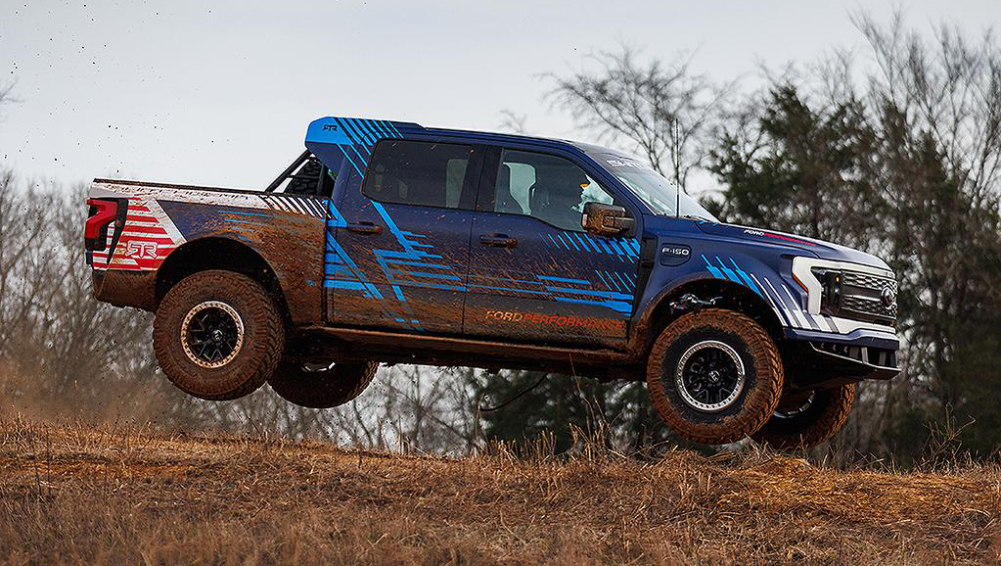
It’s a stark warning from the head of one of the company’s that pioneered electric utes with its recently discontinued F-150 Lightning.
Instead, Farley said extended-range electric vehicles (EREVs) – which use an electric drivetrain supported by a petrol engine acting as a generator – may offer a more practical solution in the near term.
No surprise, then, that that’s exactly what Ford is working on as a replacement for the all-electric Lightning.
The comments highlight the technological challenges facing automakers as they attempt to electrify one of the world’s most demanding vehicle categories.
Large pick-up trucks and utes must typically combine long driving range with heavy towing capability and off-road durability – requirements that place significant demands on battery size, weight and cost.
Farley said meaningful progress will depend on the next generation of battery chemistry.
“I mean, I don’t see that yet,” he said when asked about the viability of fully electric pick-ups.
“I think solid-state has been part of my future like fuel cells have been for my whole life. Everyone’s like ‘well, it’s gonna happen sometime’.”
Farley is referring to the circa-10-year delays on solid-state batteries, which are finally expected to make it into mainstream production over the next couple of years.
Ford has already experimented with electric pick-ups through the aforementioned F-150 Lightning in North America, a battery-electric version of the world’s best-selling truck.
However the model has struggled to match the sales success of its petrol-powered sibling, prompting Ford to slow and soon end production as demand cooled.
As a result, the company is increasingly focusing on hybrid and extended-range electrified solutions for its future truck programs.
Farley said Ford’s experience with partially electrified vehicles is helping the company better understand how customers actually use work vehicles.
“We’re starting to really understand the duty cycle,” he said.
“How big the battery should be and how much the customer is willing to pay for a bigger battery?”
Electrified trucks may also evolve into mobile power sources rather than simply transport vehicles.
“We haven’t really understood yet how much battery should carry for the vehicle for non transportation use,” Farley said.
Ford already offers such capability through its Pro Power Onboard system, which allows vehicles to power tools, appliances and equipment directly from onboard batteries.
The comments come as several automakers push ahead with electrified ute programs.
Toyota is preparing to introduce a battery-electric version of the HiLux later this year, although it’s initially going to have a short driving range, prompting Toyota to aim it at specific applications – such as mining fleets – rather than private buyers.
Chinese manufacturers are also moving aggressively into the segment, with brands including BYD and GWM already offering plug-in hybrid utes.
But Farley suggested legacy truck makers still hold an advantage when it comes to understanding real-world work requirements.
“When it comes to real world work vehicles and off-road vehicles, they are a long way from being competitive yet,” he said, referring to Chinese brands.
For now, Ford appears to see hybrid and extended-range electric technologies as the most realistic pathway to reducing emissions in the ute segment.
Until battery technology improves significantly, Farley said fully electric utes will remain a difficult proposition for many traditional buyers.
“I mean, I don’t see that yet.”
Heard that defeated commentary before, GM for example. When the established invested interests find they are losing the technology and commercial prowess they “belittle” opposition and deny the technology is possible. In the meantime, they fall further behind. History repeats itself.