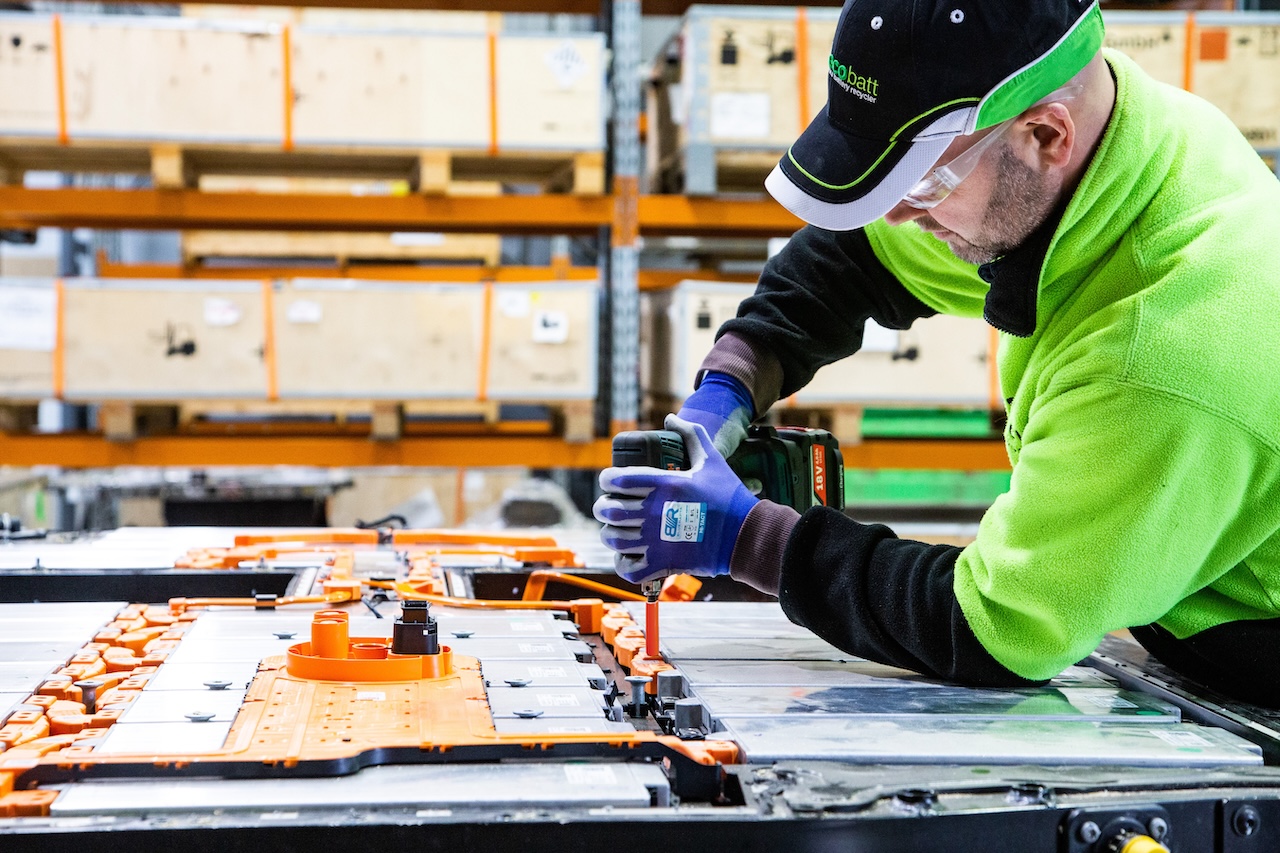
BMW launches EV battery recycling initiative in Australia
BMW Group Australia has teamed up with Australian battery recycler EcoBatt as part of plans to roll out a new national recycling program.
The scheme intends to claw back a high-voltage battery’s lithium, nickel, cobalt and manganese from expired power packs.
Once extracted, the reclaimed materials will then be returned to the production supply chain, fulfilling BMW’s aim of rolling out its ‘circular economy’ in all aspects of its business.
READ MORE: BMW i4 range trimmed in Australia: Popular LCT-busting eDrive35 updated, but more expensive models follow ICE 4 Series out the door
READ MORE: 2028 BMW iX5 Hydrogen confirmed: German luxury brand’s first production fuel cell model will sit alongside ICE, PHEV and BEV powertrains
READ MORE: Right-hand drive Neue Klasse BMW iX3 debuts; rear-drive electric SUV could be priced below $80,000 as BMW claims huge savings through “simplicity”
As part of the BMW-EcoBatt deal, BMW and MINI dealers across the country will now remove damaged or end-of-life EV batteries and transport them to EcoBatt’s Battery Discharge Plant in Campbellfield in Victoria.

To ensure there are no mishaps along the journey with potentially damaged and dangerous batteries, EcoBatt has developed specialised 20-foot-long transport containers that have an advanced fire suppression system designed to tackle thermal runaway during transport.
At a new recycling facility claimed to be the first of its kind in Australia, the used batteries are safely discharged before being shredded.
The process is said to be able to process up to 5000 tonnes of batteries annually.

According to EcoBatt, the new facility is capable of recovering as much as 90 per cent of all materials for reuse in future batteries.
That’s a little down on the 99.6 per cent claimed to be clawed back by a similar pilot scheme currently being employed in China.
Lowering the carbon footprint of recycling at the new plant, EcoBatt said any energy from the damaged or end-of-life batteries is repurposed to power the facility.

Once up and running, EcoBatt says the Campbellfield plant will be followed by similar facilities in Western Australia and New Zealand that will be introduced to help cope with the ramp-up in the number of EVs on Australian roads.
Meanwhile, ESE, Bebat and Cellblock are primed to commission a new URT lithium battery recycling plant in 2026 that will be capable of recycling 30,000 tonnes per year, further enhancing Australia’s ability to recover minerals.
“Safety and sustainability are central to the BMW Group’s global strategy,” a BMW Group statement said. “By partnering with EcoBatt, we’re ensuring that valuable resources are recovered responsibly, while keeping people and the environment safe.”

The new partnership with EcoBatt in Australia replicates what the BMW Group is doing globally.
The luxury car-maker partners with the likes of SK Tes in Germany, where BMW has owned and operated its own recycling centre for the past 30 years.
Meanwhile, the Chinese government has tasked the country’s General Administration of Market Supervision to draft new industry recycling standards that will introduce mandatory procedures on how to dismantle and recycle power packs to slash waste.
As part of pioneering new techniques developed by Chinese scientists, as much as 99.6 per cent of a high-voltage battery’s nickel, cobalt and manganese can be clawed back, with lithium recovered at a rate of around 96.5 per cent.
The demand to improve the recycling industry’s efficiency is said to be driven by battery producers like CATL who are keen to be less reliant on mining for raw materials.
The same draft regulations, that China hopes will be adopted globally, will also ban the use of second-life used batteries in e-bikes, over safety concerns triggered by fires.