Global reveal: Advanced plug-in hybrid system powers the all-new Audi RS 5 as it targets BMW M and Mercedes-AMG
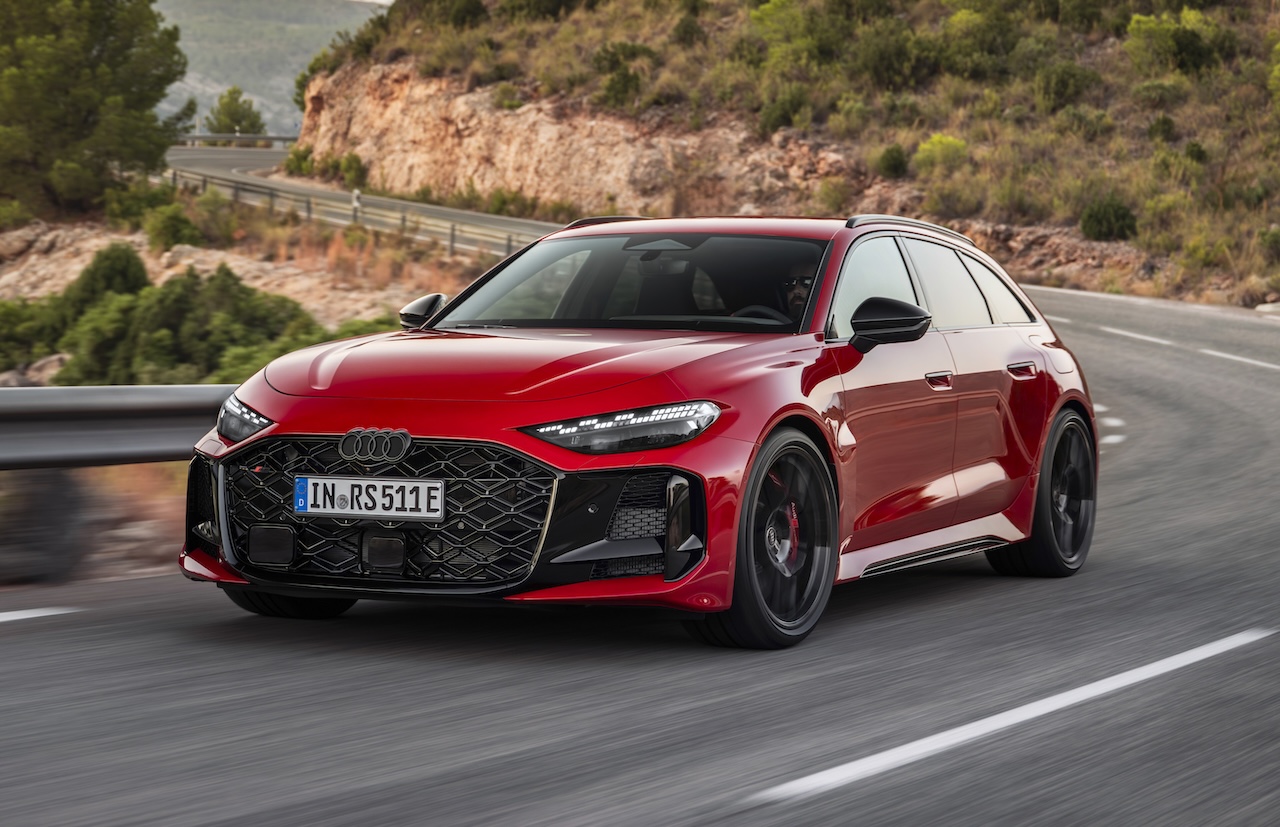
The all-new Audi RS 5 has arrived boasting epic power, supercar levels of acceleration and an impressive pure-electric range of more than 80km in a dramatic bid to overshadow the likes of the BMW M3 and Mercedes-AMG C 63.
Locked in for a launch Down Under in the second half of 2026, EV Central recently got up close and personal with the Audi RS 5 sedan and the RS 4-replacing RS 5 Avant wagon, and met some of those behind its state-of-the-art plug-in hybrid powertrain.
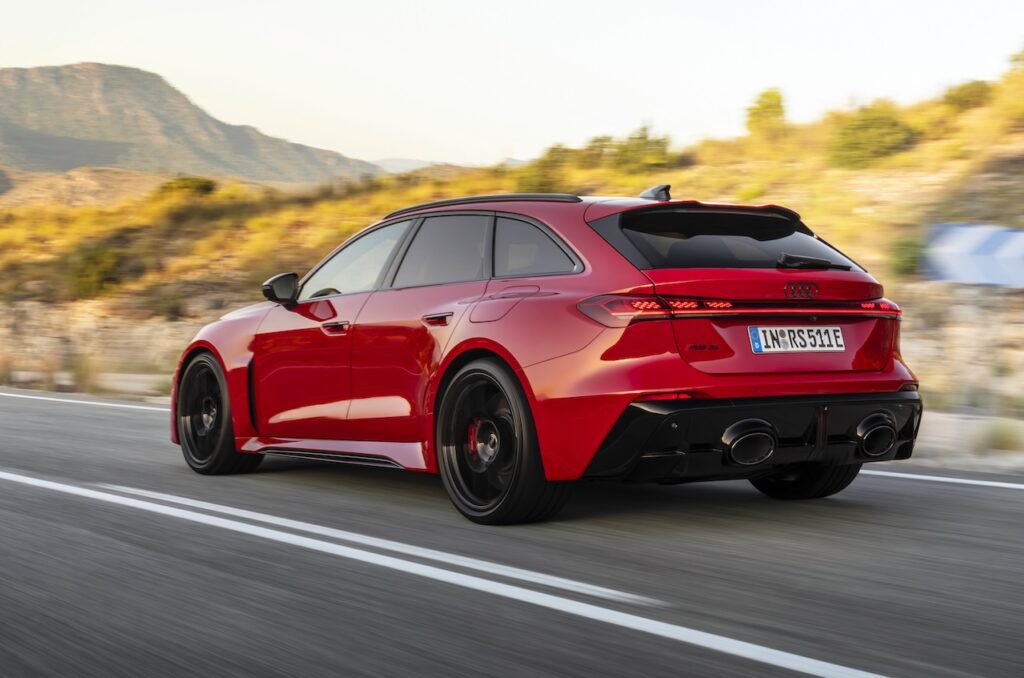
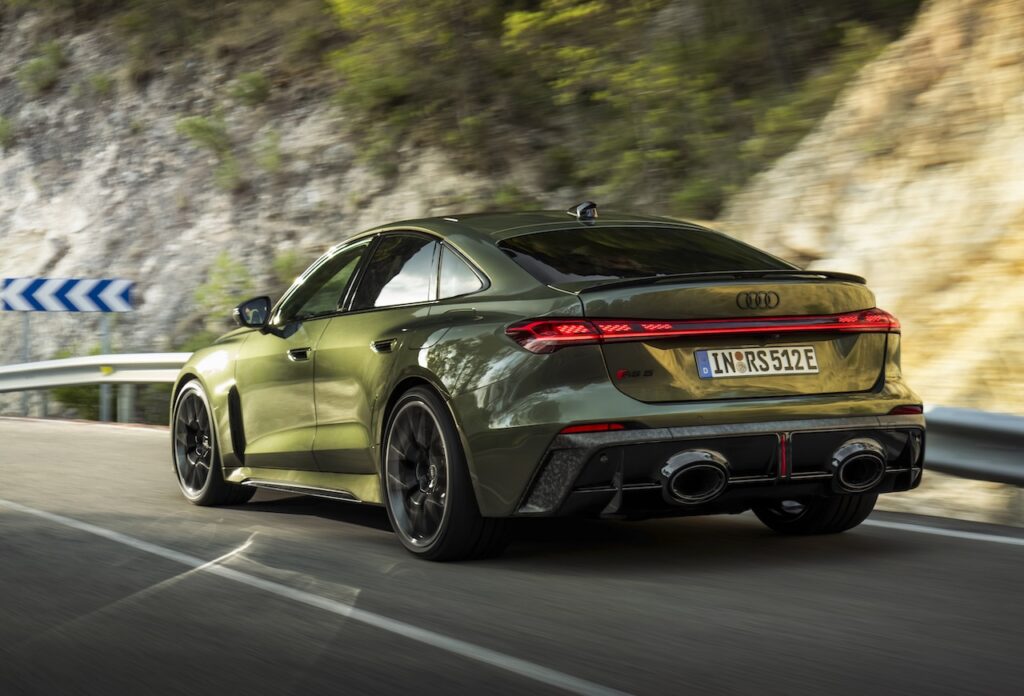
In the metal and fibre, designers have amplified the already sporty looks of the Audi A5 sedan and wagon by adding wider front and rear fenders that extend its width by 90mm. Up front there’s the dominant 3D singleframe honeycomb grille shared with other RS models.
READ MORE: Audi A2 reborn: Groundbreaking 1990s hatchback set to return as Audi’s most affordable EV
READ MORE: Price parity: Plug-in Audi Q5 e-Hybrid arrives with more power, fuel-savings, 80km EV range and same price as slower ICE
READ MORE: Audi Q4 55 e-tron quattro Review: Perfectly nice, but is that gonna cut it against a vast number of cheaper and more interesting rivals?
Both front and rear bumper uppers are bespoke and incorporate complex aerodynamic shaping, including a larger rear diffuser that houses a pair of trademark RS tailpipes.
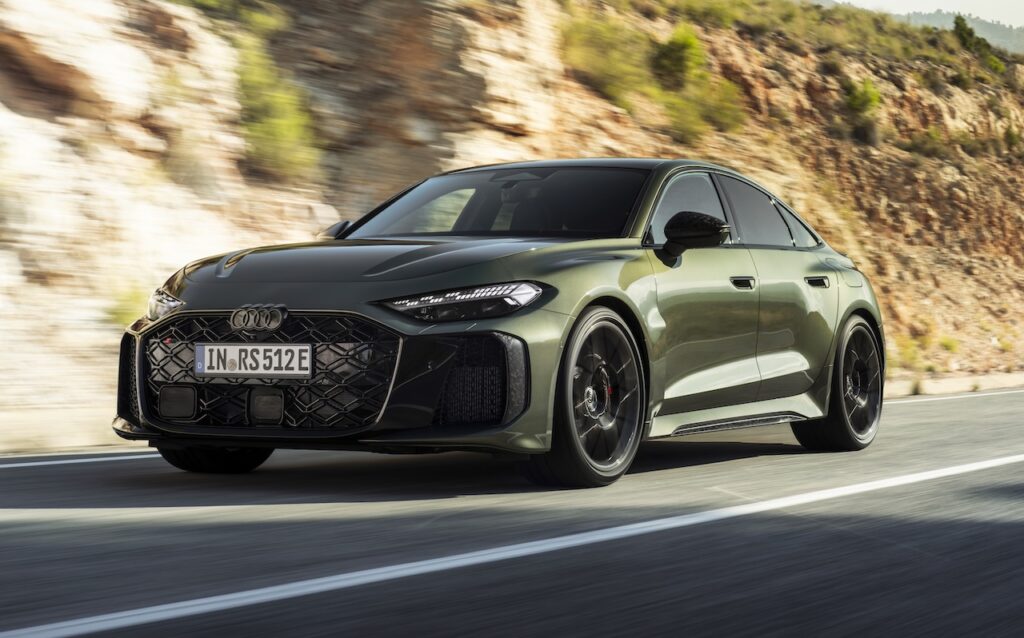
In total, just the bonnet, roof, front doors and rear boot lid are carried over from the standard Audi A5.
Beneath the skin, engineers have gone to significant lengths to raise the mid-size sedan and wagon’s power output without being penalised by emissions.
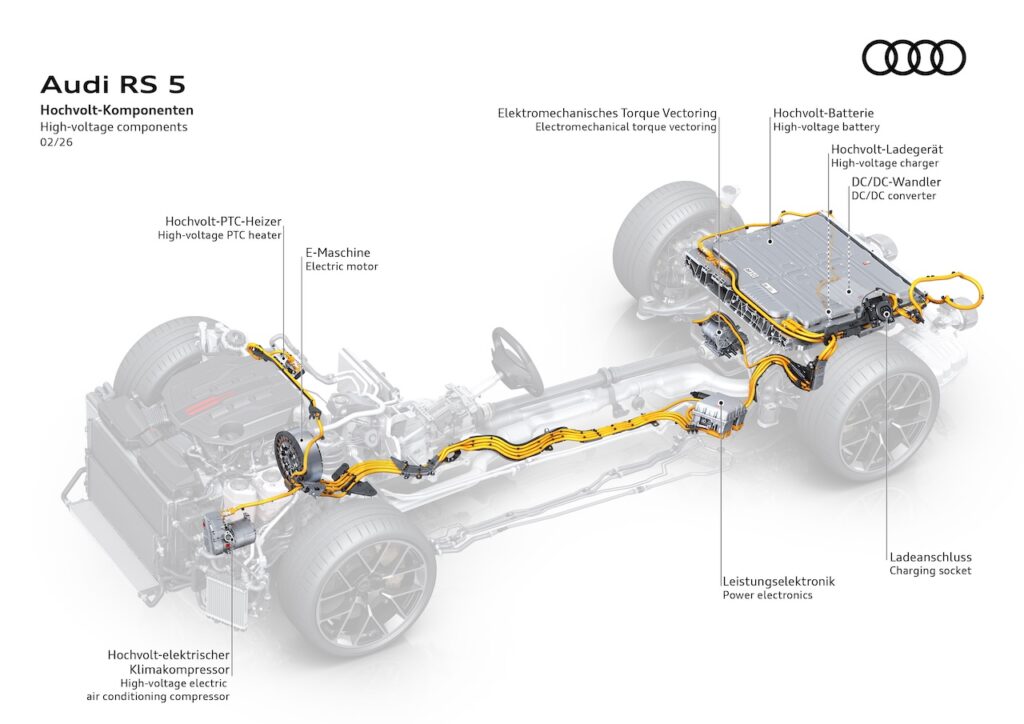
That explains the combination of its existing Porsche-Audi-developed twin-turbo 2.9-litre V6 with a 130kW electric motor, an eight-speed auto and a 25.9kWh lithium-ion battery.
Total power is a massive 470kW, while torque rises to a combined 825Nm, translating into a 0-100km/h sprint of just 3.6 seconds and a top speed of 285km/h if you tick the box for the Audi Sport pack.
Otherwise, it’s limited to 250km/h. Those figures match the latest BMW M3 Touring, although the M3 sedan is a tenth quicker from 0-100km/h.
For the first time, thanks to its plug-in hybrid powertrain, the RS 5 will offer a pure-electric range of more than 80km.
That means silent getaways in the morning and with regular charging many owners may avoid using fuel on the daily commute. The battery misses out on DC fast-charging, however, and takes 2.5 hours for a full charge using an 11kW charger.
The extra e-motor and battery have contributed to additional weight. The RS 5 sedan tips the scales at 2355kg, while the wagon weighs 2370kg.
Not that you would know behind the wheel, engineers claim, as the powerful plug-in hybrid system is paired with a new-generation quattro all-wheel-drive system.
It featurs a centre differential and a new electro-mechanical transaxle that packages another electric motor to deliver greater levels of torque vectoring for improved agility.
There are also new twin-shock dampers, bespoke front and rear axles and retuned steering, all specially developed by Audi Sport.
Buyers can choose between 20- or 21-inch alloy wheels, with carbon-ceramic brakes available as an option.
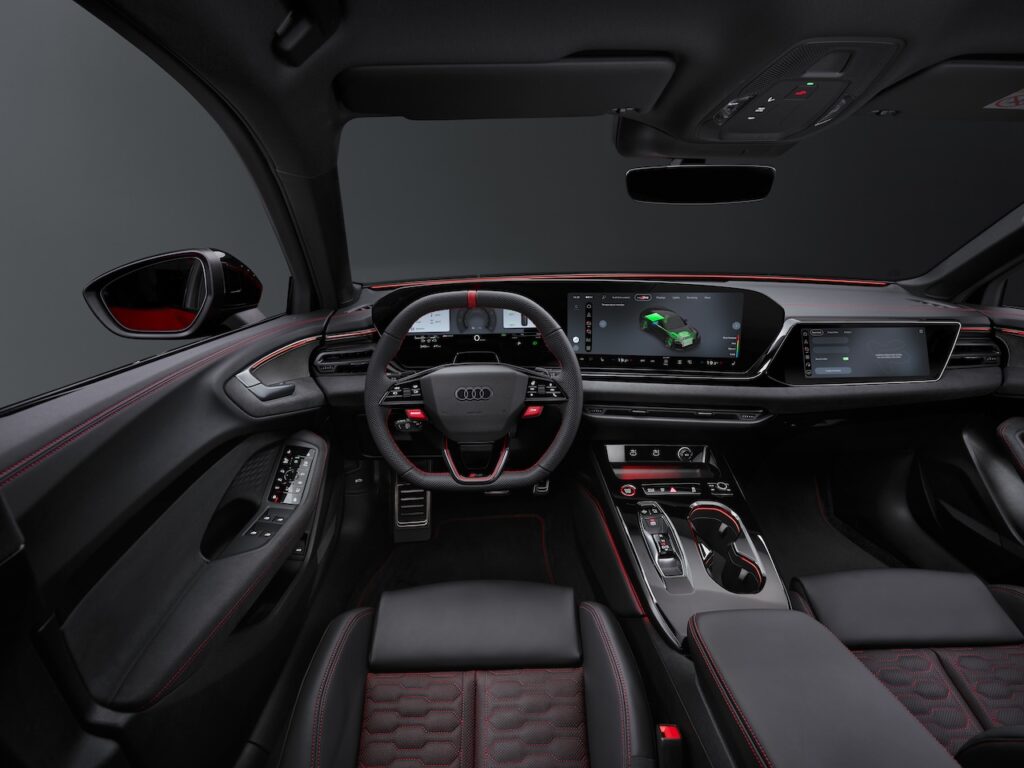
Inside, there’s a pair of more supportive bucket seats with a honeycomb quilted finish, a black roof liner, flat-bottom RS steering wheel and dedicated Audi Sport displays for the 14.5-inch infotainment system.
On-board telemetry is included for those who venture onto the track, alongside new driving modes including a rear-wheel-drive-biased setting for drivers who like to go sideways.
In Germany, the Audi RS 5 sedan is priced from €106,200 ($178,100), while the Audi RS 5 Avant wagon costs €107,850 ($180,100).
The latter represents more than a 20 per cent increase on the outgoing non-hybrid RS 4 wagon, which doesn’t bode well for local pricing. Audi Australia says full pricing for its RS plug-in hybrid sedan and wagon will be released later this year.