BMW M confirms quad e-motors for its first-generation of electric high-performance models. M3 will lead the way in 2027
BMW has confirmed a radical quad e-motor powertrain for its first generation of battery electric M high-performance models.
The new world of fossil-fuel-free BMW M cars will be led by the 2027 M3 super sedan (or iM3 as patents suggest it might be called), but a steady stream of super EVs are planned to follow.
And the ambitions for the new BMW M powertrain are mighty.
READ MORE: Roarsome: Listen to the new 2028 BMW M3 EV … could there be an inline-six turbo lurking beneath the bonnet of this zero-emission next-gen super sedan?
READ MORE: First look! The 2028 BMW M3 EV is coming with a hypercar-crushing 750kW quad-motor powertrain
READ MORE: BMW iM3 trademark signals new electric era for super-sedan icon
“We will set a new benchmark in driving dynamics,” promised Philipp Brunn, head of BMW M Neue Klasse. “We are going to combine driving qualities for the daily driving with outstanding track driving qualities.
“We are going to stay true to our BMW M DNA, we are implementing active safety features and we are going to enhance the familiar BMW M driving experience.”
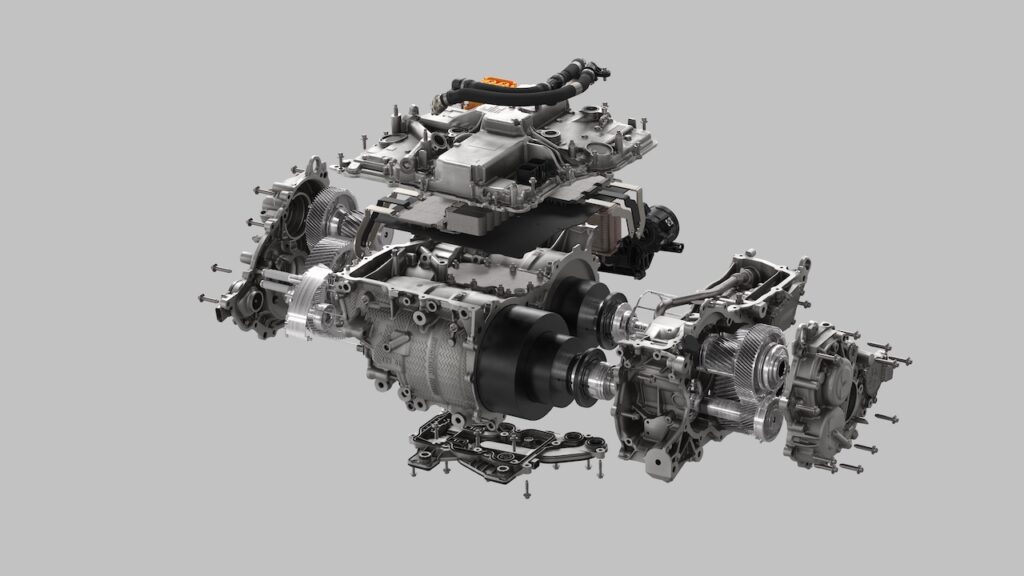
Essentially, the quad e-motor set-up is BMW M’s work, while it has retuned and uprated the new cylindrical cell battery pack that debuted with the first mainstream BMW Neue Klasse model, the iX3 SUV.
Neue Klasse is the all-encompassing engineering and design platform that will reach out and influence every BMW – be it EV or internal combustion – from this point on.
The M3 EV will spin off the recently revealed G84 i3 Series Neue Klasse EV that will debut in 2026.
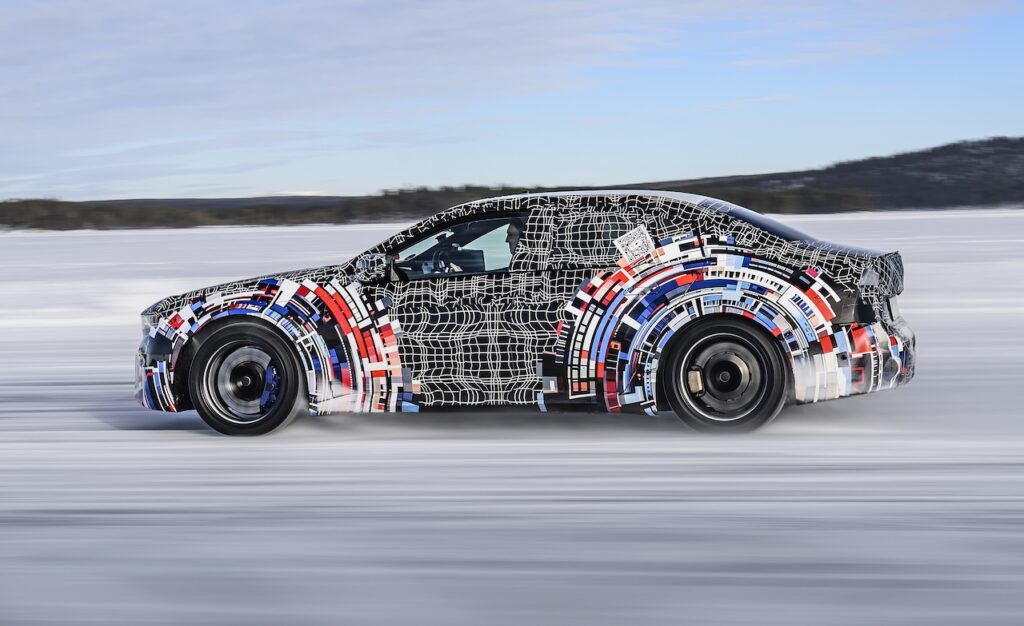
BMW M takes Neue Klasse’s Gen6 EV hardware and software, renames it BMW M eDrive and winds it up to 11 – or more (with apologies to Spinal Tap).
At the heart of M’s new platform is a retuned version of the weirdly named ‘Heart of Joy’ dynamic performance control (subtly renamed M Dynamic Performance Control) Superbrain that manages the interaction of all the mechanical and digital driving complexities within Neue Klasse.
Heart of Joy is one of four Neue Klasse Superbrains (the others cover automated driving, infotainment and basic/comfort functions). BMW M says the software stack provides data exchange up to 10 times faster, faster software updates and upgrades that all help performance.
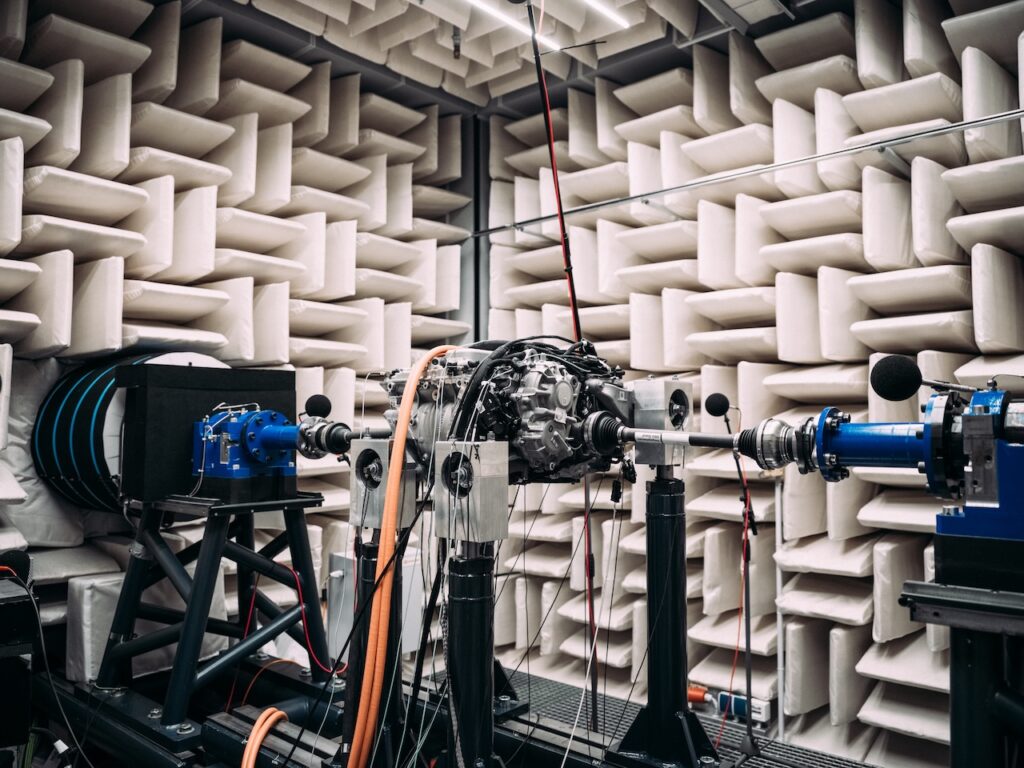
The quad e-motor set-up that debuts with the M3 EV has one oil-cooled drive unit comprising two e-motors arranged in parallel and one inverter on each axle.
Each high density e-motor is devoted to driving an individual wheel via its own reduction gearset. There is no interconnection between any wheel.
BMW M says these are the most powerful drives it’s ever used, but no quantifying number was offered, let alone the rumoured 1000kW combined outputs.
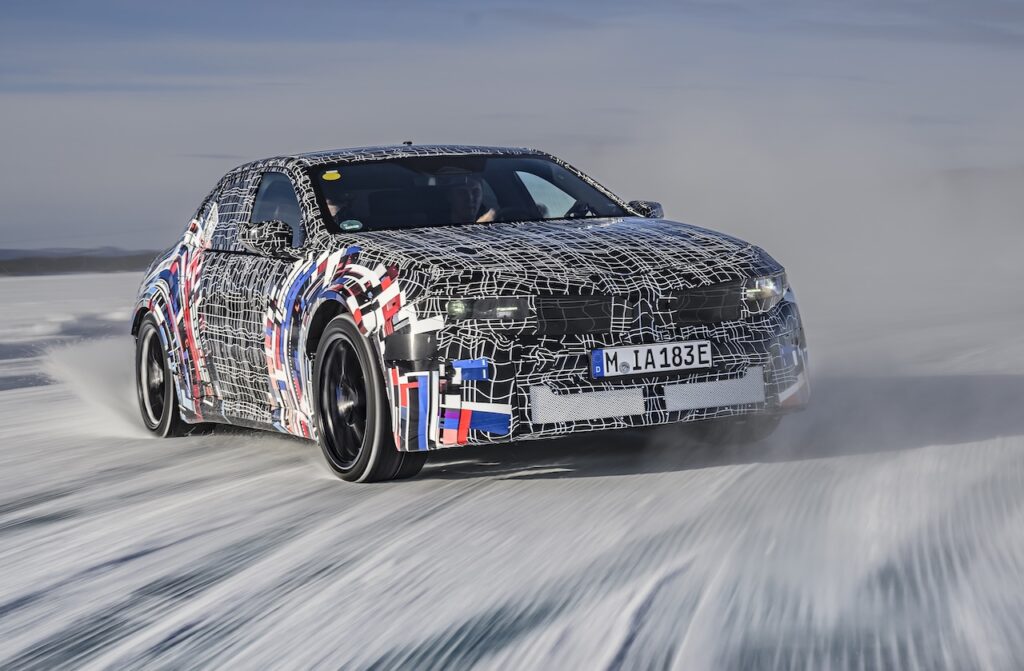
The quad set-up allows both a new version of BMW M xDrive all-wheel drive and traditional rear-wheel drive with the front axle decoupled.
BMW M says RWD’s great for efficiency on the motorway, but really they’re saying it’s great for full lock slides around corners (on racetracks of course).
Brunn promised the system will provide optimum energy recuperation, continuous torque distribution and traction right up to the limit, while the nature of the delivery can be tuned by different driving modes.

“The unique concept gives us the chance to have performance levels on production cars never seen at BMW M before,” he said.
“Further advances include precise control of torque and power to fully utilise tyre performance potential on all friction surfaces.
“So starting from snow, wet, to high grip situations we can continuously blend the electro-hydraulic brake and the electric motors,
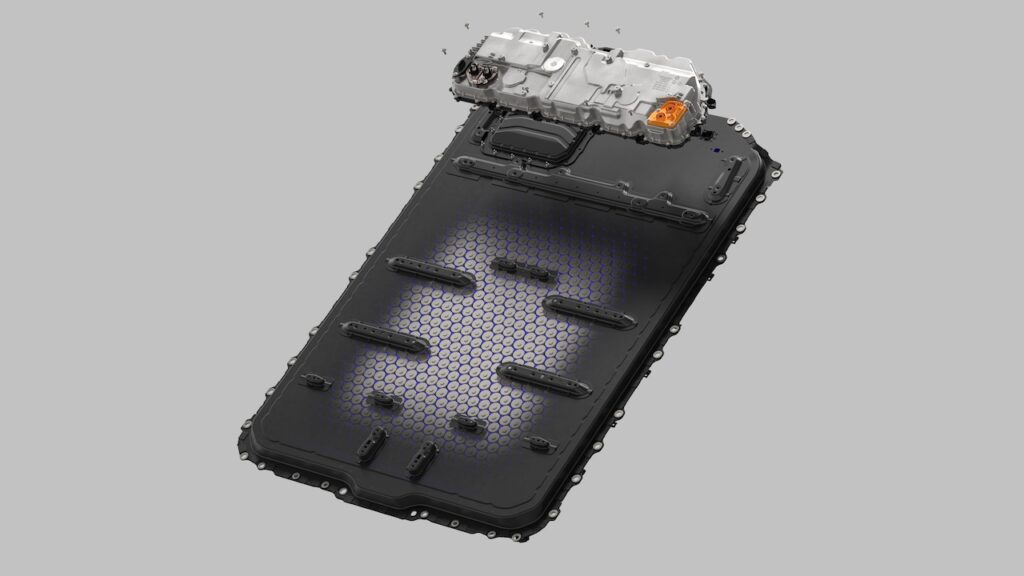
BMW also promises driving dynamics will be aided by employing the high-voltage battery storage housing as a structural component that connects andn therefore stiffens the body and suspension.
“Emulated” gearshifting in certain modes will be offered and – perhaps less enticingly – “an exclusive soundscape”. Most of these features have neen patented and will be exclusive to BMW M Models.
But there was no mention of the active aerodynamics featured on the Vision Driving Experience test mule.
The powertrain will be fuelled by an 800v battery pack employing more than 100kWh in capacity, but slightly less than the iX3’s is 108.7kWh.
BMW M employs the Neue Klasse’s lithium-ion cylindrical cells, but the chemistry has been revised to prioritise sustained peak performance and faster charging rather than efficiency or electric range.
Brunn says peak output and recharging power is better than the standard Neue Klasse, which already tops out at 400kW DC. Recuperation rates also claimed to be higher, although no specific numbers have been offered.
However, Brunn confirmed the M battery will offer reduced range than standard Neue Klasse.
The pack has been upgraded to a two-sided cooling system and the high-voltage management system (dubbed the Energy Master by BMW) has been modified for sustained performance and optimised for higher current.
“We had to push the limits of the battery,” admitted Brunn.

It’s also been revealed fully natural fibre elements will be part of the construction process for the first time in M models. These will aid lighter weight construction and while offering similar properties to carbon-fibre and can be produced with around 40 per cent less CO2e.
So just how far away is the first BMW M EV?
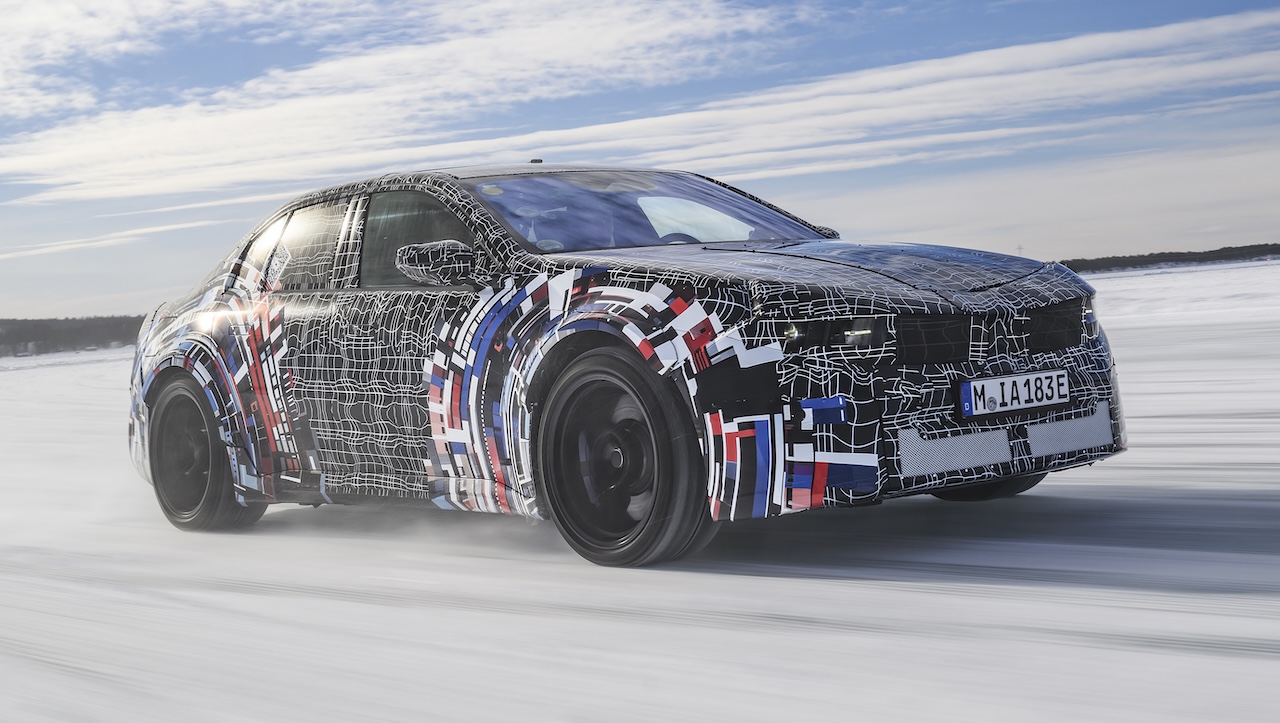
“It’s still a few months to go before we will have the first cars on the road but the prototypes are already being tested on-road and test tracks,” said Brunn.
“When can you buy the car? You’ll have to wait until at least 2027 and there is still a lot of work for us to do to get it ready for its launch.”
But Brunn is emphatic the wait will be worth it.
“I’m very happy and lucky that I had the chance to drive one of those early prototypes and it’s amazing and insane what you can experience when driving them.
“So I’m very happy and you can all be very happy when you get the chance in the future to drives those cars.”