2026 BYD Sealion 8 Premium AWD Review: Baffling and borderline alarming? BYD’s first seven-seat SUV leaves Stephen Corby perplexed
It could be just me, but do you sometimes look at world leaders – past and present – and think, in retrospect, was it really a good idea to give them so much power?
I mean, I used to think George W Bush was a bit dim to be running the world, but obviously today I’d stand up and applaud if he was suddenly allowed to take over again, even if he is barely two weeks older than the incumbent and thus obviously too decrepit for the job.
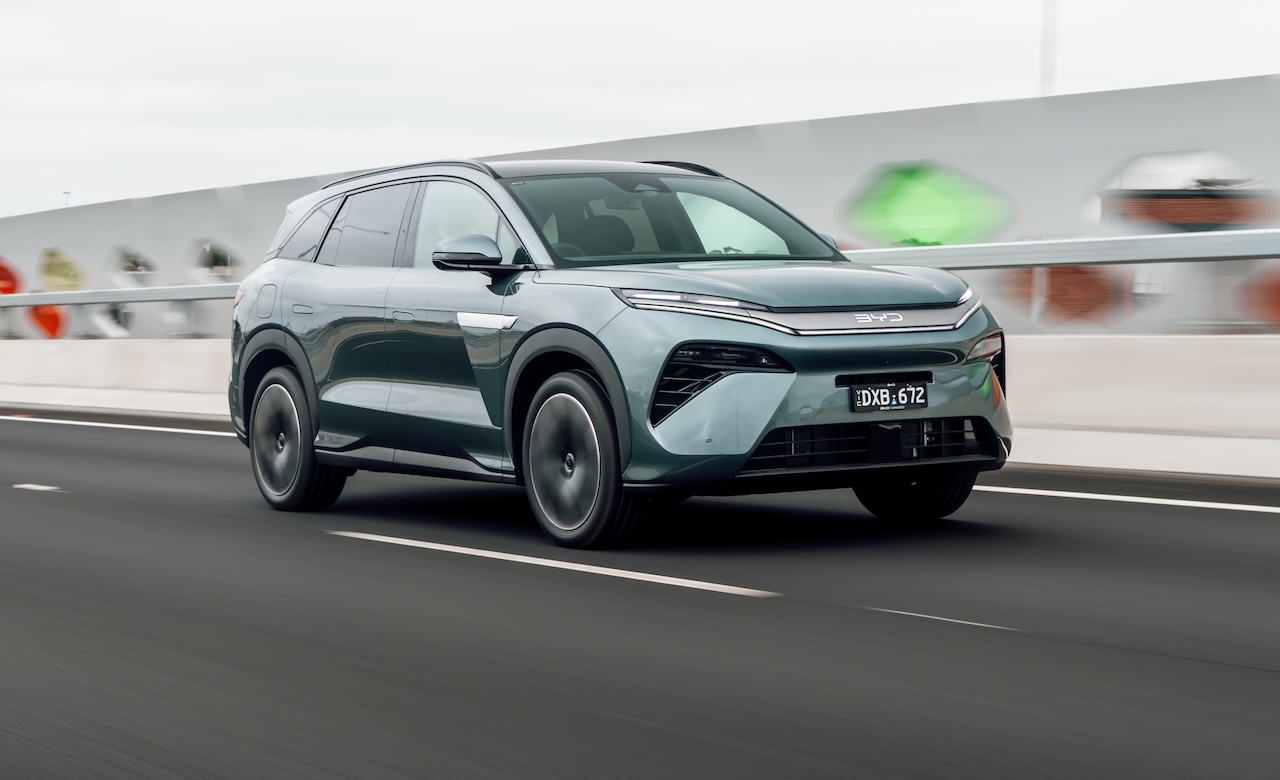
And it probably is just me, but driving the staggeringly, almost unnecessarily over-powered new BYD Sealion 8 seven-seat family SUV PHEV road rocket made me think of such things.
To understand why I am so baffled and borderline alarmed by this bonkers BYD, just step into my time machine with me and we’ll pop back 20 years (back when George W was in charge) and look at what you had to do then to get the kind of galloping grunt this feisty PHEV offers.
READ MORE: BYD Sealion 8 PHEV priced from $56,990: First seven-seat SUV from Chinese giant undercuts most rivals
READ MORE: 2025 BYD Sealion 8 Premium Review: It’s super-fast and handles like a sports car. Does a seven-seat family SUV really need to behave this way?
READ MORE: Plug-in BYD Sealion 8 arrives to conquer large seven-seat segment as Chinese brand aims to pinch sales from Mazda CX-80, Kia Sorento
In 2006, you had to take up smoking, consider a neck tattoo and grunt a lot before being allowed to buy a HSV GTS, powered by a grunting 6.2-litre V8 engine that delivered a loud and lurid 307kW and 550Nm. At the time, people were quite excited about the idea of driving cars with more than 300kW, which was considered to be enough to put hairs on your chest.
If you were a brave enough driver you could send your GTS fro 0 to 100km/h in 4.96 seconds (that’s in the manual, somehow the auto took 5.05).
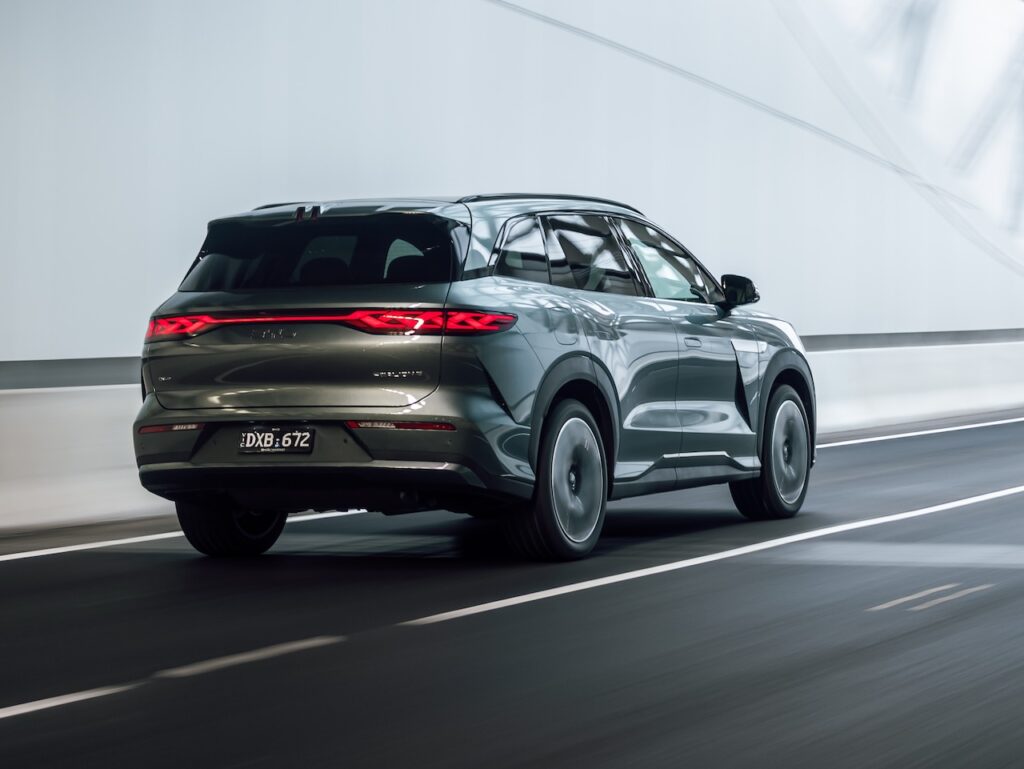
Now consider the humble, seven-seat family hauler that is the Sealion 8. Each of its electric motors – because one is not enough to make a Super Hybrid – makes 200kW, and they are mated to a turbocharged 1.5-litre engine that would make a HSV owner sneer.
All up, however, those three power sources provide this BYD with 359kW and 675Nm, which is quite a lot more than your 20-year-old GTS, and, despite, I say again, being a seven-seat family car, and one filled with premium fittings and options that would have been unimaginable in 2006, like massage seats as standard, this Sealion 8 can hit 100km/h in… 4.9 seconds. Perhaps even more remarkably, its brakes can cope with all that acceleration and the fact that it weighs 2580kg, before you put humans in it.
Is this sane?
Has the world – as many other factors suggest – gone mad?
EV Central went to the launch of this new and highly in demand vehicle – BYD says its dealers are already holding more than 1000 orders – to find out.
2026 BYD Sealion 8 Premium AWD price and equipment
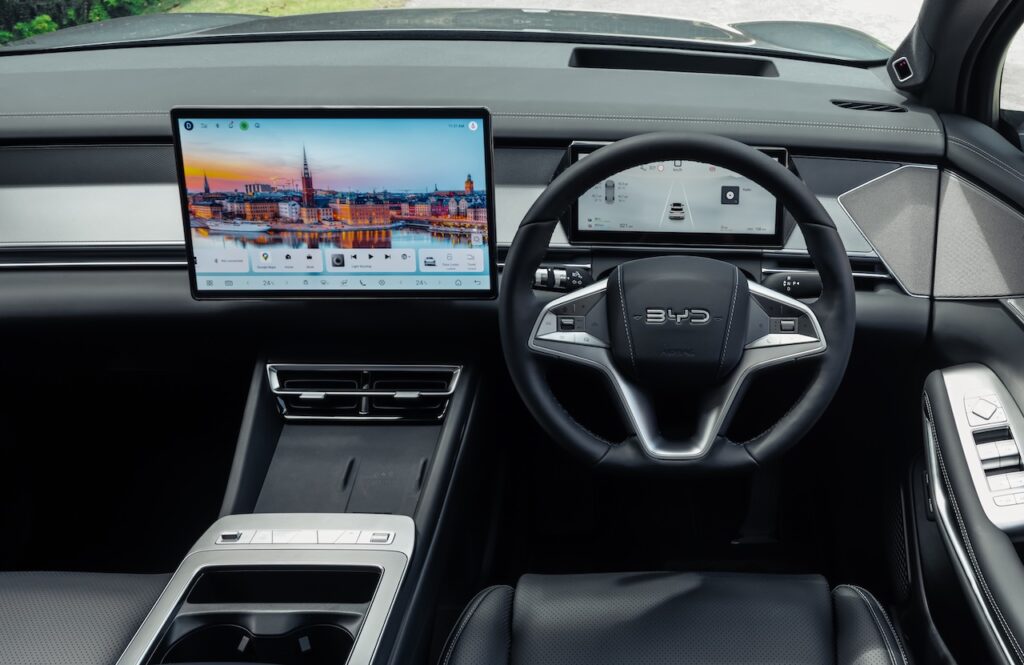
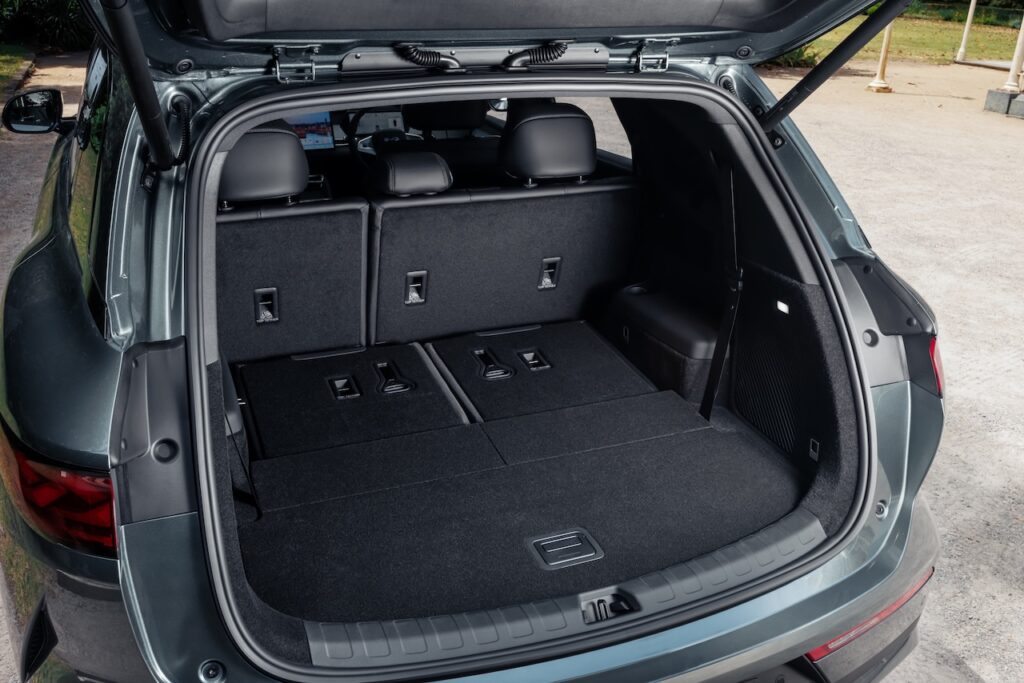
So keep in mind those mad power and acceleration numbers and the size of the vehicle we’re dealing with (5040mm/1996mm/1760mm) and then throw in the standard equipment, which includes heated and vented seats that also have a properly enjoyable massaging function, a 21-speaker 1500-watt stereo system, wireless everyone, a 10.25-inch driver’s display and a 15.6-inch central touchscreen, with “intuitive swiping” (I believe this is what Winona Ryder suffered from) and/or voice control.
Then consider just some of the technology on offer, including BYD’s clever Blade battery, plus a powertrain that’s “approaching F1 levels of thermal efficiency” and Intelligent Damping that can adjust your suspension every two milliseconds for an adaptive ride.
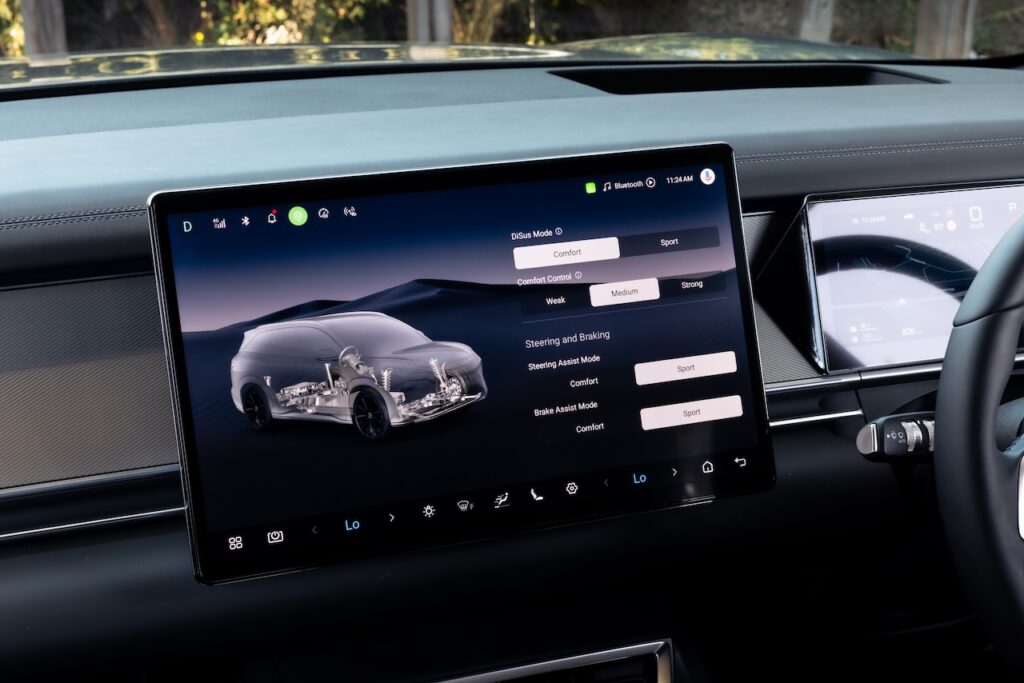
BYD calls this system DiSus-C, which I’m pretty sure is also the name of a very popular guitar chord used by both Guns’N’Roses and Poison.
Sadly, every car has its thorns, and in this case it might be just how impressive the Sealion 8 looks from a distance, and particularly through the glow of its lengthy spec sheet, which makes it sound like a circa $100,000 car.
Jump inside, however, and it doesn’t quite feel as expensive or premium as it sounds. It’s hard to put your finger on exactly why, but just try putting your finger on any of the materials and it will become clear. For instance, while the seats are generally comfortable – and the FREE INCLUDED MASSAGE is very good – the head rest feels like a leather-wrapped coward punch.
Still, with all that in mind, you should be prepared to be floored by the price because the BYD Sealion 8 Premium AWD flagship of the three model range with everything included costs just $70,990, and despite any and all misgivings I might have about perception of quality, that’s one hugely impressive bargain right there, and it’s no surprise to hear that so many people are interested in at least test driving one.
2026 BYD Sealion 8 Premium AWD: What we think
Again, this could just be me, but I have a feeling that a lot of men, and probably quite a few women, suffer from a desire to engage in what can only be called “let’s see what this baby will do” behaviour.
Perhaps I’m wrong, and perhaps anyone looking for a seven-seat family car that will make them feel wrapped in luxury while saving them money, both on purchase price and fuel economy – and the Sealion 8 really does shine in that area – will never put their foot down. In which case, I have to ask, why bother giving this thing so much stonking, silly power?
I say again, 359kW is a lot, but then such is the genius of battery technology and its power density. This PHEV gets a 35.6kW battery to work in concert with its petrol engine, and while it seems, at first blush, to have been used for wild fun, the really clever reason it’s there is to provide an EV-only range of 152km, which is properly impressive. Consider that the average Australian drives 30km a day and you can see how practically useful this would be.
The combined range is an impressive 1017km and the theoretical, ideal-world fuel economy is 1.1L/100km. In short, then, this is one hell of an impressive PHEV, one that really works, and follows on from the excellent and very popular work done by BYD’s big-selling Shark 6 ute.
Similarly to that big lug, there’s something very pleasant and smooth about driving the Sealion 8 in EV mode, while its endless, effortless acceleration is made even more so by its single-speed, EV-style gearbox.
In essence, if you drive it sensibly you will feel like you’ve driven a bargain and no doubt be happy with it as a practical, semi-luxurious family SUV. Indeed, even if you drive a bit enthusiastically, up to about 80 per cent, you’ll find it enjoyable.
The clever suspension works reasonably well, although its still not approaching Audi or BMW or Benz levels of refinement, and the steering is direct enough, while offering a slightly remote, or gizmo-electronic level of feel. And if you throw it through a series of bends at 80 per cent you can actually have a bit of fun.
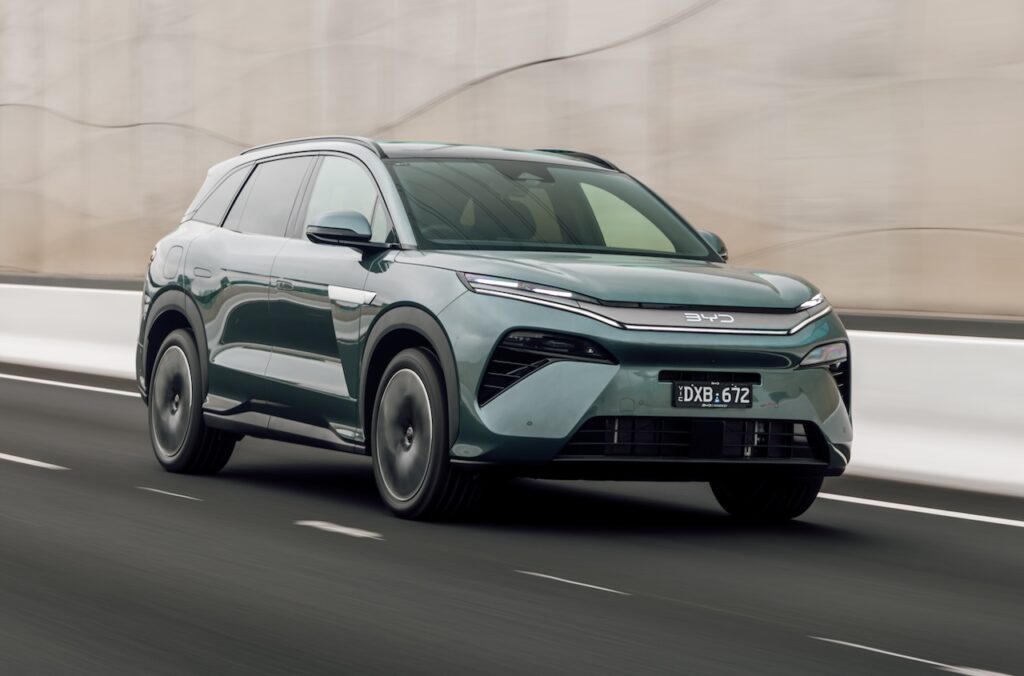
What is not advised is to fully implement all of its power and then throw it into a bend, as I stupidly did, because you will quickly discover that it has more grunt than it knows what to do with and that you can overwhelm both the vehicle dynamics and the traction systems in a quickly alarming way if you push on too hard.
But again, perhaps, most people won’t be that stupid.
2026 BYD Sealion 8 Premium AWD: Verdict
This is one wildly overpowered, occasionally amusing and most impressive SUV PHEV. With its high level of included luxury touches, low price and properly useful EV-only range, the BYD Sealion 8 is going to be a big seller in Australia for sure.
SCORE: 4/5
2026 BYD Sealion 8 Premium AWD price and specifications
Price: $70,990
Basics: PHEV , 7 seats, 5 doors, SUV, AWD
EV Range: 152km (NEDC)
Range: 1017km (WLTP)
Battery capacity: 35.6kWh LFP
Battery warranty: Eight-years/160,000km
Energy consumption: 19.9kWh/100km (ADR)
Fuel consumption: 1.0L/100km (ADR) *SOC above 25%, 6.3L/100km *SOC below 25%
Powertrain: 1.5-litre turbocharged four-cylinder petrol engine 110kW/220Nm
Motors: 1 front 200kW/315Nm, 1 rear 200kW/360Nm
Combined output: 359kW/675Nm
AC charging: 11kW, Type 2 plug
DC charging: 40kW, CCS2
0-100km/h: 4.9 seconds