2025 Hyundai Ioniq 5 Base Review: Can this entry-level EV variant keep the cheaper BYD Sealion 7 and Tesla Model Y at bay?
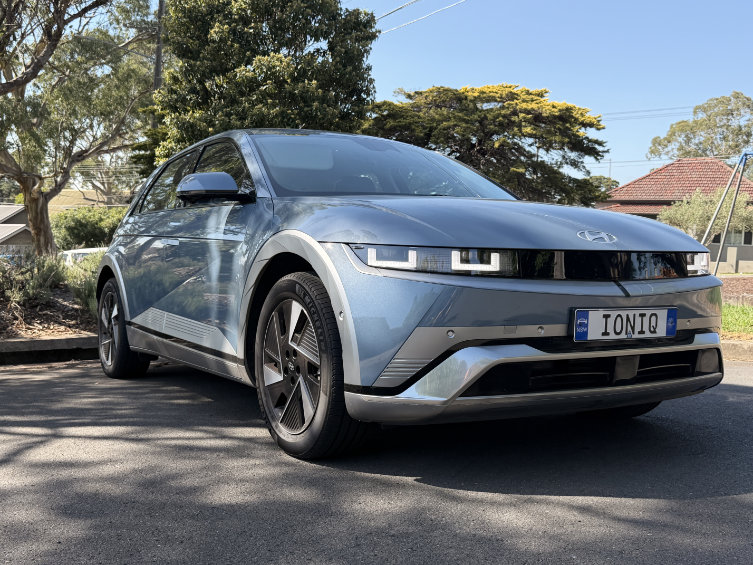
The Hyundai Ioniq 5 range has been right-sized, rationalised, insert HR jargon of choice here. The point is, the offering has been around halved, with what was once more than six options across three trim levels, two battery sizes and the choice of two- or all-wheel drive reduced to just three trim levels (Base, Elite and Premium N Line), all of which share the same 84kWh battery. Not including the Ioniq 5 N, of course, which operates in a league all of its own.
READ MORE: Geely EX5 silences the bing-bongs!
READ MORE: Kia’s Aussie EV woes: EV4 hatch not confirmed yet, EV2 SUV never likely to be
READ MORE: Another affordable EV set to land in Australia: SsangYong Torres EVX here late 2024
Anyway, that and sharp drive-away pricing, which drops the $76,200 MSRP to $71,990 on the road (offer valid till March 30 2026) , was more than enough incentive to climb behind the wheel of the cheapest Ioniq 5 to see how Hyundai’s once trail-blazing EV stacks up in 2026.
Short answer? Well.
2025 Hyundai Ioniq 5 Base price and equipment
Price is a funny old thing. I don’t think Hyundai intended the Ioniq 5 to be an outright premium offering, at least in terms of its sticker price, but the EV war – largely between Tesla and China – has seen prices plummet, and now you could argue Hyundai’s offering looks a little pricey.
Consider the Tesla Model Y, which lists at $58,900 for the cheapest rear-drive model, and steps to $68,900 for the AWD Long Range model. Or the BYD Sealion 7, which starts at $54,990 and steps to $63,990 for the Performance. Both make the $76,200 list price of the cheapest Ioniq 5 feel like quite the jump.
Crucially, the old smaller-battery version has been discontinued, meaning every 2026 Ioniq 5 now uses an 84kWh battery, delivering up to 570km of WLTP driving range in rear-wheel-drive form. Power in our entry model comes from a rear-mounted electric motor producing 168kW and 350Nm, sent exclusively to the rear wheels. In fact, it’s now only the N Line Premium that gets the 239kW AWD setup.
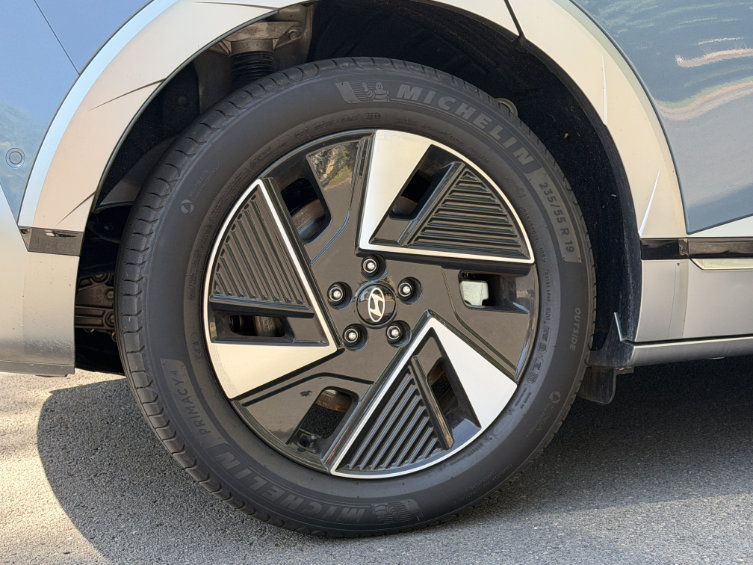
Despite being the cheapest model, the equipment level is pretty good. Outside there are LED projector headlights, flush-fitting door handles, 19-inch alloys and acoustic glass at the front and sides.
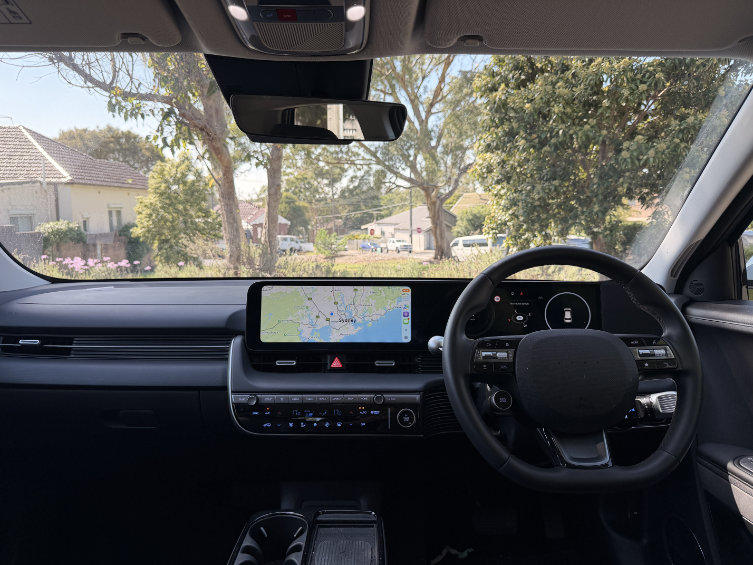
Inside, there are dual 12.3-inch digital displays, wireless Apple CarPlay and Android Auto, wireless charging, and a six-speaker stereo. The seats are wool and faux-leather, the steering wheel is real leather, and there’s a household-style power point under the backseat, which is super handy.
Elsewhere, there’s dual-zone climate control, a 10-way power-adjustable driver’s seat, sliding and reclining rear seats and enough USB ports.
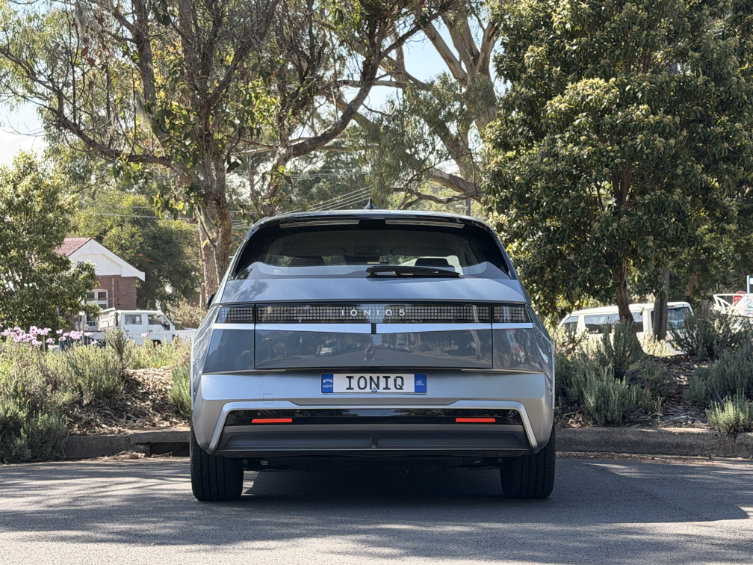
The other big change for 2026 is the launch of Hyundai’s Digital Key 2.0 – but not on the car you see pictured – meaning you can use your phone’s digital wallet to get in and go, and leave the physical key at home. There’s also connected services and over-the-air updates.
The Ioniq 5 still wears a five-star ANCAP rating, tested back in 2021, and its seven airbags are joined by a long list of active safety stuff that – thank you, Hyundai – is never overbearing and annoying.
There’s also a five-year, unlimited-kilometre warranty (seven years if all servicing is completed through Hyundai), while the battery is covered by an eight-year or 160,000km warranty. Servicing intervals are 30,000km, and Hyundai’s prepaid servicing plans cost $659 for two years or $1318 for four years.
2025 Hyundai Ioniq 5 Base: What we think
There are certain cars that come through our garage that require some mental gymnastics to figure out. Who is the buyer? What would they think of this feature, or that drawback?
The Ioniq 5 isn’t one of those cars. No gymnastics required. Because I can very easily picture myself as the buyer.
For one, the range is fantastic. Now with the long-range battery as standard, the cheapest Ioniq 5 will travel up to 570km between charges, which really is heaps. Even if you knock 70km off that to a realistic 500km, there’s not much in the way of range anxiety on board here. I have a 7kW wallbox charger at home, so I plug my test cars in overnight, but it’s also set up for ecently quick DC charging (Hyundai does not specify an exact number), which Hyundai reckons will take you from 10 to 80 per cent charged in less than 20 minutes.
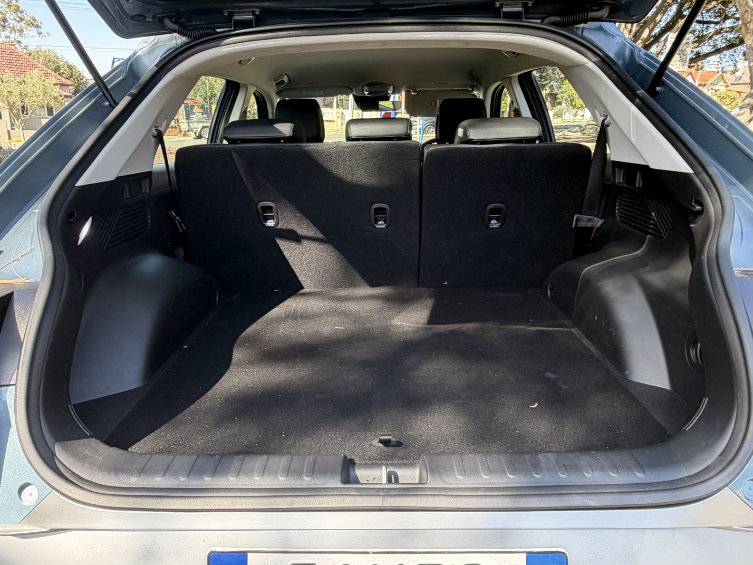
So yeah, it does the EV stuff pretty well. But it also does the driving/living stuff well, too. We have a baby on board these days, and space matters. And while not ridiculously cavernous, we’ve found the boot (527 litres with the rear seats in place) big enough for what we need, plus the spacious backseat with its fully flat floor is a family helper, too.
On the road, there’s been little change in the way our car drives (other than how far it travels), but that’s no loss here. The Ioniq 5 is a smooth, easy-driving EV, and one that offers a connection between car and driver sometimes missing from the new breed of Chinese electric vehicles.
It’s up there with the Kia EV6, the Tesla Model Y Juniper and the RWD Polestar 2 as one of my favourite-driving EVs, and you really don’t miss the punch of the dual-motor powertrain with the single motor’s 168kW and 350Nm.
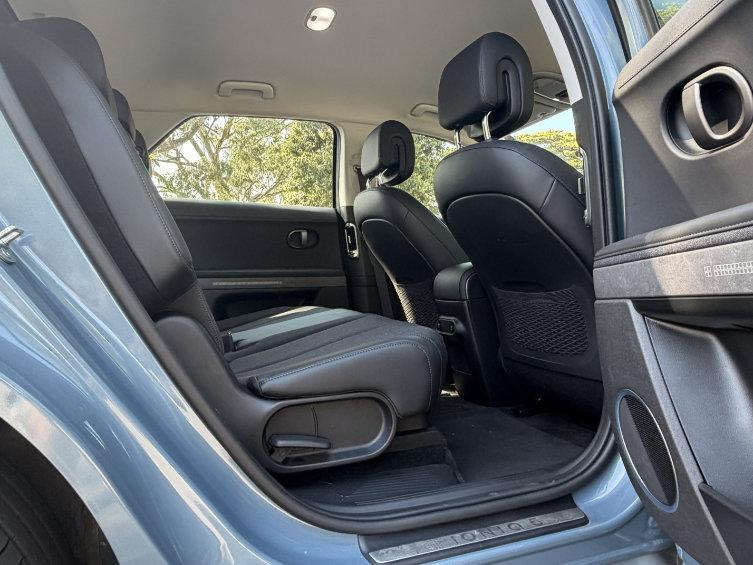
Downsides? It feels expensive. Sure, once you peel back the layers (the architecture, charging speeds, battery size and range) it makes more sense, but that’s hard to immediately grasp, and the RWD Model Y, with its 466km range, and even the Model Y Long Range, which will travel a massive 600km, feel like more value-packed buys.
Plus, call me old fashioned, but at $70-plus-thousand, I want a powered boot and heated seats. There are places in which this feels a little too stripped back.
2025 Hyundai Ioniq 5 Base: Verdict
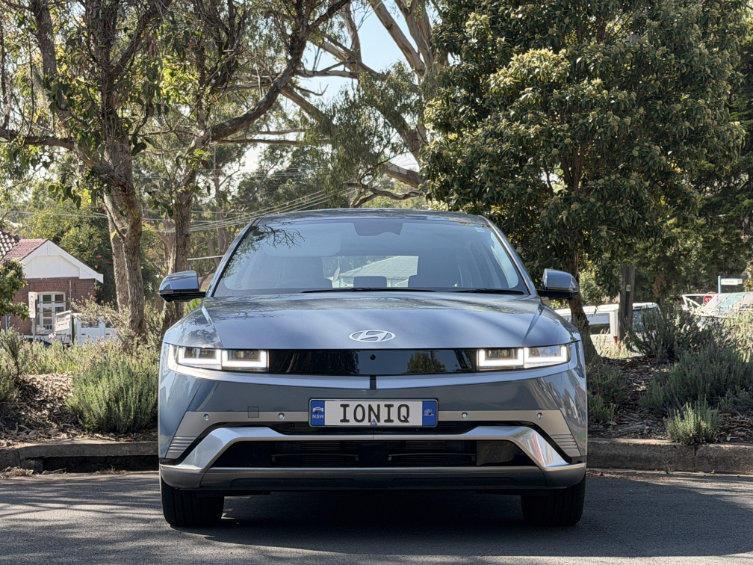
A still high-quality offering, albeit in the face of strong and cheaper competition, the Ioniq 5 feels super liveable. Charming driving dynamics, a strong usable driving range, a high-tech cabin and super-fast charging combine well here, even if it does feel a little under-specced in places.
SCORE: 4/5
2025 Hyundai Ioniq 5 Base price and specifications
Price: $71,990 drive-away (special offer)
Basics: EV, 5 seats, 4 doors, RWD
Range: 570km (WLTP)
Battery capacity: 84kWh
Battery warranty: 8 years/160,000km
Energy consumption: 15.5kWh/100km
Motors: 168kW/350Nm rear
AC charging: 11kW, Type 2 plug
DC charging: 350kW, CCS combo plug
0–100km/h: 8.5 seconds (estimated)