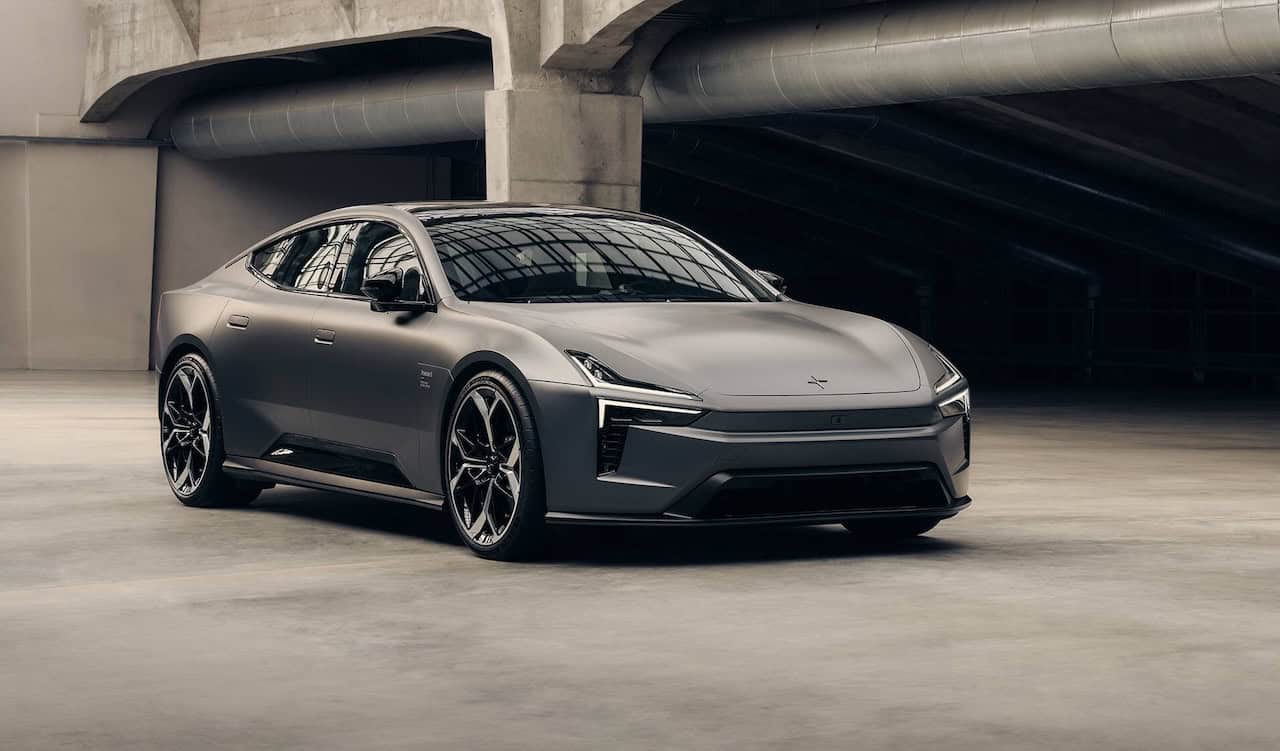
Polestar 5 cradle-to-gate emissions revealed: Luxury EV maker accounts for new GT’s CO2e emissions
Polestar has released a full life cycle assessment (LCA) for its upcoming Polestar 5 electric grand tourer, detailing the vehicle’s total carbon footprint from raw material extraction through to production, as the brand continues to position itself around transparency on emissions.
A four-door electric GT with outputs of up to 650kW and a claimed WLTP driving range of up to 678km, the 5 is due on-sale in Australia this year.
The Swedish EV maker says the Polestar 5 has a cradle-to-gate carbon footprint of 23.8 tonnes of CO₂ equivalent (tCO₂e), covering emissions generated from sourcing materials, manufacturing and delivering the vehicle to customers.
READ MORE: Polestar 5 debuts: Australian pricing, options and supercar performance confirmed for Audi e-tron, BMW i5 and Porsche Taycan luxury rival
READ MORE: Take Five! New Polestar 5 flagship snapped testing in Australia months before its global launch
READ MORE: Another battery breakthrough! Polestar 5 shows off ultra-fast 370kW EV charging
The figure places a spotlight on where emissions are concentrated, with materials accounting for the largest share of the vehicle’s production impact.
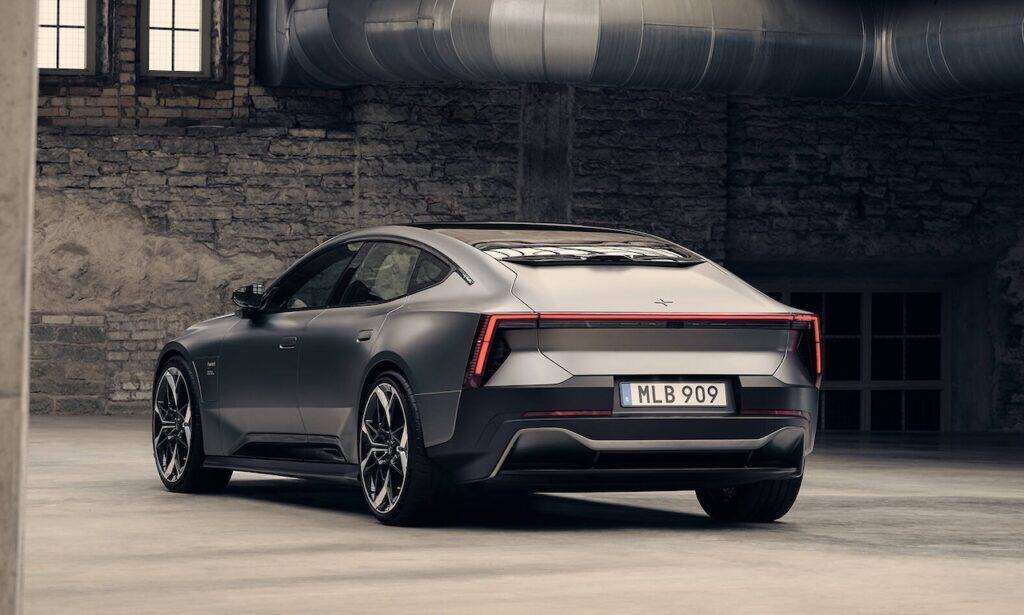
According to the LCA report, around 60 per cent of cradle-to-gate emissions come from material production and refining, with battery modules contributing a further 29 per cent and manufacturing and logistics making up the remainder.
Polestar said it has focused on reducing emissions in high-impact areas such as aluminium, which is typically one of the most carbon-intensive materials used in vehicle manufacturing.
For the Polestar 5, 83 per cent of aluminium is sourced from smelters powered by renewable electricity, while recycled aluminium is also used, contributing to a reduction of more than 14 tCO₂e per vehicle compared with conventional sourcing.
Battery production remains a significant contributor to overall emissions, but the company says this has been mitigated through the use of renewable electricity in the production of battery cells and key materials.
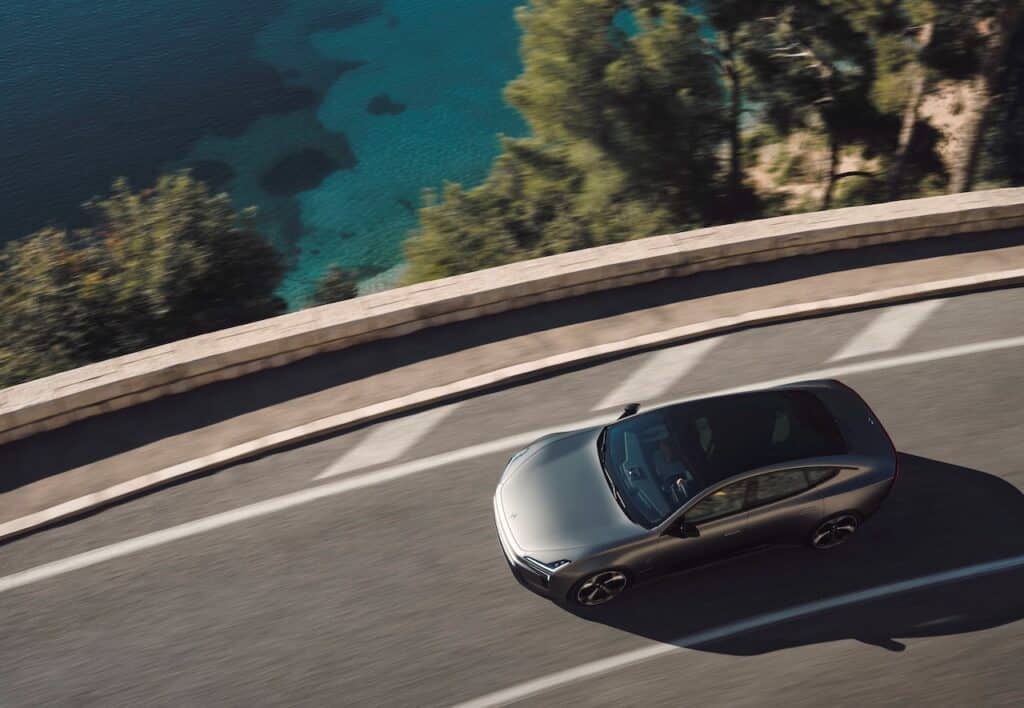
The LCA indicates battery modules account for nearly a third of production emissions, despite efforts to lower their impact.
Looking beyond manufacturing, Polestar estimates the Polestar 5’s total lifecycle emissions at 38.6 tCO₂e when assessed from cradle-to-grave using a global electricity mix over a 200,000km lifespan.
The use phase accounts for about 31 per cent of total emissions, with material production remaining the single largest contributor across the vehicle’s life.
The report also highlights the influence of energy sources on overall emissions, noting that renewable electricity – particularly wind power – can significantly reduce the vehicle’s lifetime carbon footprint during the use phase.
Polestar has published LCAs for all models in its line-up since 2020 and claims to be the first carmaker to disclose full carbon footprints across its entire range.
The company says the approach is designed to identify emissions hotspots and support efforts to reduce the climate impact of future vehicles.
Compared to other Polestar model LCAs the 5 is placed broadly in the middle of the brand’s current line-up.
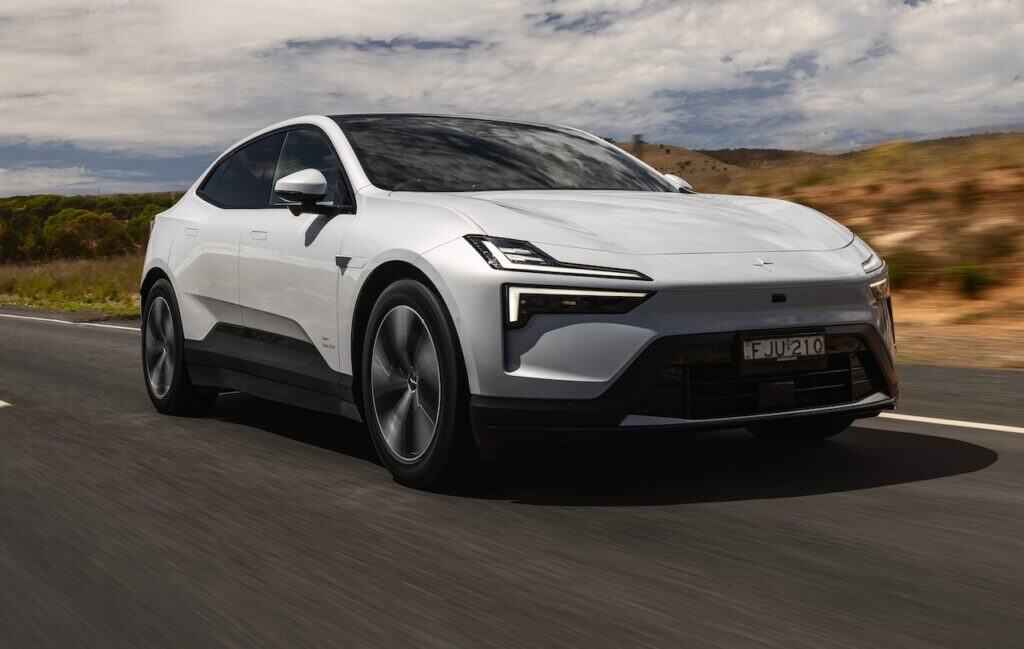
That figure is lower than the large Polestar 3 SUV (24.7 tCO₂e), roughly in line with the latest updated versions of the Polestar 2 (around 22–23 tCO₂e), but higher than the Polestar 4, which currently represents the brand’s lowest-emissions vehicle at roughly 19–21 tCO₂e.
The result highlights the influence of vehicle size, weight and performance, with the high-output, large-battery Polestar 5 unable to match the lower embodied emissions achieved by the smaller, more efficiency-focused Polestar 4.
The comparison also reinforces a consistent trend across Polestar’s LCAs: material production and battery manufacturing dominate total emissions, accounting for the majority of the footprint before a vehicle even reaches the road.
While Polestar 5 benefits from increased use of renewable-powered aluminium and lower-emissions battery production, gains are partly offset by its scale and performance positioning.
As a result, the latest LCA suggests further reductions will rely less on incremental efficiency improvements and more on breakthroughs in low-carbon materials and battery supply chains.
Cradle-to-gate CO₂e (t) – Polestar models
Polestar 4   | ████████████████  ~19–21
Polestar 2   | ███████████████████  ~22–23
Polestar 5   | ████████████████████  23.8
Polestar 3   | █████████████████████ 24.7
Fredrika Klarén, Head of Sustainability at Polestar, said: ”You cannot reduce what you don’t measure. Making the carbon footprint of a car visible helps focus the industry on where emissions occur, particularly in materials and manufacturing. That transparency is essential if we want to scale the low-carbon materials, renewable energy and circular solutions needed to reduce the climate impact of cars.”