PM’s warning to Chinese car companies
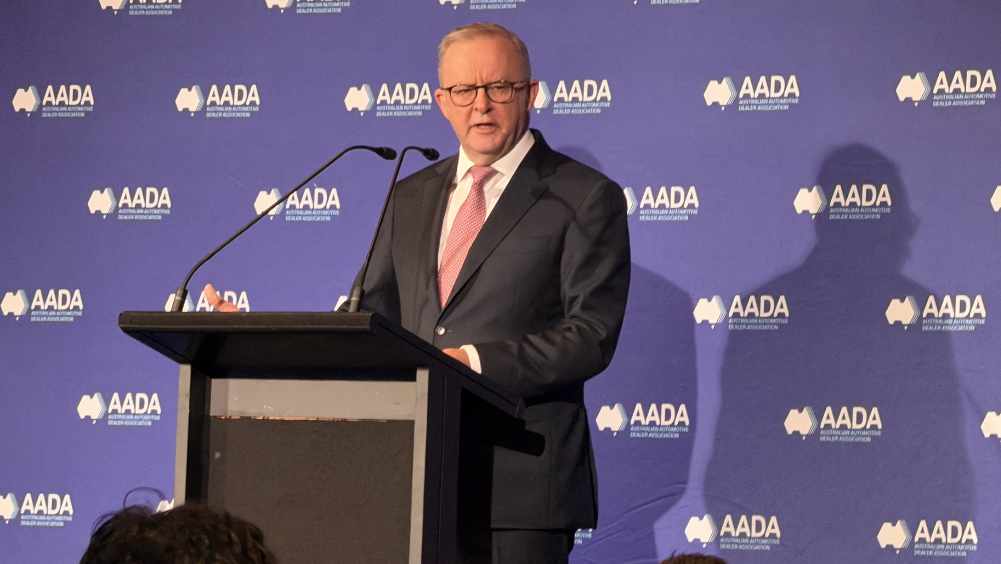
Prime Minister Anthony Albanese used his keynote address at an Australian Automotive Dealer Association (AADA) conference in Sydney to warn new car companies in Australia that they must meet standards around servicing, not just sales.
In what appeared to be a lightly veiled reference to the influx of Chinese brands that have either recently launched, or will soon launch in Australia, the PM said they couldn’t expect to rely on sales volumes alone.
The Labor Government will also this year introduce legislation aimed at protecting Australia’s approximately 3800 automotive dealerships from what it says is an unfair power imbalance in which international car makers stymie negotiation, refuse payments or impose “excessive audit powers”.
READ MORE:
Farizon V7E electric van confirmed for Australia: Says it will rival diesel vans on capability
The most popular postcodes for buying EVs revealed
Plug in that name: Chery launches Aussie competition to name its diesel-electric ute!
“When we came to government in 2022, we outlawed unfair contract terms for small businesses and consumers. And for the first time, we gave the ACCC and ASIC the power to seek penalties against companies that breach these laws,” Mr Albanese said.
“Now we’re building on that, expanding these small business protections to include all franchise holders registered under the franchising code. The government has heard directly from many of you about how difficult it can be for a local dealer to negotiate with a global manufacturer. As a result, too many dealer agreements include unilateral variation clauses, excessive audit powers, (and) termination rights that sit solely with original equipment manufacturers.
“Formal consultation on these reforms is complete, and as we move ahead, we’ll continue to engage with the AADA and directly with business owners to get these changes right.
The legislative changes — which are yet to be fully detailed — will also be aimed at protecting consumers, with Mr Albanese suggesting dealerships were left out of pocket for doing “the right thing by customers” without being reimbursed by automotive manufacturers.
“We will take this same cooperative approach with supplier indemnification and consumer guarantees. A dealer should not suffer financial loss for doing the right thing by the customer. Yet those stories are ones that you’ve shared with us — manufacturers delaying approval, denying reimbursements, or trying to claw back authorized payments,” Mr Albanese said.
“We want Australians to be able to choose from the broadest possible range of vehicles and manufacturers at the best possible price. And we want to make it clear to companies new to the Australian market that they also have to meet standards around service, not rely on volume alone.”
Mr Alabanese’s comments will come as music to the ears of the AADA, which says its members are suffering from”unfair trading practices” as the new-car business becomes increasingly crowded and competitive.
“As international competition in Australia’s automotive market intensifies, franchised new car dealers are increasingly facing pressure from multinational manufacturers through unfair trading practices and contract terms that exploit the clear power imbalance in the sector,” says James Voortman, CEO of the AADA.
“As local new car dealers are squeezed, it will ultimately be Australian customers who pay the price through less investment in local jobs and reduced access for regional communities.
“It is therefore, absolutely vital that the Government implements the commitments made prior to the election to extend unfair contract terms to all new car franchisees and to develop an unfair trading practices prohibition for franchisees.
“In the past five years, 28 brands have been set up in Australia. However, an increase in the number of brands has not resulted in increased profits. If this trend continues, we certainly don’t want to end up in a situation where we’re seeing dealerships closed, and local jobs lost.”