
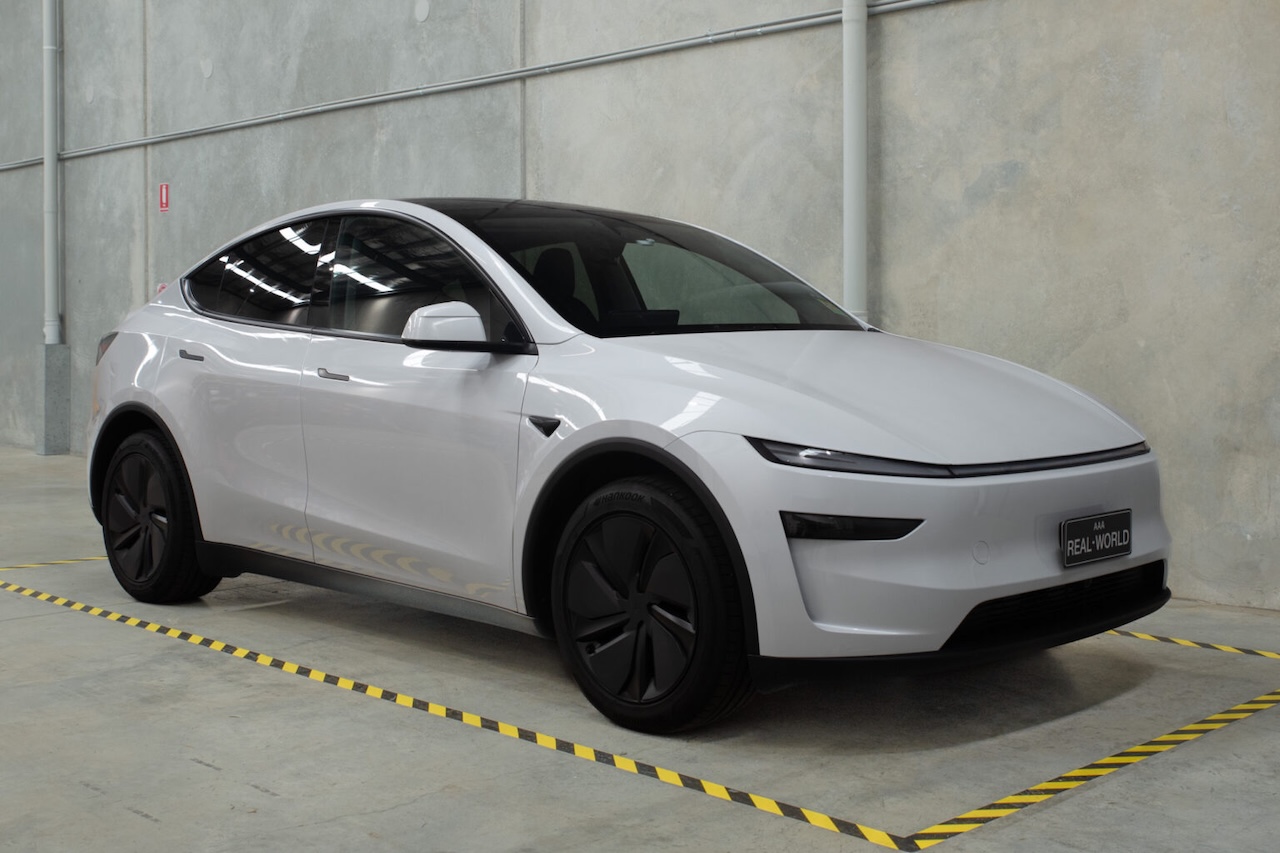
Latest AAA real-world EV range test results are in: Tesla Model Y triumphs while MG4 disappoints.
EV-makers have been caught out again when it comes to delivering the advertised range in real-world conditions.
In the latest round of testing on Australian roads, it was the facelifted Juniper Tesla Model Y Rear Wheel Drive that was found to come closest to replicating its laboratory test result.
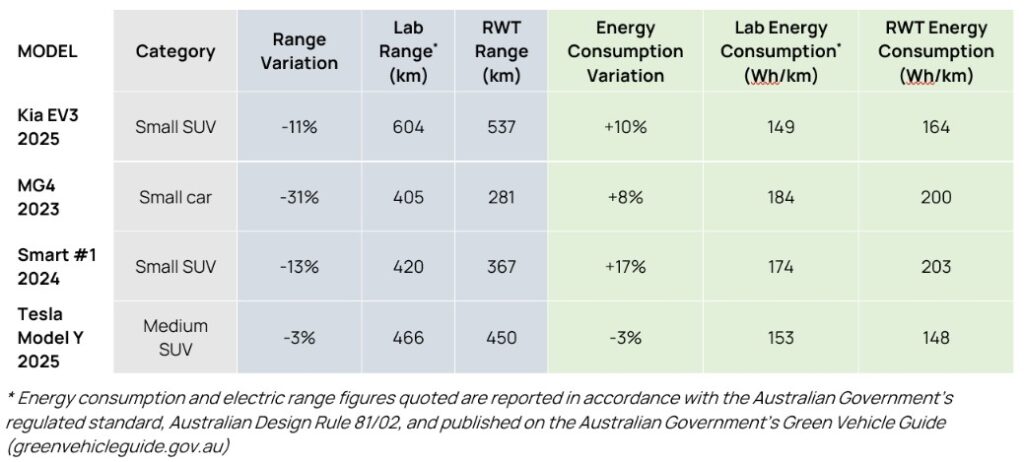
The mid-size battery-powered SUV covered up to 450km on a single charge. That figure was three per cent, or 16km shy, of its claimed range.
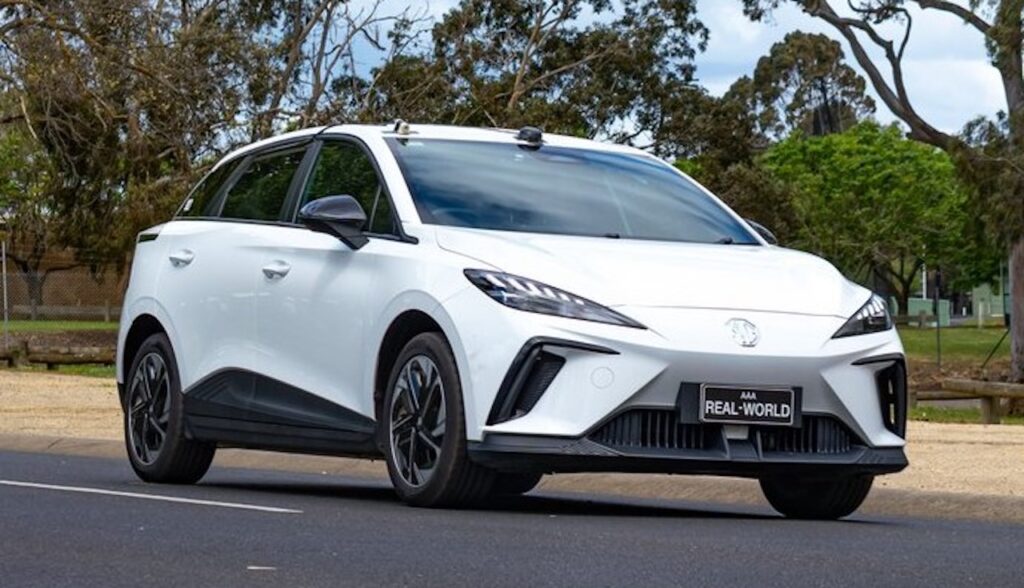
At the other end of the range spectrum, the MG4 Excite 51 could only drive up to 281km on a single charge, a considerable 31 per cent off the 405km claimed range displayed on its window sticker.
The AAA has carried out real-world testing on 131 combustion-powered, hybrid and EVs and has found around 76 per cent of all vehicles are less efficient than claimed.
Supported by Commonwealth funding, the AAA testing involves a 93km circuit in and around Geelong, Victoria.
It involves what are described as “strict test protocols” based on European regulations that help guarantee repeatability and minimises human factors like driving style and changing traffic flows.
To accurately calculate the EV range, testers measure both the energy needed to drive the route and then record the total amount of energy needed to recharge the depleted battery.
As well as the MG4 and Model Y, in the latest batch of testing the AAA found the Kia EV3 Air Long Range small SUV could drive up to 537km on a charge – 67km less than its window sticker – equating to a variation of 11 per cent compared to the 604km claimed range.
The final car tested, the Smart #1 Pro+ also couldn’t repeat its lab result, with the small SUV only able to travel up to 367km on a charge, 13 per cent adrift of the manufacturer claims.
Confusingly, the mechanically similar Smart #3 drove up to 432km on a charge which was just five per cent off the claimed range figure.
Helping calculate and compare real-world range is vital for buyers to make an informed choice, argues AAA managing director Michael Bradley.
“These results give consumers an independent indication of real-world battery range, which means they now know which cars perform as advertised and which do not.
“Giving consumers improved information about real-world driving range means buyers can worry less about running out of charge and make the switch to EVs with confidence.”
Motivating the creation of an Australian testing program was 2015 Dieselgate scandal following the German car giant Volkswagen being found to be using software to cheat vehicle emission tests.
As the owner and driver of EVs for close to 6 years, I know that the attainable range can vary for many reasons including ambient temperature and wind speed/direction. These are not controlled in a road test and many not even be recorded.
The advantage of a laboratory test is that we should be comparing apples with apples. However, if testing is carried out in different jurisdictions, maybe apples aint apples?
Real world tests are meaningless. Things like air temperature, wind speed and direction and traffic conditions can have a huge affect. That is why we have laboratory tests. Any thing else is just BS. I know for a fact a 20 km/hr head wind can increase consumption by 10%.
Hi I drive an Ev3 air long range.
After 20,000 klms mixed driving my average is 12.9kwh/100klms. Which is better than claimed.
This is what I call real world driving, not lab results nor so called AAA one off testing.
Just the usual bull shit. The range depicted on the windscreen or vehicle specs is done to a standard ( presumably WLTP). To determine whether the manufacturer has fudged the range, you need to test the vehicle to the WLTP standard (or whichever standard the vehicle manufacturer has used). There is no “real world” test. Someone conducting a “real world test” by driving around a circuit near Geelong is not going to be relevant to the daily driving habits of several million other Victorians. What I get out of the WLTP test data is that an ev with a WLTP range of 500km should go about 20% further than an ev with a WLTP range of 400km, in similar driving conditions.