
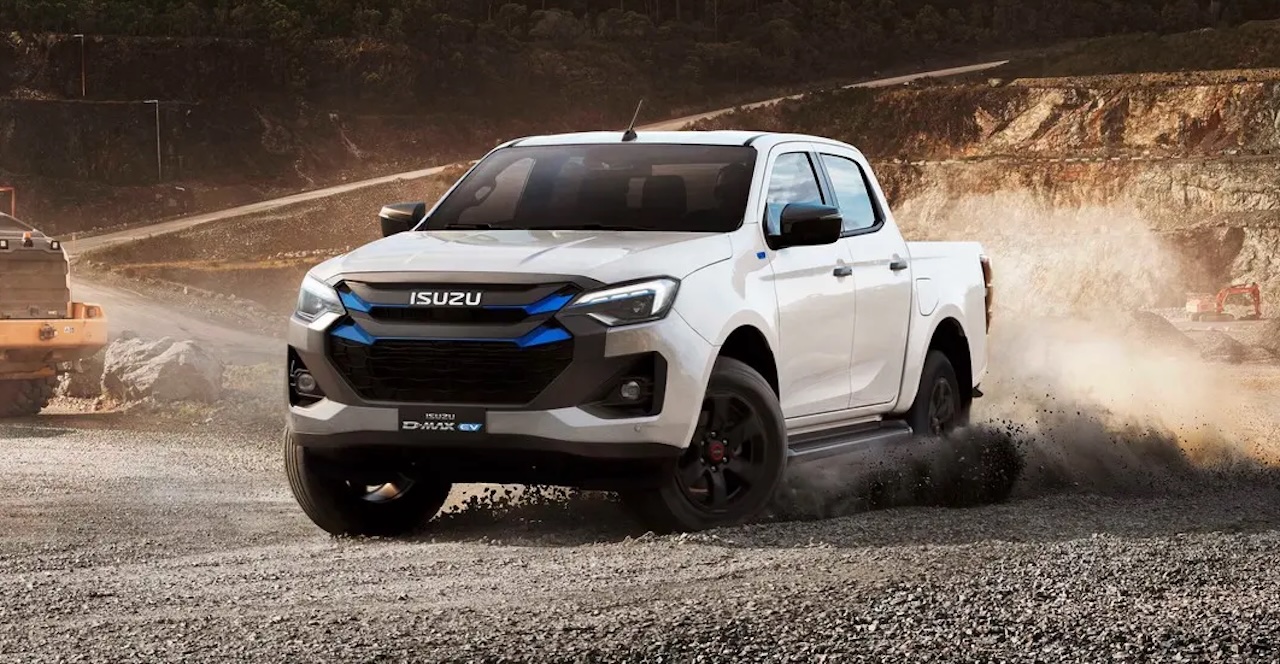
Isuzu D-MAX EV debuts: $100K price and short range mounts a good argument for PHEV utes
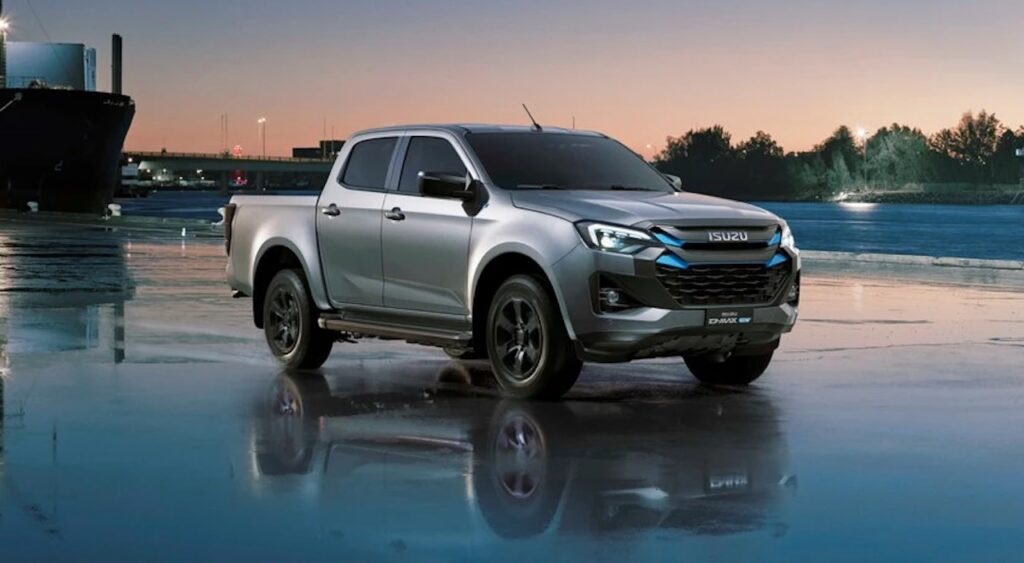
The battery electric version of the Isuzu D-Max ute has debuted in right-hand drive in the UK priced at the equivalent of more than $100,000.
While confirmation of its local sale – let alone pricing – is yet to be officially announced, UK pricing for the top-of-the-range D-MAX EV eV-Cross has been released with the British-spec ute costing an alarming £59,995, excluding a 20 per cent tax.
That equals $123,000 in Australia, give or take a bit of spare change.
In EV-friendly left-hand drive Norway, the D-Max dual cab is still priced from the equivalent of an eye-popping $112,000.
READ MORE: NVES Strikes! Ford Everest and Isuzu MU-X diesel SUVs are culled to avoid CO2 emissions fines
READ MORE: Isuzu vows to stay in Australia: Plug-in hybrid research revealed, but questions over D-Max EV confirmation
READ MORE: Locked in: Isuzu D-MAX EV ute gets green light for Australia to fight incoming electrified Ford Ranger and Toyota HiLux
In the UK the D-Max EV charges a hefty £20,095 premium ($41,000 approx) over the flagship turbo-diesel V-Cross that sells for £40,900.
Apply the same price differential to Australia’s high-grade D-MAX X-Terrain ($70,500 plus on-roads) and the new D-MAX EV will arrive with a punchy $108,000 (plus on-roads) price tag.
At that money, unless the local outfit absorbs some of the new high costs, the D-MAX EV will command a significant price premium over even the maligned LDV e-T60, let alone the diesel utes that dominate the segment and the PHEV utes that are emerging as a more logical alternative here than battery electric in at least the short to medium term..
Worse for Isuzu, the rear-wheel drive LDV which is priced from $92,990 (before ORCs), travels up to 330km on a charge, versus the D-MAX’s paltry 263km.
However, the new D-MAX EV can match the eT60 for its 1000kg payload and tow up to 3500kg (braked) – three-and-a-half times what the LDV can manage.
Based on an adapted version of the same ladder-frame chassis as the diesel-powered version, the Isuzu also comes with all-wheel drive, thanks to a dual-motor powertrain that produces 140kW and 325Nm of torque.
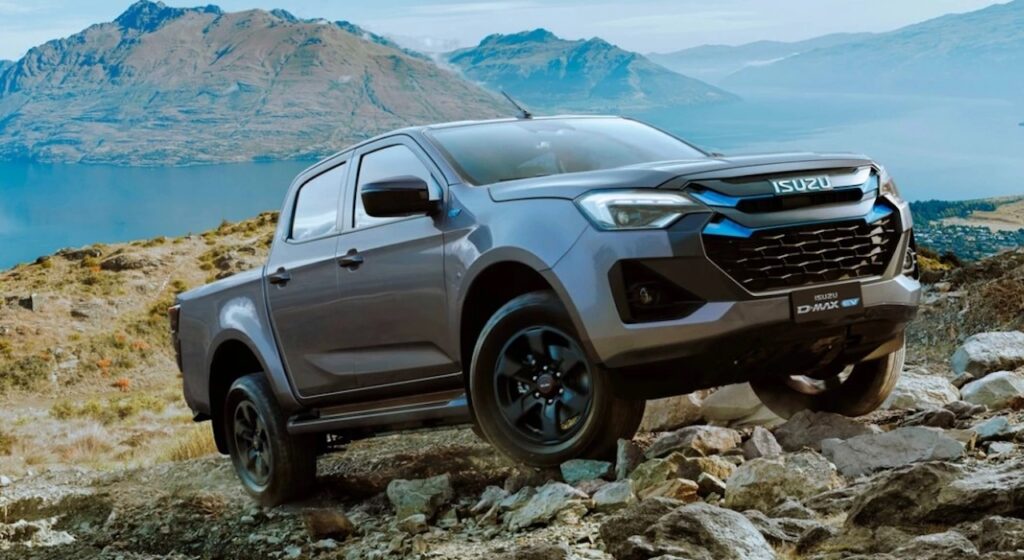
With its extra driven pair of wheels, the Isuzu ute should be able to go far further off-road than many EVs and the Japanese car-maker has also equipped it with a traction-enhancing Tough Terrain mode.
There’s also a decent 210mm ground clearance and an independent front and De-Dion rear suspension. Isuzu also says its EV ute is rated to wade water at a depth of up to 600mm.
What lets the side down for someone switching from the turbo-diesel D-MAX (that could be as much as $30,000 cheaper) is the electric version has a 66.9kWh lithium-ion battery that can only cover the aforementioned 263km between charges and is also slow to top-up.
Plug it in and DC charging is capped at 50kW, while AC top-ups are limited to j11kW. That means a 20-80 per cent DC recharge takes 60 minutes, and a full AC charge a tedious 10 hours.
While exact specification for the Aussie-spec D-Max EV has yet to be revealed, in some markets the new EV powertrain will be offered in two trims, with the choice of extended cab or double cab body styles.
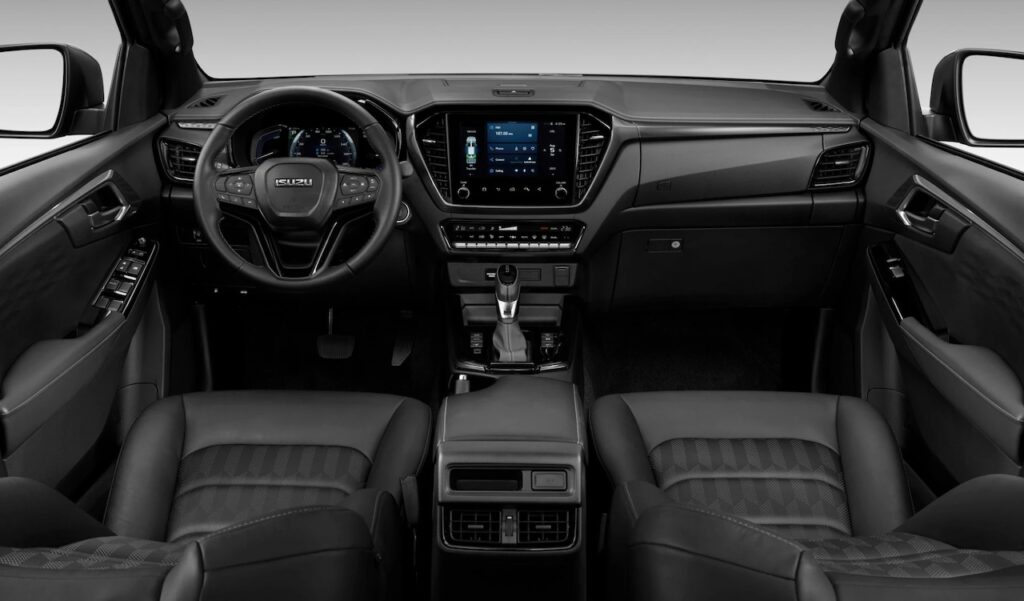
Lower grade versions of the new EV variant come with an 8.0-inch infotainment system, a six-speaker sound system, 7.0-inch digital instrument cluster, heated front seats, LED headlights, leather seats, dual-zone climate control, front and rear parking sensors and traction-boosting Rough Terrain Mode.
The range-topping X-Terrain trim adds a larger 9.0-inch infotainment, an auto-dimming rear-view mirror and an eight-speaker premium sound system – but only in the double-cab body.
While Isuzu Ute Australia is yet to confirm either local pricing or when the all-electric D-MAX will land, it’s been speculated its arrival Down Under will coincide with the British version’s launch in early 2026.

The Japanese just can’t make an EV.