
Hyundai’s damning self-assessment: “We do a terrible job with our EVs,” declares local boss, as Tesla, BYD and Kia sprint away in electric sales race
The local boss of Hyundai has lambasted his own company’s efforts to sell EVs in this country.
Hyundai Australia CEO Don Romano told journalist at last week’s Ioniq 9 luxury SUV launch that it had done a “terrible job”.
But Romano, who has only been running the show in Australia since April, has vowed to do better.
READ MORE: Hyundai Ioniq 9 pricing and spec announced: Electric family SUV will be offered in Australia as one expensive model
READ MORE: 2026 Hyundai Ioniq 6 N lands with devastating performance! four-door track-bred EV is a super-fast family hauler
READ MORE: 2025 Hyundai Inster review: $1 to go 100km as new EV pairs small car frugality with a big personality for a fresh alternative to the BYD Dolphin and MG4
“We do a terrible job with our EVs – on the record,” he said.
“We are not doing the job we should be. Our market share of electric vehicles is extremely low relative to our market share of total vehicles.
“And the only explanation for that is that we haven’t put enough focus on it.
“I can see other car companies that are selling electric cars that are doing a much better job with their EVs than they do with their ICE. We’re the opposite.
“So we spent some time in the months that I’ve been here really discussing what’s at the root of that.”
To the end of June 2025, Hyundai has sold 863 EVs in Australia. Tesla has sold 14,146, BYD 8314 and fellow Hyundai group auto brand Kia 4402. Brands separating Hyundai from the top three include BMW (3090), Mercedes-Benz (1581) and Volvo (1333).
Romano promises Hyundai’s renewed EV effort will include better marketing and communications and more support and education for the Hyundai dealer network, which was only allowed to start selling Ioniq sub-brand EVs from May 2024.
Romano is also in the final stages of vetting of the Chinese-built Hyundai Elexio electric medium SUV, which will deliver the brand a cost competitive model in Australia’s most popular EV segment against the likes of the Tesla Model Y and the Kia EV5.
EV Central understands that vehicle is basically a lock for Australia.
“It’s under evaluation right now. It’s definitely a promising vehicle,” Romano said.
“I still have work to do to ensure that it’s the right vehicle in the right segment at the right price for our market. And I have not reached that level yet.
“I have to [make a decision] in the next 60 to 90 days. And so if you check with me in three months, I’ll give you a definitive answer.”
Romano is also keen to get to grips with the Ioniq 2 EV that will launch at the Munich IAA in September.
It will sit in the global Hyundai line-up between the Inster and the Kona electric.
“It’s a potential opportunity, but I don’t have enough details to get to it,” he said. “So at this point, I’m glad we’re showing it. I’m glad we’re producing it.
“Now I just need to get the details and find out, will it fit into our overall product plan and create enough demand to where it becomes a viable option for us? So my initial thought is absolutely. Yep.
“I don’t have enough details to be definitive on it.”
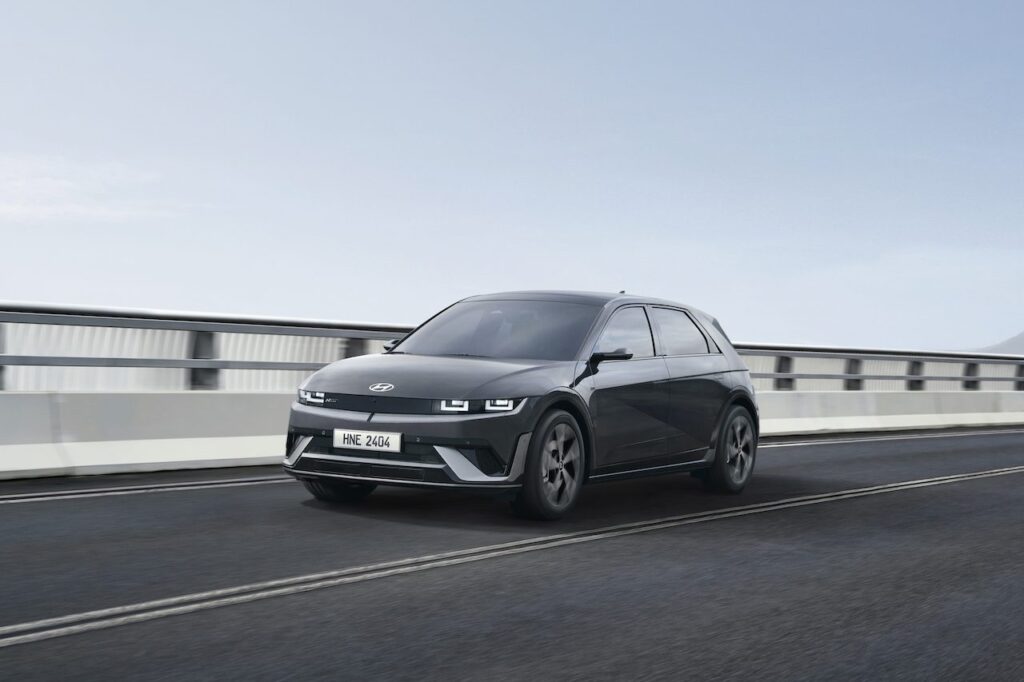
Hyundai Australia has not capitalised on its position as an early EV adopter in this country, launching the Hyundai Kona Electric and Ioniq Electric in 2019.
It expanded the Ioniq name into a sub-brand with the launch of the Ioniq 5 SUV in 2021, followed by the Ioniq 6, the Inster and the Ioniq 9.
The tiny Inster is it cheapest model at $39,000 plus on-road costs and is undercut by the cheapest Chinese offerings.
Romano identified Hyundai’s initial decision to sell Ioniq EVs direct over the internet to customers rather than via dealers as a mistake.
“We have a job to do to get our dealers back in the game,” he admitted.
He said the next step will be a broader EV marketing campaign to exploit that shift to dealers.
“We are looking at what we can do probably later this year early into next year around our electric vehicles more broadly,” he said.
“We need to really completely change the way in which we interact with our dealers and communicate and train and market and then help them market to customers that are interested in EVs.”

Inster, harumph. If you get the long range model and add ORC it pushes closer to $50K. Absolutely hopeless. It’s less appealing in looks than a $25K Suzuki Ignis. The schedule for EV/ICE parity seems to be lagging. With the MG4 price increase, it’s going in reverse!
My experience, at a large dealer, is the disinterest of most sales staff to trying to sell EVs, particularly in the Hyundai dealership near me, in Perth. The younger staff are keener.
Fortunately, with 13 years pure EV experience, I was comfortable to order online direct from Hyundai, that order after selling my first Hyundai EV privately.
Personally, I would prefer to avoid a dealership middle profiteer, and deal direct with manufacturer.
Since after sales service income is reduced with EV sales, the dealerships could add fast chargers for extra revenue. This would help home renters who cannot install home chargers.
Dealerships are challenged.
Word of mouth is a very important sales vector with new technology, something Tesla clued onto.
Hyundai doing a way better job than Nissan dealerships and leadership did, though not high bar to jump over.