GWM Cannon Alpha Ultra PHEV Seven-Day Test: The plug-in BYD Shark alternative for proper off-roaders.
The BYD Shark may steal headlines and sales numbers, but GWM’s huge Cannon Alpha dual cab is the plug-in for those demanding a ute for heavy duty off-road work.
While the now ubiquitous Shark lacks a dual-range transfer case and its towing’s limited to 2500kg, our Alpha can pop into low range for challenging surfaces work, or haul 3500kg on a tow ball.
Such abilities, allied to decent inclusions, help this Cannon Alpha PHEV look solid value at $57,490 drive-away in Lux grade, or $64,990 on the road in our as-tested Ultra guise for ABN holders. At time of writing, GWM’s offering an additional $6000 off the Lux and $4000 off the Ultra, which is seriously punchy.
The BYD Shark is from $57,900 before on-roads, or around $60,500 drive-away, so these rigs are price competitive.
READ MORE: 2025 GWM Cannon Alpha PHEV off-road test review.
READ MORE: 2025 GWM Cannon Alpha PHEV first Australian review.
READ MORE: Think the plug-in Ford Ranger PHEV isn’t capable enough? I just drove one up an active volcano in Iceland
The only other plug-in hybrid dual cab on the market is Ford’s new Ranger PHEV; a smaller size ute starting at a chunkier $71,990 plus on-roads.
Our Cannon Alpha uses a 2.0L four-cylinder turbo petrol good for 180kW and 380Nm. Then there’s an electric motor sandwiched between the engine and gearbox, adding another 120kW and 400Nm.
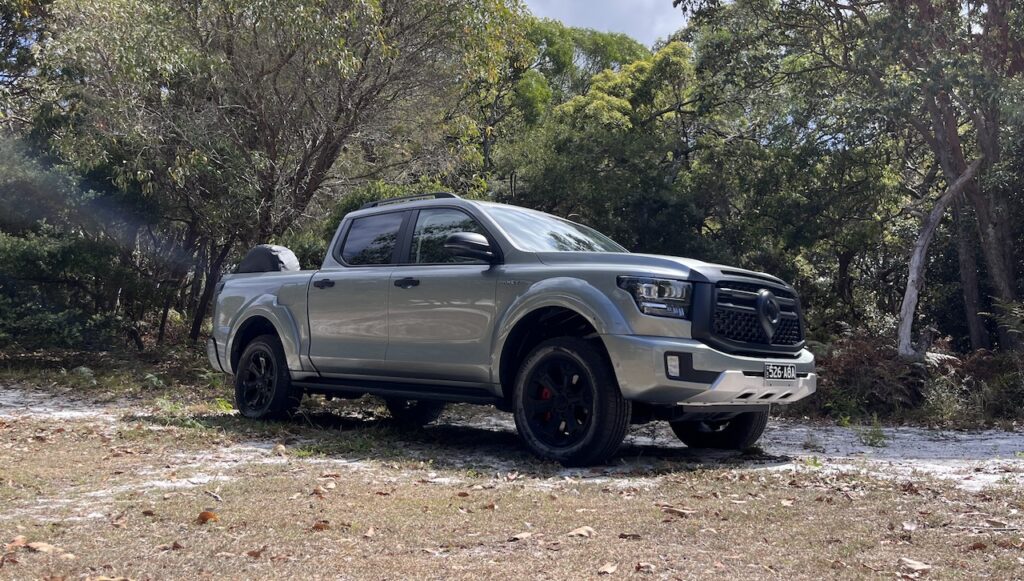
Combined, that’s a chunky 300kW and 750Nm on tap. Plus, a 37.1kWh battery offers a claimed 115km of EV-only driving.
You can read our in-depth launch review of the Cannon Alpha PHEV here, and a pre-launch review here, where we tested the GWM over some challenging off-road tracks.
But how does is go as an everyday family ute, as so many are used for? Here’s our week-long family test .
Day One: Big impression
Big old things these Alphas. Clambering onto the side steps really feels like you’re going truckin’.
The cabin presents really well. Not only is it huge, but the big screen, silvery bling, ambient light and seat leather look a cut above most utes. A chilled box under the armrest is a nice touch.
We’re starting well. Leather-look seats are heated, ventilated, massage, electric everywhere and pretty comfy; I’m under a sunroof, and as I back out, surround view cameras are superb quality.
But hang on. The digital driver’s display font is comically small. My eyesight’s not what it used to be, but for such a massive display, larger letters and numbers seems a no-brainer.
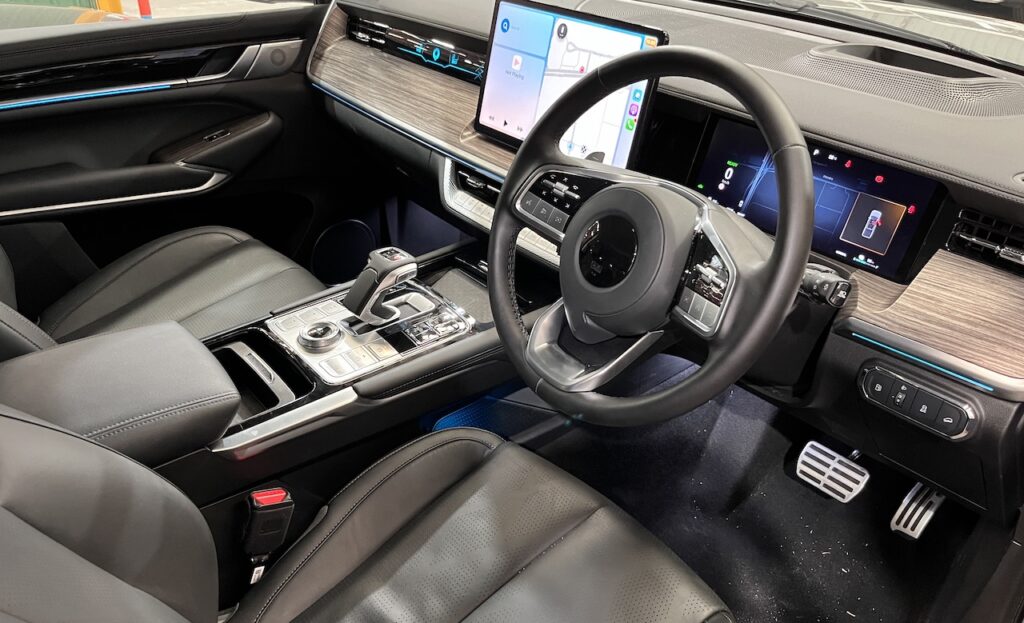
We’re showing a full electric battery and impressive 107km EV range is indicated. With another 903km range on offer from the petrol tank, overall time between fill-ups here is mighty.
On the road you’re perched up high and it’s a big unit to manoeuvre.
It’s a bit wobbly as it bounds along, but damn there’s serious shove, even if not quite as sharp as a Shark.
After some throttle lag the electric and petrol in unison surge this 2.8-tonne beast forward, and the acceleration between 40-80km/h – right where you need it – is mega.
My 120km drive home in HEV (Hybrid Electric Vehicle) mode sees me use 8.7L/100km and 5kWh per 100km, which the readout says equals the equivalent of 10.3L/100km. Hardly planet-saving, but not bad for such a massive rig.
When I switch off it plays a cheesy “goodbye” melody, a bookend to the cheesy tune it plays on start-up. Must we do this?
Day Two: Family truck
Every time I bring home a truck, the family is interested. What kid doesn’t love a mega, in-yer-face pickup when their daily drive is a simple VW Golf?
My wife says the Alpha’s massive grille logo looks likes an apostrophe. My son reckons it mimics a toilet seat.
The school run reveals the first hiccup. The charge cables seemingly have no obvious place to live, so are just sitting on the back seat.
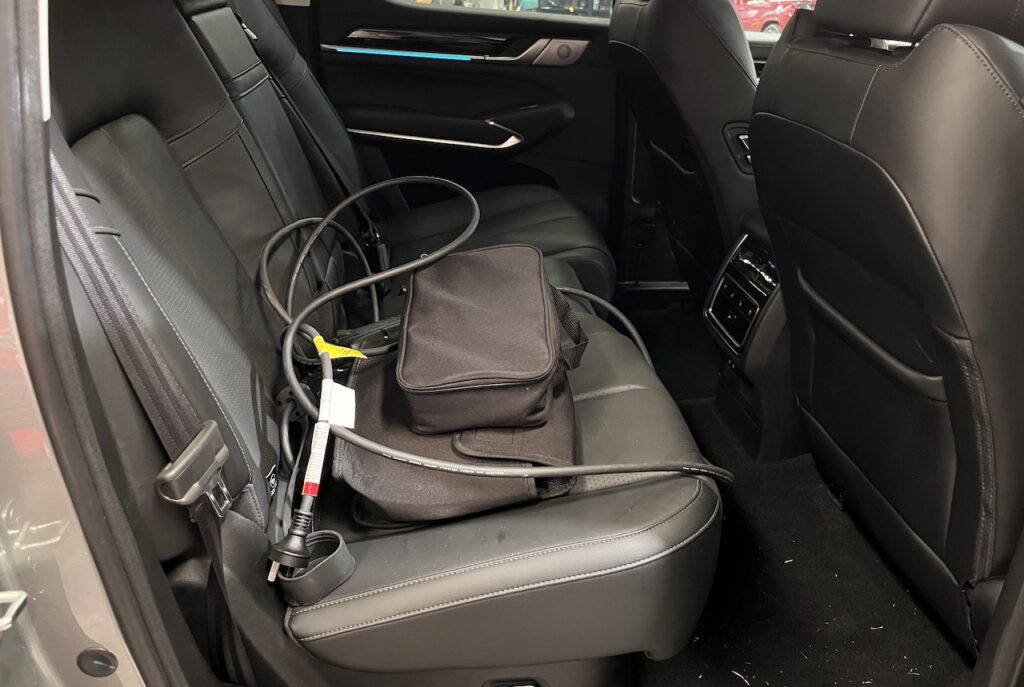
Once jettisoned on the floor, our teen/tween child combo is impressed. Rear chairs are heated and cooled, they electrically recline with the seat base moving forward, and they even have a wireless charging pad out back.
Damn roomy here too, showing the advantage of a plus-sized dual-cab ute with better family space than your HiLuxes and Rangers.
I press the “EV” button and the petrol stays dormant. It’s really weird having such a big unit move in whisper quiet. This is the true PHEV benefit, being so peaceful and smooth in the urban traffic.
Day Three: Home charging
Our electric battery is just about empty, and in petrol only we’re getting over 11L/100km around town.
Time to do a quick top up using the home power point. With 15 per cent battery charge and 6km range, the dash readout gives a worrying 16 hours estimated charge time until full. The readout says 1kW charging power and 3A current. Not sure what’s going on there…
After two hours on the socket we’re at 24 per cent and 17km range. At least my current is up to 5A, but this is all rather woeful.
Adding to the disappointment, the Cannon Alpha simply won’t fit in our garage due to the sloping driveway. The angle of attack means the roof bars would bash the garage top.
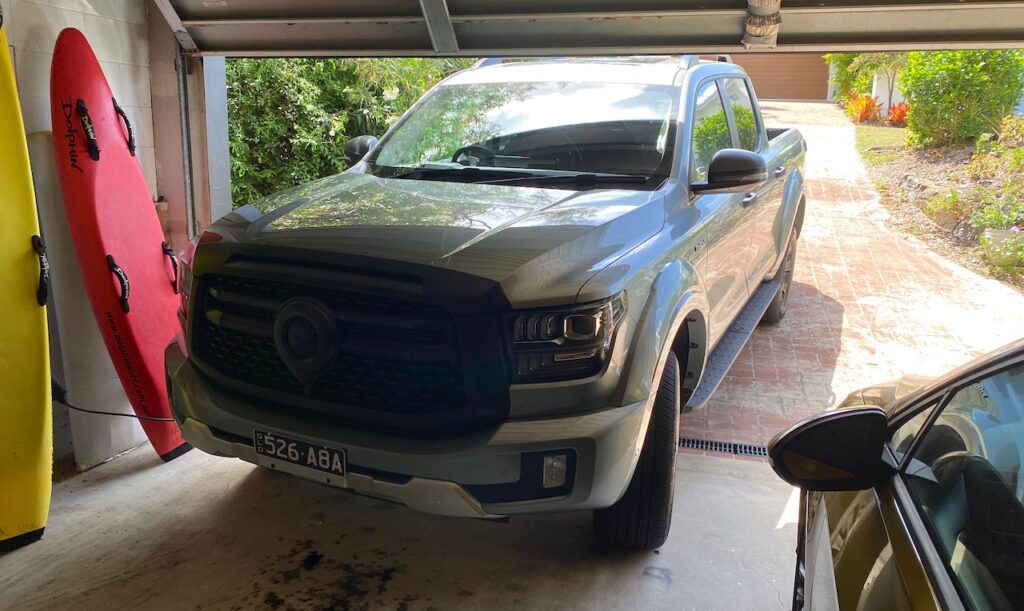
We need to give it an overnight charge, and blessedly, after it being topped up for twelve hours, we have a full battery once more.
It’d DC charge up to 50kW, and we’re told it’d go from 30-80 per cent in 24 minutes this way.
But a PHEV is something you really want to home charge, especially this mighty unit, as driving it into a skinny public charge space isn’t going to be fun.
Day Four: Picking holes
There’s no missing the 14.6-inch infotainment screen running wireless CarPlay and Android Auto.
If anything it’s too large. If you put a podcast on it projects the show’s image as a giant picture. If the presenter is no oil painting, their ugly mug is hard to ignore in your peripheral.
The centre screen is so massive, it’s a long reach to poke at the far side of it to access certain functions. The touchscreen proved inconsistent and very slow to respond at times, especially if the ute had been parked in the sun and the screen was hot.
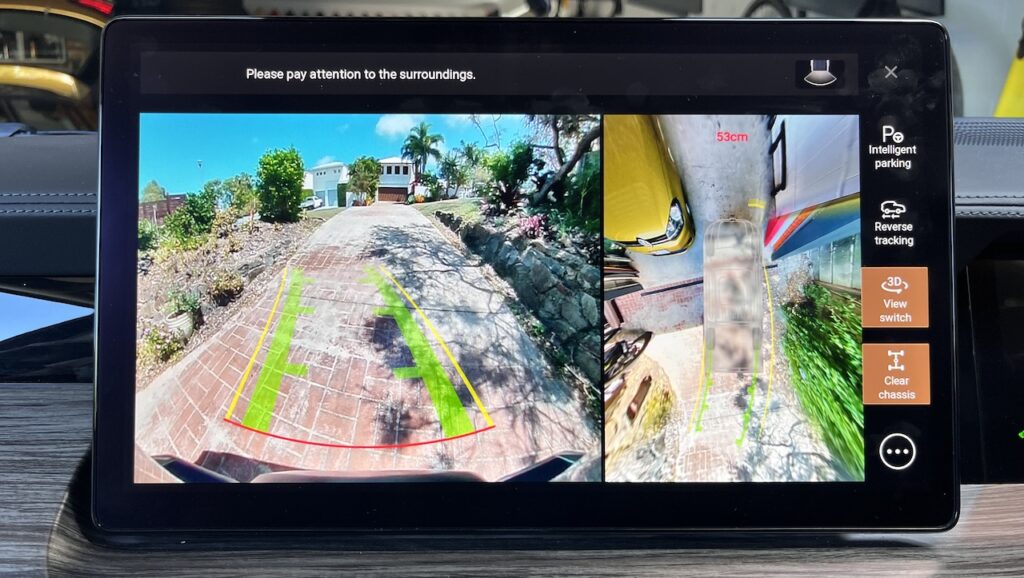
My phone also got very warm while wireless charging. A cooling fan – as is becoming the norm – would be a decent revision for future.
Control buttons are well laid out, the aviation-like gear stick’s quite cool and touch points are generally of soft plastic.
The giant faux-wood dash panel looks good from a distance, but looks and feels too plasticky up close.
The dashboard has a giant panel in front of the passenger showing a Tron-like outline of the Alpha’s face. Much to my kids’ pleasure (but not mine, being a grumpy old man) is the ambient lighting giving off a rainbow of colours when music (or even podcasts) are playing.
At night it’s really quite distracting. It can be turned off, but the kids insisted it remain. I’m too soft of them…
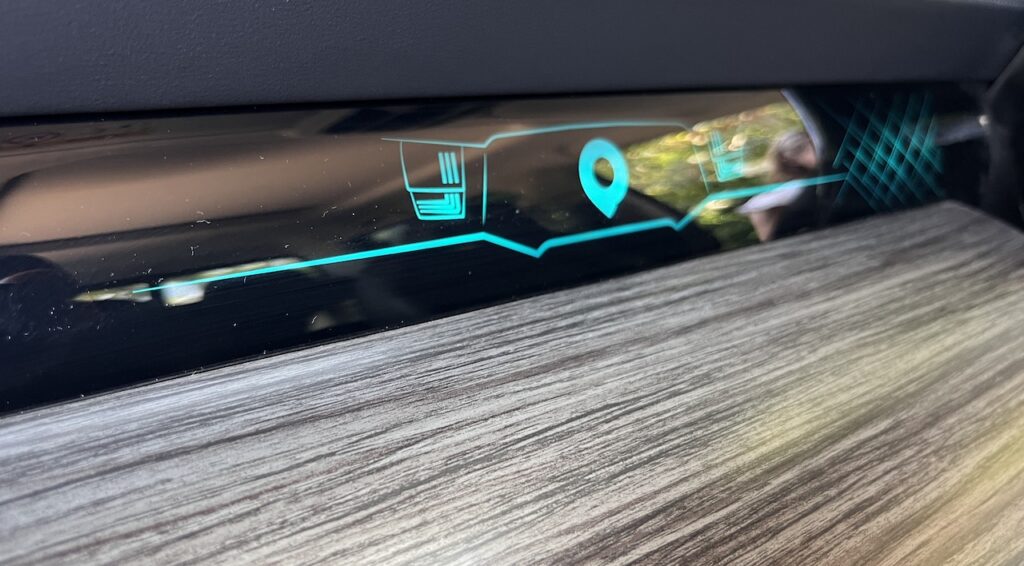
Another annoyance is the only way you to control the audio volume is through a steering wheel button. Normally fine, but if one of my kids is in the passenger seat, they have no option but to reach over and try to take charge. Not appeciated.
Day Five: Load it up
I’ve not yet mentioned it, but the spare tyre in the tray’s a massive fail, really.
It could easily be pinched, and it eats into load space. The BYD Shark manages a full-size spare underneath, but GWM couldn’t make the packaging work with the big battery beneath the tray.
Small consolation is you can remove the spare from the tub when you need the full load space, and there’s a repair kit if you get a flat. Sub-optimal, but a fair solution.
The tray floor also isn’t totally flat (due to a battery indent), which is also not ideal.
Our Ultra scores a 60/40 split tailgate, opening like asymmetrical barn doors. It’s a decent trick for quick, easy access to reach or climb into the load space.
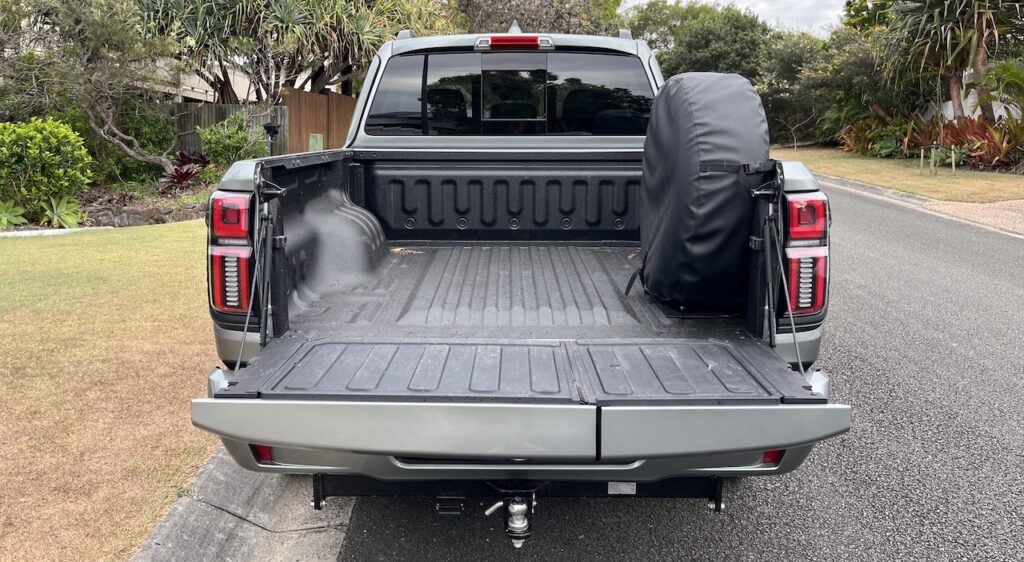
A short press on the rear button opens one side, a long push opens it down conventionally. It had a few missteps during our test, but in general it’s an appreciated innovation.
But when it drops down normally, it’s heavy and falls at quite a rate. My short daughter was standing too close and almost had got a severe whack on the head.
It’s a decent pallet-sized tray though, and comes with protective spray-in lining. But payload’s a disappointing 685kg. That’ll rule this dual cab PHEV out for some, who’ll be pushed towards the 790kg of the Shark, or 808kg-973kg in the Ford Ranger PHEV.
But if you are needing serious tow capacity, that’s where the Cannon Alpha PHEV trumps the BYD; its 3500kg is a full tonne above the Shark.
Day Six: Rejection from the Boss
My wife’s stopped driving the Cannon Alpha. She said, and I quote: “It’s overwhelmingly too large for me for it to have any practical purpose.”
Grumbles include it being too large to park, it can’t fit in the garage and the side-step to get into it is too skinny.
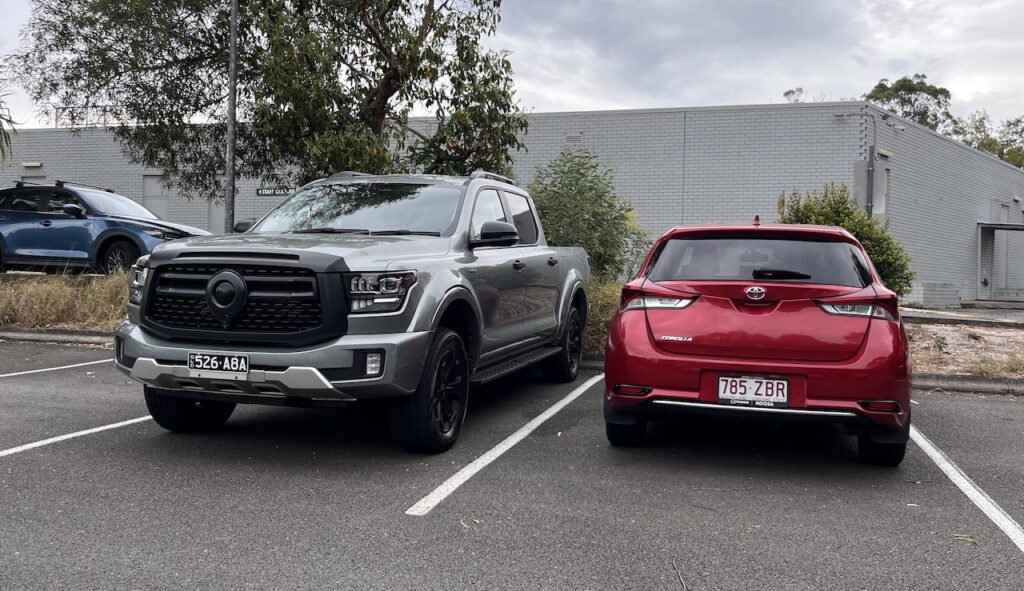
I agree with her that the indicators need a surgeon’s light touch to ensure they offer just the three winks while changing lanes on the highway.
I take the big GWM for the day, and force it into EV-only mode for some town and highway work. It drains the battery a touch faster than quoted, but still scores 90km before the petrol must kick in. Really, that’s more than enough for most people’s daily drive… even tradies going around job sites.
I’m overall quite impressed with the ride, helped by this thing being coil sprung all round.
But good grief the driver assist gets annoying. It pogos between white lines trying to keep this behemoth in the middle of the road; and it beeps every time the speed limit changes (I have eyes and can read signs, thanks). These must be turned off or it drives you potty, but it’s quite the laborious mission through the touchscreen.
Day Seven: Let’s off-road
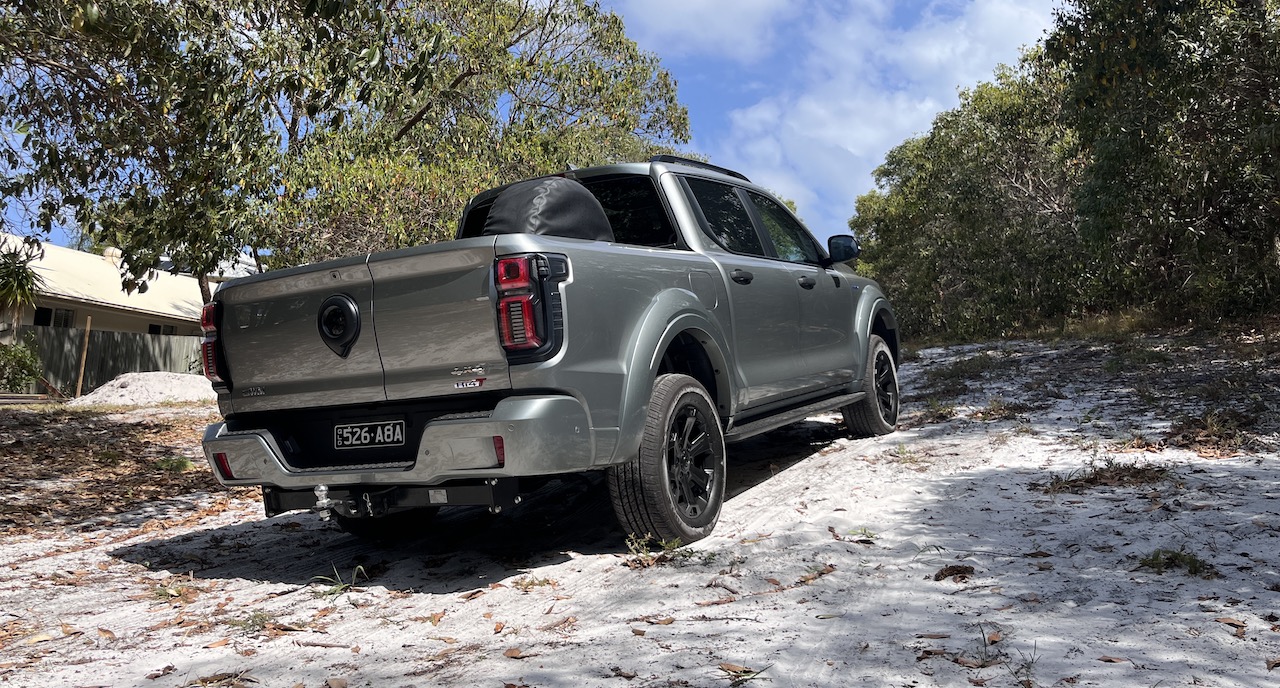
I sling the GWM up my favourite sandy track, which is both steep and soft sand. It’s a drama and clunk-free shift into low range, and with front and rear diff locks in our Ultra, I’m expecting great things.
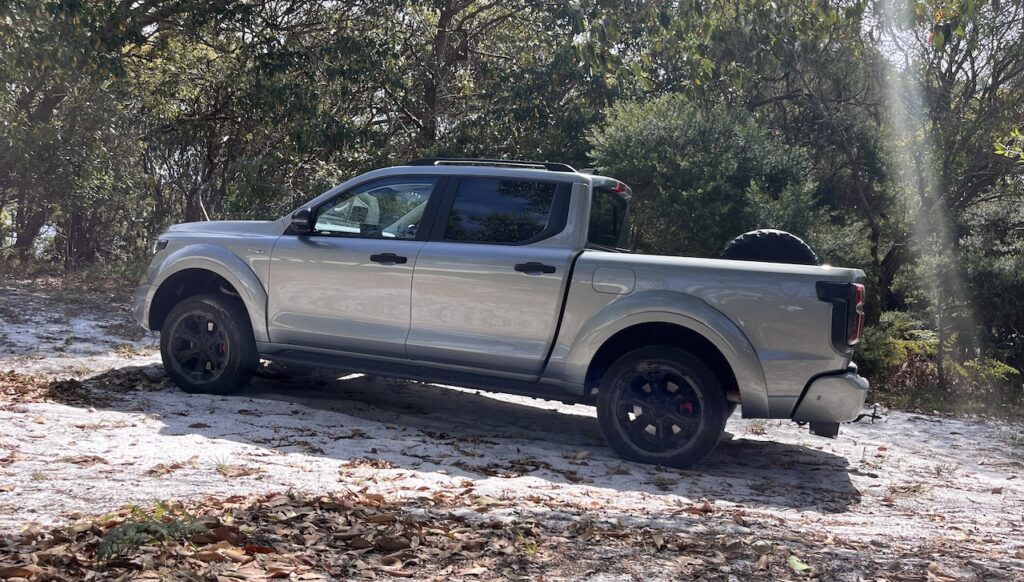
Overall it’s superb. Controlled, decent power delivery and mainly untroubled, all the while being blissfully comfortable inside while we’re bashing along the track.
A particularly steep section halts progress. The Giti highway tyres are the weak point; we really need knobblies for our route, as the rubber’s simply not gripping. All-terrain tyres would absolutely help the look of the GWM, too.
But I’d trust this Cannon Alpha for an off-road adventure. It’ll wade to 800mm, has a “Camping Mode” which saves 50 per cent battery to charge electrical equipment; possible through a $230 adapter plugging into the charge port for vehicle-to-load (V2L).
I know the BYD Shark is the current darling of the ute PHEV world – it is a decent rig – but this Cannon should be the preference for Aussies who really need proper off-road skills and towing capacity.
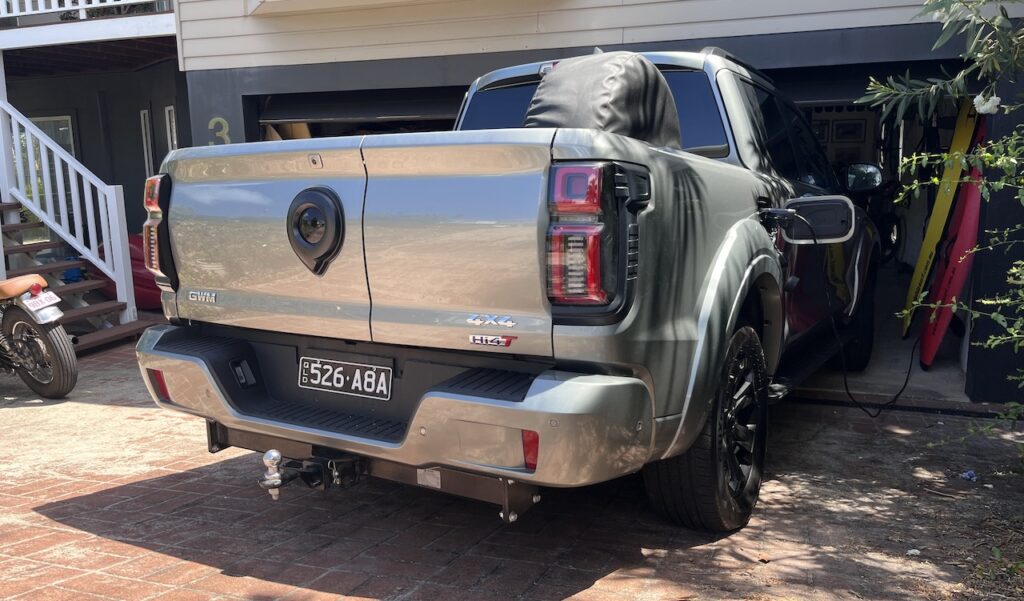
I’ve found it an overall decent thing to live with, and the EV-only range, reasonable drive quality and high spec and mainly high-quality cabin to be standout.
Sling a decent set of rubber on one and it’s a pretty compelling off-road/family ute choice with acres of interior space.
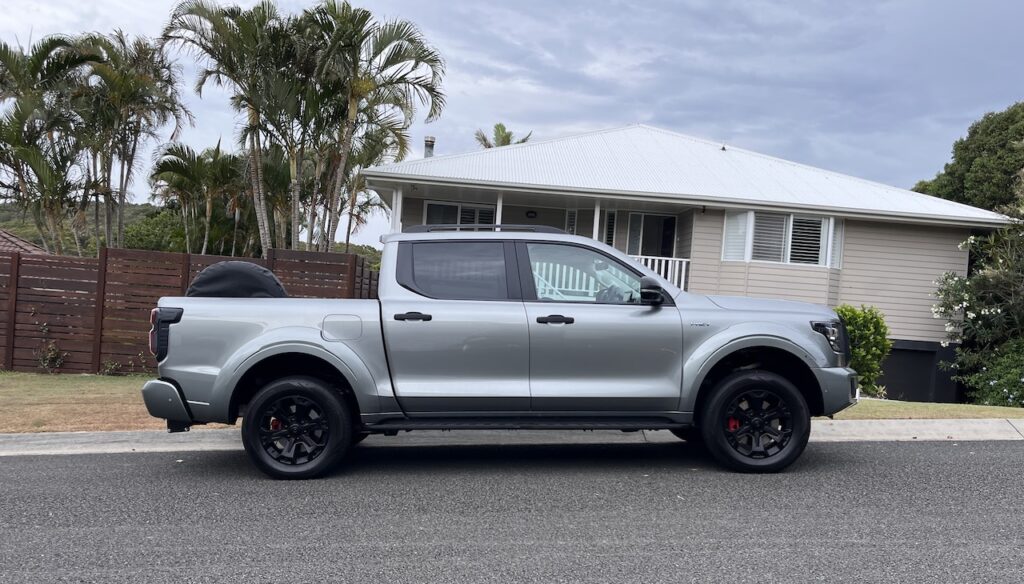
2025 GWM Cannon Alpha Ultra PHEV price and specifications
Price: $66,990 plus on-road costs
Basics: PHEV, 5 seats, 4 doors, ute, 4WD
EV range: 110km (NEDC)
Battery capacity: 37.1kWh
Battery warranty: 8 years/unlimited km
Energy consumption: 30.3kWh/100km
Fuel consumption: 1.7L/100km
Powertrain: 2.0-litre four-cylinder turbo-petrol, 180kW/380Nm
Motor: 1 in transmisssion, 120kW/400Nm
Combined output: 300kW/750Nm
AC charging: 7kW, Type 2 plug
DC charging: 50kW, CCS combo plug
0-100km/h: 6.9 seconds