Ford plans high-performance pivot to hybrids: Fancy a petrol-electric V8 Ranger Raptor? It could happen!
Ford’s V8 engine could be handed an electrified lifeline as the company accelerates its pivot toward hybrid tech, with off-road performance emerging as a key proving ground for the next phase of electrification.
Rather than positioning electrification as a replacement for combustion engines, Ford is increasingly framing hybrid systems as a way to enhance capability, efficiency and usability – particularly in demanding off-road environments where electric assistance can deliver tangible benefits.
And with tightening emissions regulations in most parts of the world – the US under Trump being an exception – a petrol-electric V8 could be just the ticket for the modern world.
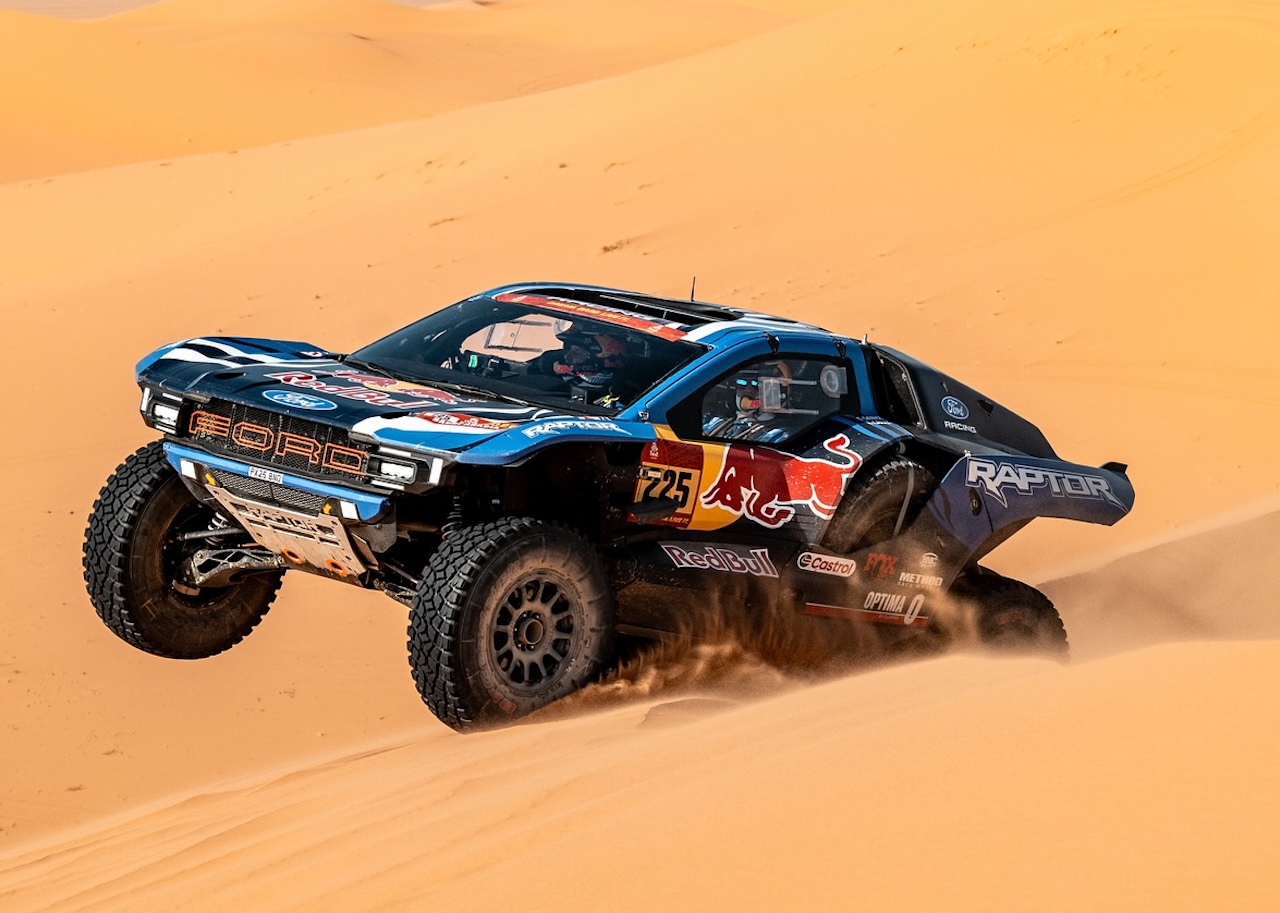
That philosophy was reinforced at the recent Dakar Rally, where Ford executives confirmed it is open to deploying V8 hybrid drivetrains in future high-performance Raptor off-road vehicles.
READ MORE: 2025 Ford Ranger PHEV review
READ MORE: GWM shocks the world with new V8 engine
READ MORE: Porsche Cayenne EV locked in but V8 to live on alongside
Following a recent US$19.5 billion write-down of EV investments – something that killed any chance of a high-performance electric F-150 – Ford CEO Jim Farley said hybrid systems would play an increasingly important role across the company’s performance portfolio as Ford reassesses how best to balance full electrification with near-term customer demand.
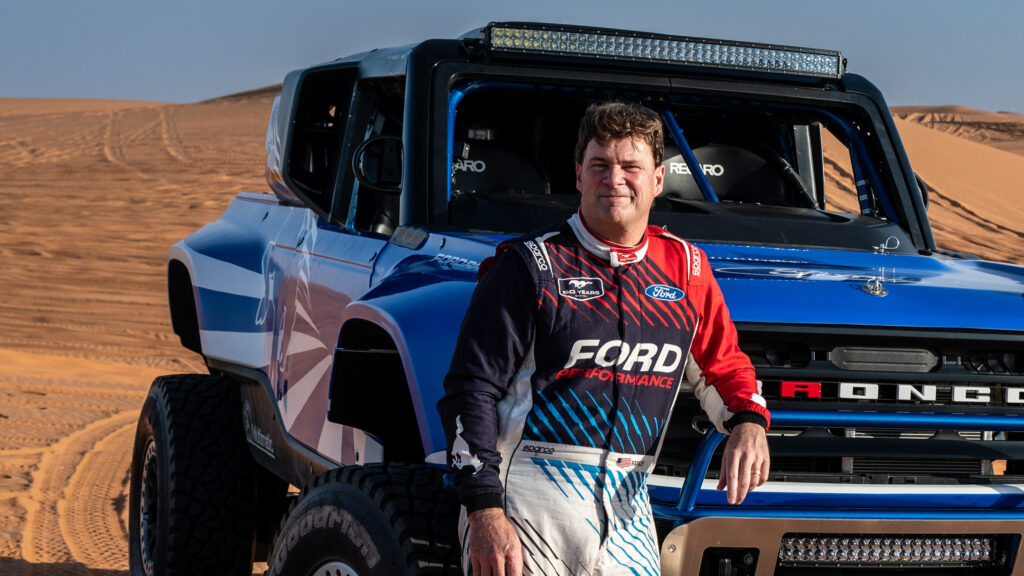
And given the enduring love for V8s, it make sense for the brand to head down the V8 hybrid route, following Chinese brand GWM’s 2025 announcement that it would unleash a bent-eight hybrid.
“Our best selling F-150 is the EcoBoost hybrid,” said Farley, reinforcing the swelling popularity of petrol-electric tech.
“You can expect in our performance off-road vehicles more and more hybridisation, but more on the performance side.”
When asked specifically about the prospect of a production V8 hybrid drivetrain for off-road vehicles, Farley confirmed it remained part of Ford’s thinking.
“We have accelerated the investment in hybrids across our lineup – and that will include off-road,” he said.
Those views were reinforced by Will Ford, general manager of Ford Racing, which has been restructured to play a direct role in future product development.
The son of former Ford CEO Bill Ford described hybrid systems as central to the future of high-performance vehicles and a way to keep internal combustion relevant as electrification gathers pace.
“It’s pretty clear that hybrid is the performance drivetrain of the future,” said Ford.
“That’s the nice thing about hybrid: It might allow us to keep the V8 alive a little longer – hopefully a lot longer.”
Of course, there are many details yet to be revealed, but our guess is that any such V8 hybrid would be more about boosting performance than saving fuel, which is similar to the strategy Porsche took with its first 911 variants with hybrid propulsion.
For Ford, hybrids are increasingly being positioned as a bridge between traditional combustion vehicles and full electrification, particularly in segments where energy density, range and infrastructure remain challenges.
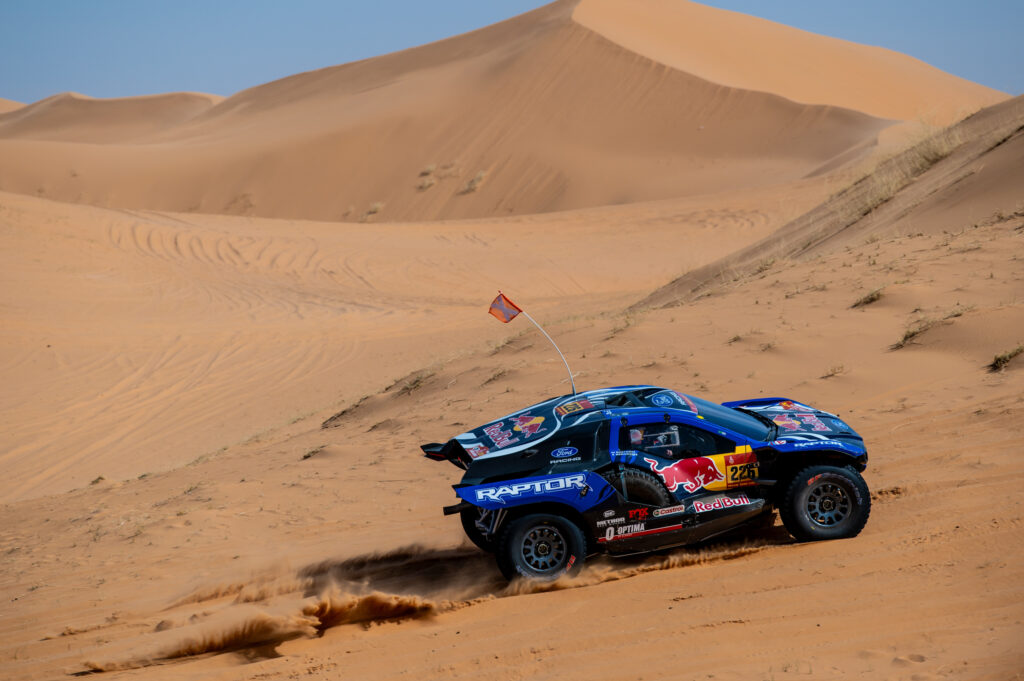
The comments highlight a broader recalibration under way at Ford as it shifts focus from pure EVs – which have proven a tough sell for the brand, especially in the pick-up truck market with the F-150 Lightning – to what it describes as higher-return electrified technologies, including hybrids and extended-range EVs (essentially a plug-in hybrid where the electric motors are the only things driving the wheels).
The company is forecasting that around half of its global sales will be hybrids, extended-range EVs or EVs by 2030.
Ford has not confirmed where a V8 hybrid would sit within its off-road portfolio, which globally includes Raptor variants of the Ranger, Bronco and F-150 (only the Ranger Raptor is sold in Australia).
However, the F-150 appears the most logical starting point, given the existing Raptor R already uses a naturally aspirated V8.
More broadly, Ford’s interest in hybrid off-road powertrains reflects a growing recognition that electrification can add functionality rather than compromise capability.
Electric motors offer torque benefit at low speeds, potentially improving control over rough terrain, while regenerative braking and battery systems can support auxiliary functions far beyond propulsion.
Farley pointed to “exportable power” as a key advantage of electrified vehicles, highlighting how battery-equipped utes can operate as mobile power sources in remote locations.
That thinking aligns with Ford’s existing Pro Power Onboard system that is part of the Ranger PHEV offering; it allows the high voltage battery to power worksites, tools and camping equipment without the need for a separate generator.
In off-road and remote-use scenarios, that capability is increasingly being viewed as a core benefit of electrification rather than a niche feature.
Importantly, Ford is saying that electrification will not come at the expense of emotional appeal, something that has been evident with some brands during the EV transition.
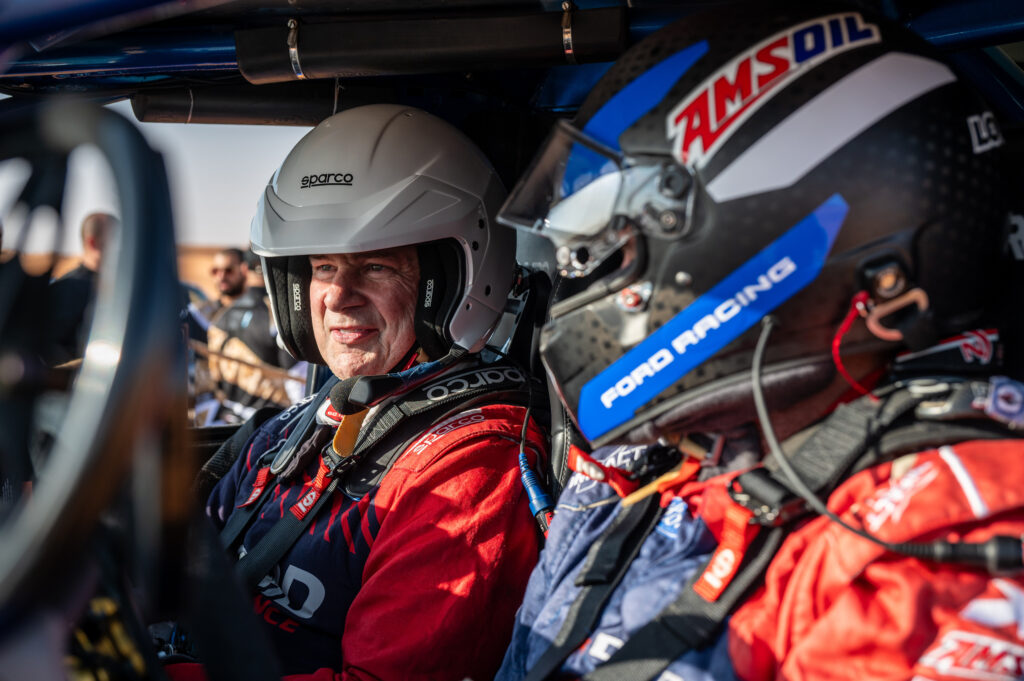
“I like that our company is unapologetically American with the sound,” Farley said.
“The sound of the vehicle is important.”
That balance – combining electric assistance with traditional engine character – helps explain why hybrid systems are gaining traction internally as Ford looks for scalable, globally relevant electrification solutions.
Rather than pushing full EV adoption uniformly across all segments, Ford is tailoring its electrification strategy to suit how vehicles are actually used.
In off-road and commercial environments, where charging infrastructure may be limited and range demands unpredictable, hybrid systems offer a practical pathway to electrification while still delivering emissions reductions and efficiency gains.
As Ford continues to develop battery technology, software and power electronics through motorsport and production programs, hybrid off-road vehicles could become a key stepping stone toward broader electrification – especially in markets where full EV adoption remains constrained.
And the prospect of a V8 hybrid could appeal not only to traditional enthusiasts but also those interested in EVs.
Either way, like Toyota, BMW and others, Ford’s electrification is not a one-size-fits-all solution.