End of an era: Tesla’s transformative Model S and idiosyncratic Model X have been axed to make way for robot production
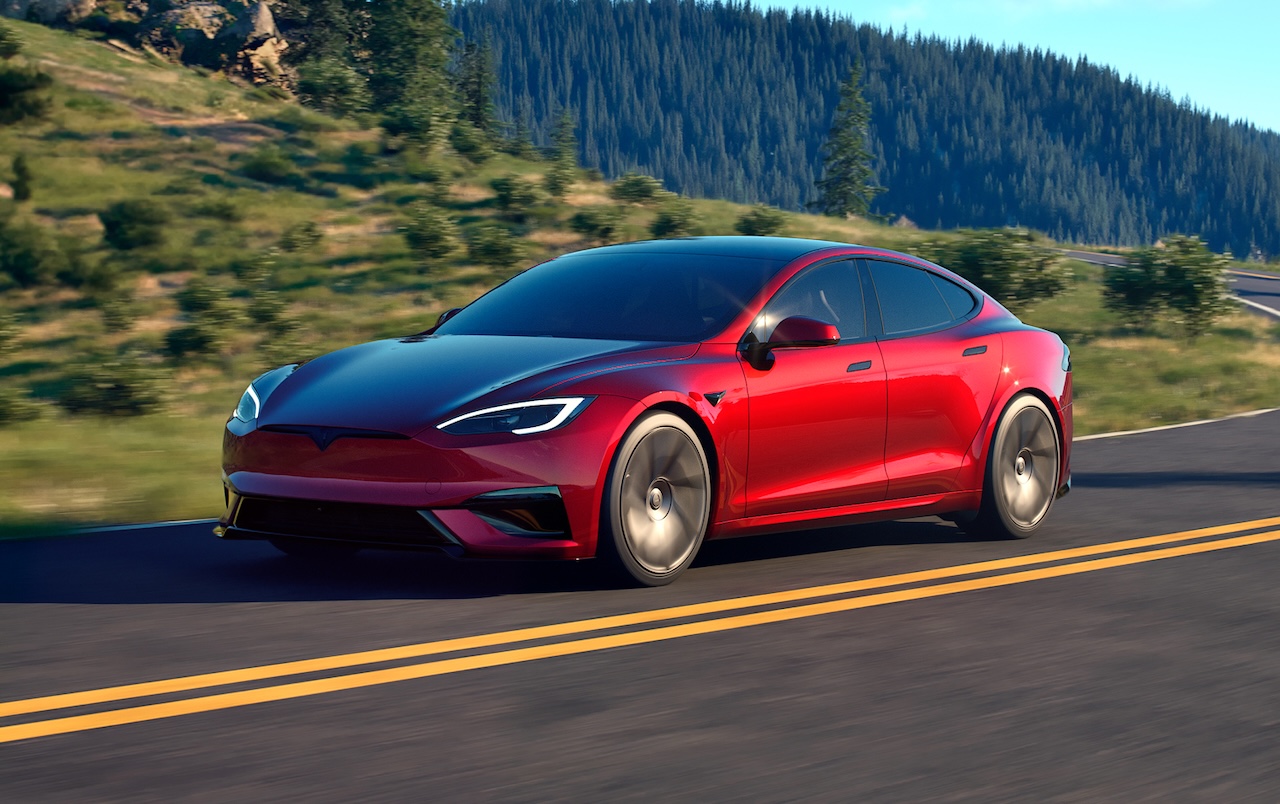
The pivotal Tesla Model S that first established the pioneering EV maker in Australia and its idiosyncratic Model X SUV spin-off have been axed to make way for humanoid robot production at the brand’s Fremont factory in California.
Tesla confirmed during its fourth-quarter earnings call on January 28 that global production of the long-running flagship sedan and SUV will end by mid-2026, with manufacturing capacity at Fremont to be reallocated to building the Optimus humanoid robot and supporting the company’s expanding focus on artificial intelligence and autonomy.
Tesla’s 2025 global sales show that out of a total production of 1,654,667 vehicles just 17,161 were Model S and X as well as Cybertruck and Semi.
Chief executive Elon Musk described the wind-down of the vehicles as an “honourable discharge”, signalling a clear pivot away from two of Tesla’s earliest and most influential products.
READ MORE: Tesla updates Model S and Model X again: Is it enough to fend off emerging competition … and will we ever see them again in Australia?
READ MORE: Tesla Model S 2022 revealed: New high-tech steering wheel looks like a practical yoke
READ MORE: Tesla Model X drives – and gets bogged – on Stradbroke Island
Launched in 2012, he Model S was the first volume model from Tesla at a time when its survival was hanging in balance. The Model X, which launched in 2015, was very much Musk’s baby with unusual features such as its ‘falcon doors’, production difficulties and a two-year launch delay
For Australian EV buyers, the news is both significant and oddly familiar. The Model S and Model X were once central to Tesla’s local identity, but have effectively been absent from new-car showrooms for several years due to the end of right-hand-drive production.
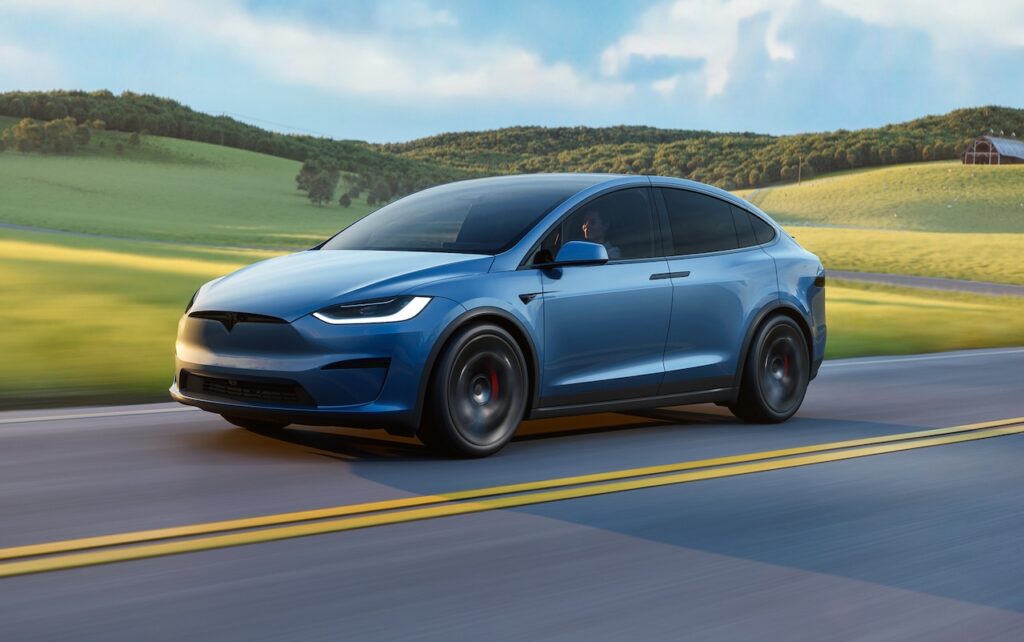
Their global discontinuation formalises what had already become the practical reality here.
When the Model S first arrived in Australia in late 2014 it was widely regarded as a turning point for electric vehicles on local roads.
Contemporary reviews praised its long real-world range, strong performance and premium feel, describing it as a car that reset expectations of what an EV could be.
Tesla’s local launch was supported by the rollout of its first Australian Supercharger sites, reinforcing the sense that a new era of motoring had arrived.
The Model X followed in 2017 and was received as a bold and futuristic large SUV, combining seven-seat practicality with startling performance in P100D form.
Its falcon-wing doors, huge touchscreen interface and quiet, smooth electric driving experience were all key features, even if some build-quality quirks and usability issues were also observed.
Together, the two vehicles established Tesla as a serious and credible brand in Australia’s premium car market at a time when most other EVs were niche or compliance-focused offerings.
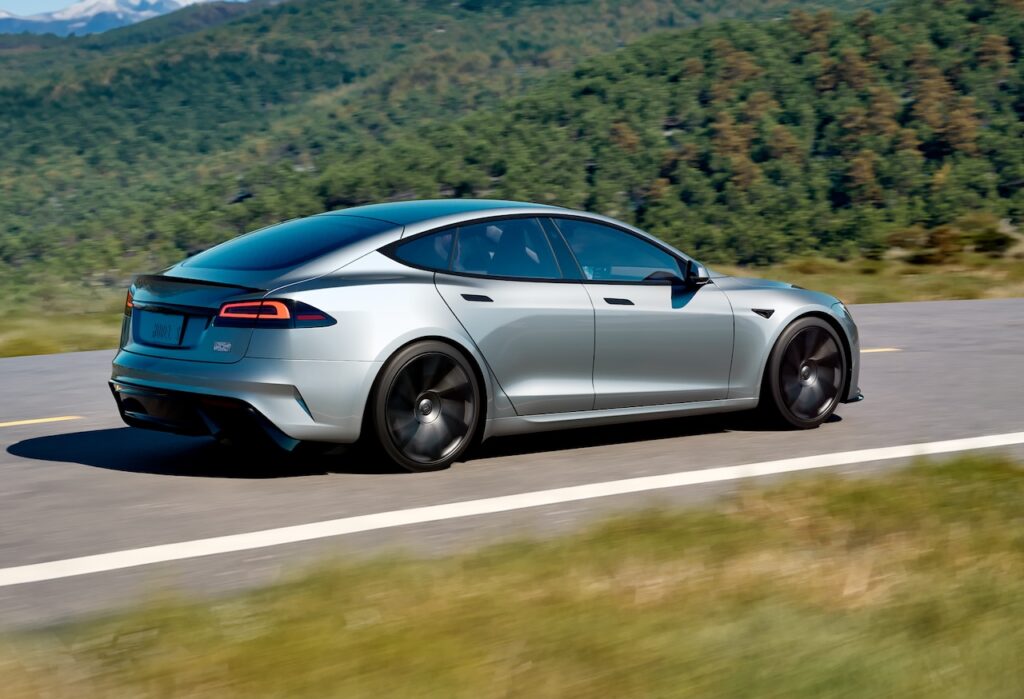
Excitement returned in 2021 when Tesla revealed heavily updated versions of both vehicles. The refreshed Model S debuted a radical new interior with a yoke-style steering control, larger screens and a more minimalist layout, while the Model X adopted similar changes along with a tri-motor Plaid powertrain option.
Australian enthusiasts watched closely, expecting the new generation to finally reach local roads in right-hand-drive form.
Instead, the timeline began to slip. In early 2021 Tesla’s Australian configurator showed deliveries of both models were on hold until 2022, pending arrival of the new versions.
Through 2022, Tesla confirmed the updated cars were delayed for Australia until the end of the year, a target that passed without deliveries.
During this period, local pricing for Model S and Model X Long Range variants increased by about $15,000, despite the cars not being physically available.
Interest spiked again with the global launch of the Model S Plaid, a tri-motor performance flagship that drew worldwide attention for its acceleration claims.
Early Australian pricing estimates placed the Plaid around the $230,000 drive-away mark, positioning it at the very top of the local EV market. But like the refreshed standard models, the Plaid never entered right-hand-drive production for Australia.

By May 2023 Tesla formally confirmed it would no longer produce right-hand-drive versions of the Model S and Model X.
Customers who had placed deposits were advised their orders could not be fulfilled and were offered full refunds, along with a $3000 credit toward a Model 3 or Model Y as a gesture of goodwill. Pricing and delivery estimates had already quietly disappeared from Tesla’s Australian website months earlier.
This drawn-out sequence of delays, pricing adjustments and eventual cancellation left Australian buyers in limbo and underscored the difficulty of servicing smaller right-hand-drive markets with low-volume flagship models.
Over the same period, the Model 3 and Model Y came to dominate Tesla’s Australian deliveries and the local EV market, reflecting a broader shift in buyer demand toward more affordable, practical EVs.
The Model S and Model X also carried a legacy of regulatory and reliability scrutiny during their long production runs.
US authorities investigated suspension failures on some earlier vehicles in 2020, part of wider safety attention directed at Tesla models over the years. While no formal recall followed in that case, it formed part of the complex history surrounding the vehicles as they matured.
Now, with production ending globally, the story of the Model S and Model X comes full circle. These were the vehicles that helped define Tesla’s image and, in Australia, changed the conversation around what electric vehicles could be. Yet their final years here were characterised by anticipation rather than availability.
Tesla’s focus is now clearly shifting beyond traditional passenger cars. The Optimus robot, robotaxi ambitions and broader AI initiatives are taking centre stage in the company’s strategy, and the space once used to build its pioneering luxury EVs will soon be devoted to entirely different machines.