Andrew Chesterton’s best electric car of 2025: Hyundai Ioniq 9
Don’t you just hate motoring journalists? While the rest of the car-buying world has to worry about things like finance rates, resale values and sky-high sticker prices, us automotive scribes get to judge our favourite car based on little more than how much fun we had behind the wheel.
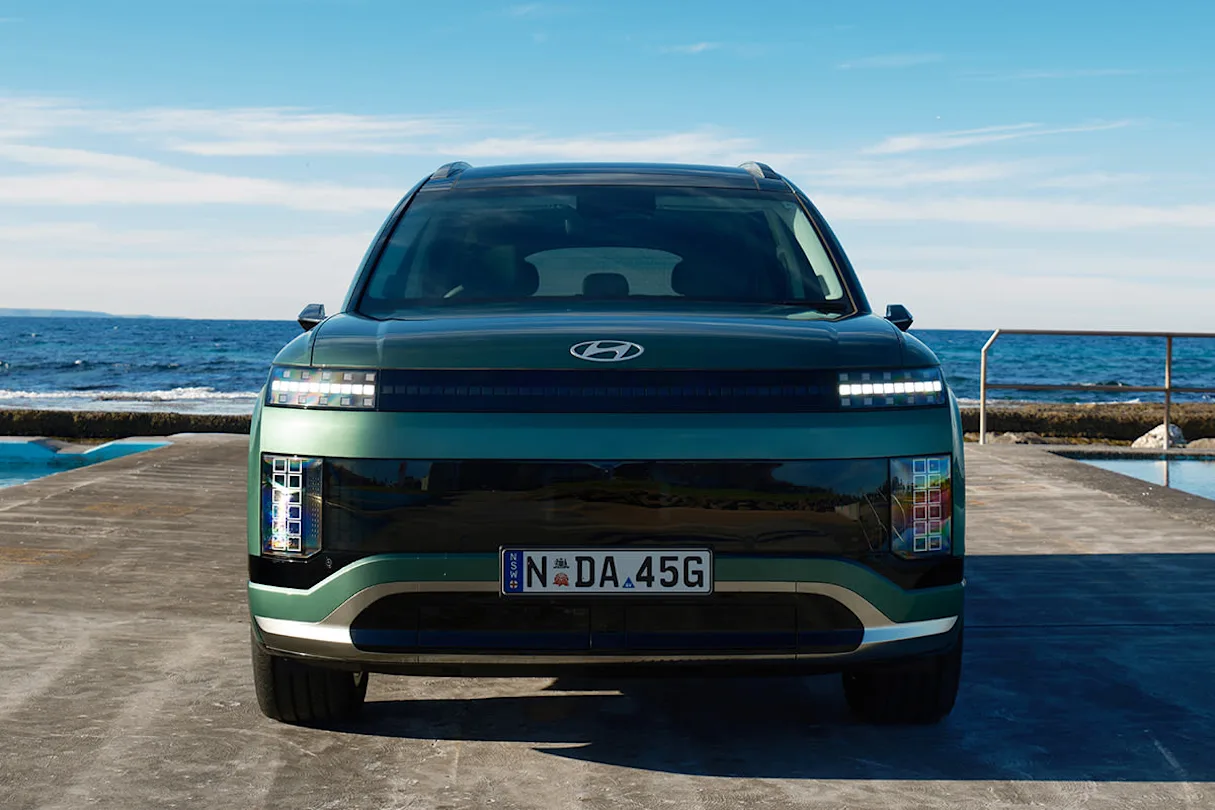
And it’s in this very spirit that I’d like to announce my favourite EV of 2025. It’s a car that makes very little financial sense, and which its own brand concedes will be bought by very few people, but that bothers me not. It’s flash, fancy and surprisingly fun, and those who do spring for one are in for a treat.
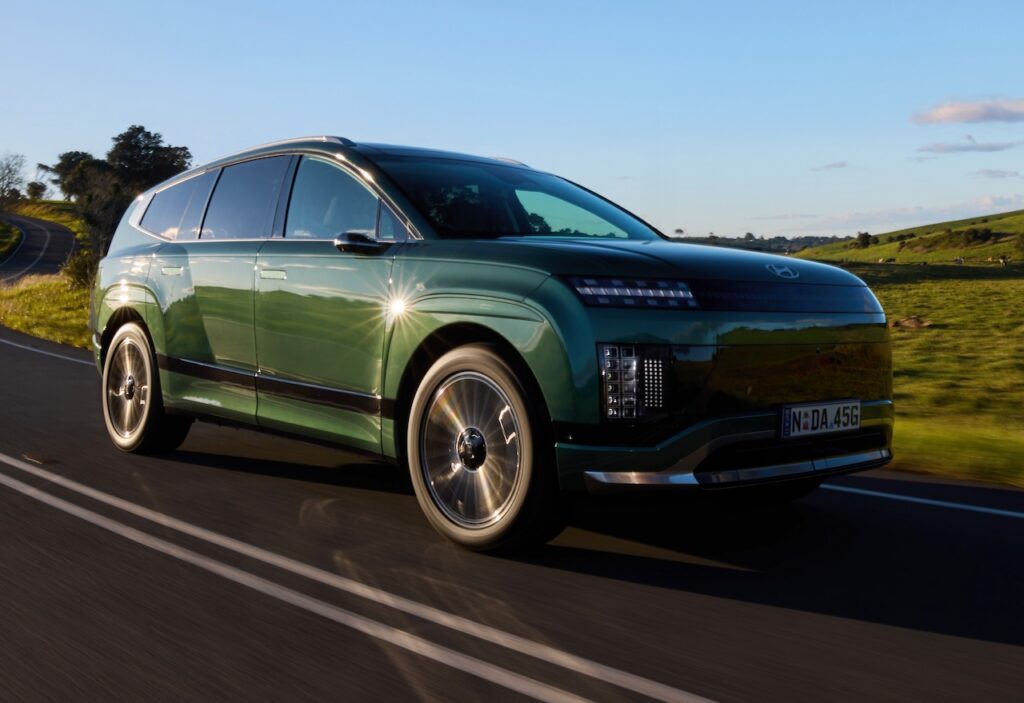
It is the Hyundai Ioniq 9, the sister vehicle to the Kia EV9, and Hyundai’s flagship EV in Australia – at $119,750 before on-road costs, it’s even more expensive than the bonkers Ioniq 5 N – and it arrives in just the one swag-dripping trim level, the Calligraphy.
READ MORE: Iain Curry’s best electric car of 2025: Kia EV3
READ MORE: 2026 Hyundai Ioniq 5 price and specifications: New tech, fewer grades for refreshed EV
READ MORE: 2026 Hyundai Palisade Calligraphy HEV Review: Can Hyundai’s new hybrid system really turn this huge SUV into a fuel-miser? Corby is sceptical
READ MORE: China-sourced Hyundai Elexio confirmed for Australia in early 2026.
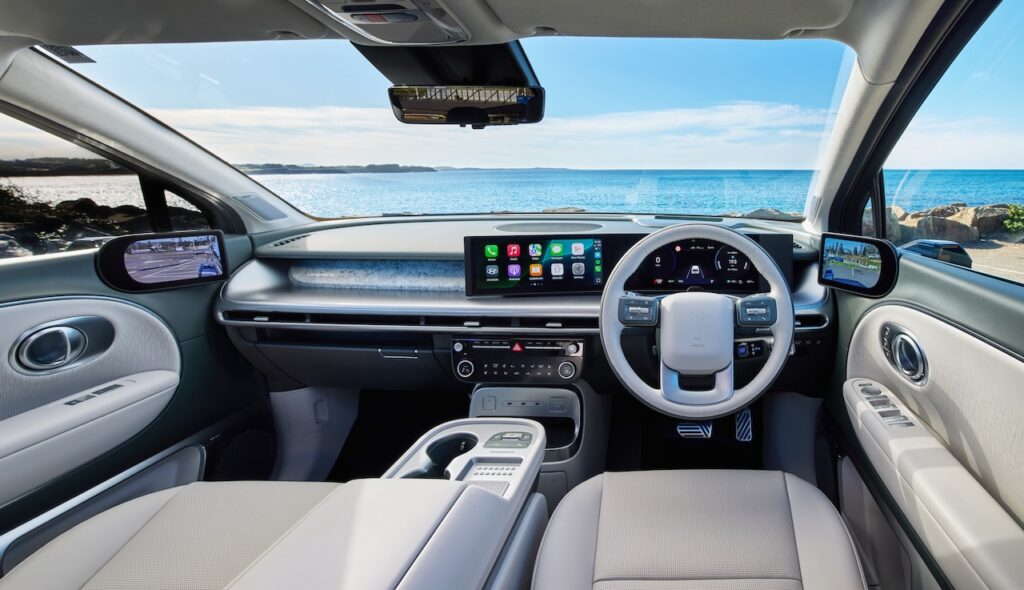
It’s a big three-row bus with oodles of space, and you can opt for two captain’s chairs in the middle row if you really want your kids to feel like VIPs, and you get just about everything Hyundai can throw at a vehicle (think Nappa leather, Bose audio, active noise cancellation and IMAX-aping screens) for your considerable investment.
The other critical bit is the massive 110.3kWh battery, which produces a claimed WLTP driving range of 600km.
Sure, a big and expensive car with lots of kit isn’t that surprising, but the real shocker with the Ioniq 9 is how lush and lovely the driving experience is.
A note here that Hyundai’s three-row family hauler weighs 2.7 tonnes, but some absolute wizardry has been performed here, so much so that Ioniq 9 positively shrinks around you. It rides beautifully, is whisper-quiet in the cabin, and – should you stumble across a twisting road – is shockingly nimble.
Helping with all of that is a dual-motor AWD powertrain producing a combined 314kW and 700Nm – the sprint to 100km/h takes just 5.2 seconds. I honestly don’t know how they’ve done it, but the result is a posh and potent family hauler that can still paint a smile on the driver’s face, no matter whether you’re on a freeway or something more challenging.
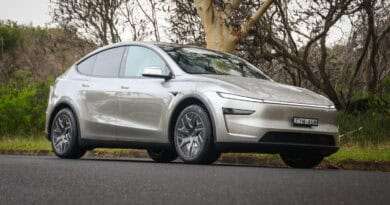
A quick congratulations to the Zeekr 7X and Porsche Macan Electric, both of which are super solid EV offerings and came nail-bitingly close to taking the win. And to the Leapmotor B10, which operates at the other end of the pricing spectrum, but really doesn’t feel cheap, and which redfines how much champagne one can get on a beer budget. But the Ioniq 9 pips the field for me, if only because of how impressive, and suprising, the drive is.
Well done, Hyundai. This one’s a peach. Albeit a very big one.
Biggest EV surprise of 2025: How fast the Chinese brands ate their established siblings
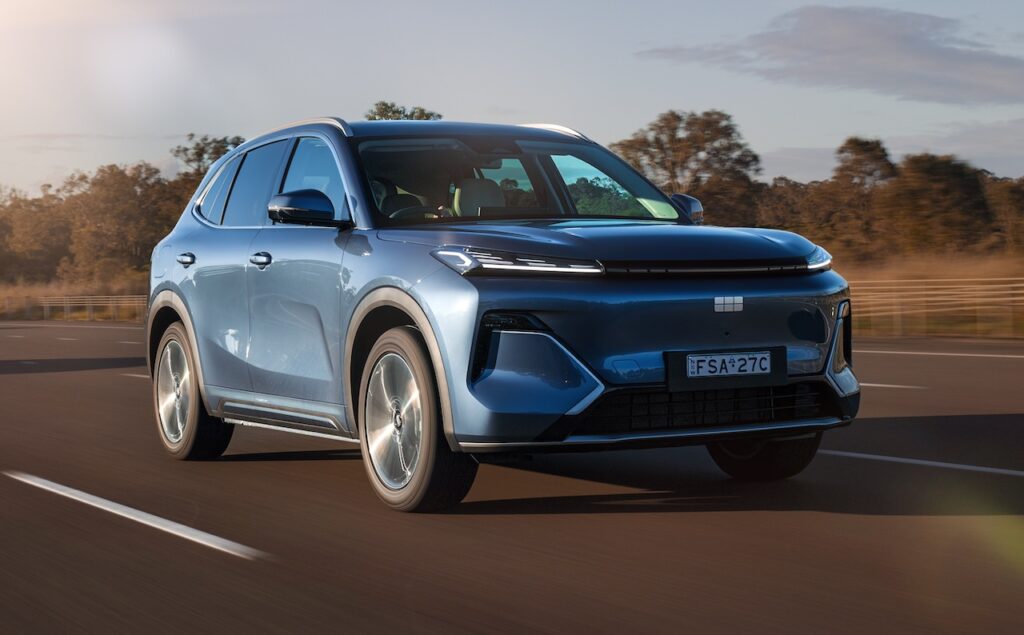
We knew that some of the most sought-after Chinese brands would make a sizeable dent in the Australian market, but I was suprised by just how many are now making their mark.
Sure, brands like BYD, MG and Great Wall are fixtures in our top 10, but even further down the sales charts the smaller Chinese outfits (at least in Australia) are making their presence felt.
Stellantis, for example, invested in Chinese newcomer Leapmotor, with the latter hoping the former would give them some credibility on the global stage when it comes to established dealership networks and the like. And the plan appears to be working, with Leapmotor now the best-performing factory Stellantis brand in Australia in November, outselling Jeep, Fiat and Alfa Romeo. Only Ram bettered it, but that’s imported by a distributer (Ateco).
The same is happening at the Geely group, where Volvo – with its 629 sales in November – was outsold by both Zeekr (727 sales) and Geely (808 sales).
The change isn’t coming, it’s happening now. And it will only accelerate in 2026.
The EV I’m most looking forward to in 2025: Hyundai Ioniq 6 N
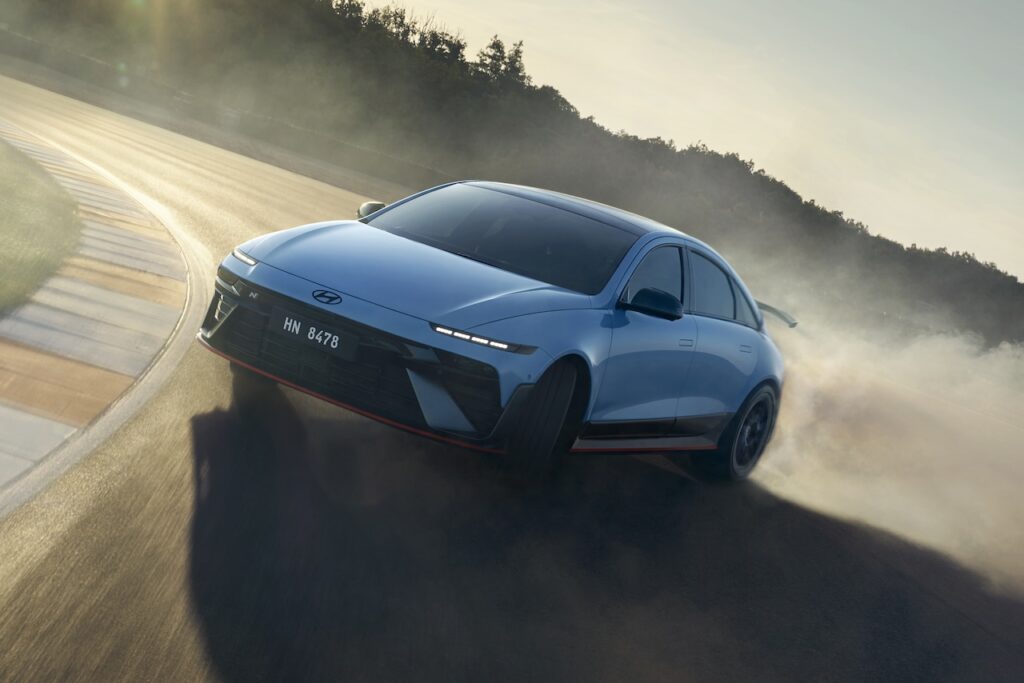
We love the Hyundai Ioniq 5 N, and its 6 N sibling – due in early 2026 – promises to dial things up even further, with its dual electric motors (478kW and 770Nm) unlocking a sprint to 100km/h in 3.2 seconds, and a flying top speed of 257km/h.
There’s new suspension and aero that promises to make Hyundai’s ugly duckling feel lower, sharper and more stable than the low, sharp and stable Ioniq 5 N, and that’s good news, too.
But more important than all of that, it promises to be another EV with genuine driver engagement in its DNA.
Bring it on.