2026 Denza B8 6S Review: The Toyota LandCruiser is about to be tested more seriously than ever by this full-size Chinese PHEV 4×4 wagon
Many have tried to take on the mighty Toyota LandCruiser 4×4 wagon and very few have succeeded. The latest challenger comes from China in the form of the Denza B8.
Denza is the premium brand of BYD and the B8 is one of two launch models alongside the Toyota Prado-sized B5, which we’ve already covered.
While badged Denza in Australia and other export markets, the B8 and B5 are actually the product of another BYD spin-off called FangChengBao.
The boxy family exterior design relationship is obvious between them, but they also share fundamental chassis and powertrain concepts with the successful BYD Shark 6 plug-in hybrid ute.
It’s this PHEV powertrain, a lot of off-road capability, lashings of equipment and some keen pricing that has Denza confident of success with the B8, not only against Toyota but a bunch of premium brands like BMW and Benz as well.
B8 deliveries begin in February 2026.
READ MORE: Denza B8 priced! Shift aside Toyota LandCruiser! BYD-owned luxury brand Denza unleashes sub-$100K off-road assault
READ MORE: Denza B5 priced! BYD-owned luxury brand’s plug-in hybrid SUV brings big power, big torque and affordable dollars
READ MORE: 2026 Denza B5 Leopard Review: Toyota should be worried, this plug-in hybrid could redefine the Australian 4×4 wagon market
2026 Denza B8 6S price and equipment
There are two Denza B8 models, the standard $91,000 (plus on-road costs) B8 S7 and the $97,990 six-seater B8 6S, which swaps out the bench in row two for a couple of captain’s chairs.
These are not cheap prices, but when you consider there’s only one LandCruiser and one Nissan Patrol priced under $100,000 and the cheapest BMW X5 is close to $140,000 … well, you get the picture of relative affordability.
You also get plenty of size for your buck with the B8 6S.
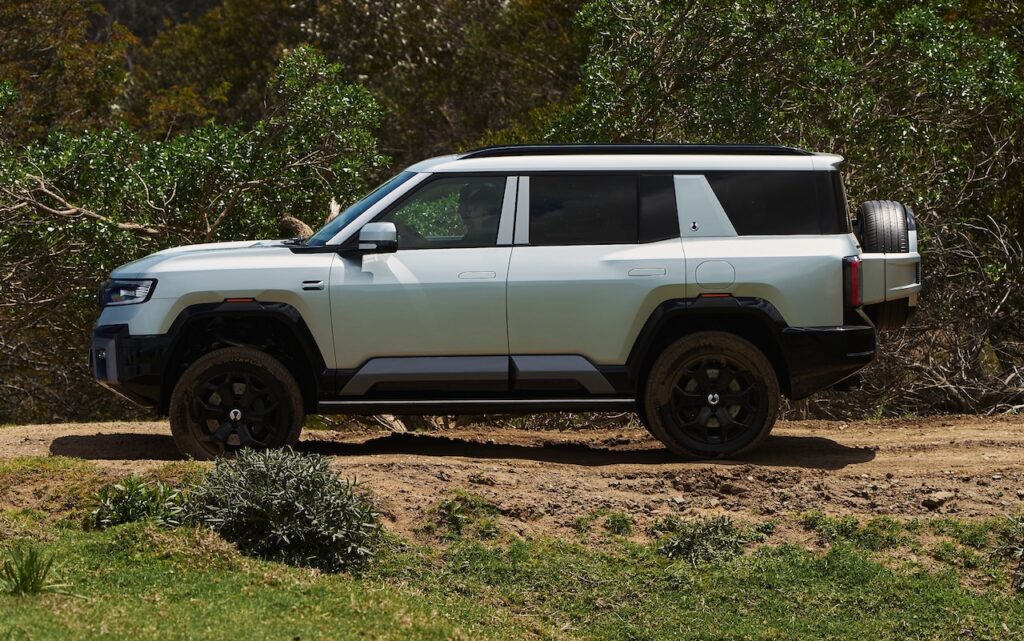
It measures up at 5195mm long, 1994mm wide, 1905mm high and has a 2920mm wheelbase. Kerb weight is given as a lardy 3290kg!
With all three rows in place the luggage capacity is a pretty minimal 166 litres, but it expands to 1130 litres with row three folded. The boot is accessed by a side-opening tailgate that opens towards the sidewalk.
The B8 comes powered by a 425kW/760Nm powertrain that combines a 2.0-litre turbo-petrol engine with an e-motor on each axle and an e-CVT transmission to create an all-wheel drive system BYD/Denza calls DMO – Dual-Mode Off-Road. A 36.8kWh BYD Blade battery pack integrated into the steel chassis provides juice to the e-motors.
At slower speeds on-road, the petrol engine is primarily there to recharge the battery. It can kick in to drive the wheels above about 80km/h. Off-road it can get directly involved at much slower speeds. The claimed 0-100km/h time is a lusty 4.8 seconds.
Claimed economy is a highly theoretical 2.0L/100km (NEDC) when the battery is charged above 25 per cent and 9.89L/100km when SOC drops below that rating (that is, when it’s effectively running as a regular hybrid). The preferred fuel is premium unleaded and the tank holds 91 litres.
The EV range is given as 100km and the combined NEDC range is 1040km. The usually generous CLTC range is shorter at 905km. The peak AC recharging rate is 11kW and DC fast charging is 120kW.
The B8 is underpinned by double wishbone independent suspension and what’s called DiSus-P intelligent adaptive hydraulic damping.
Denza claims the system can scan the road up to 150 metres ahead and proactively adjust damping force to best cope with whatever is coming.
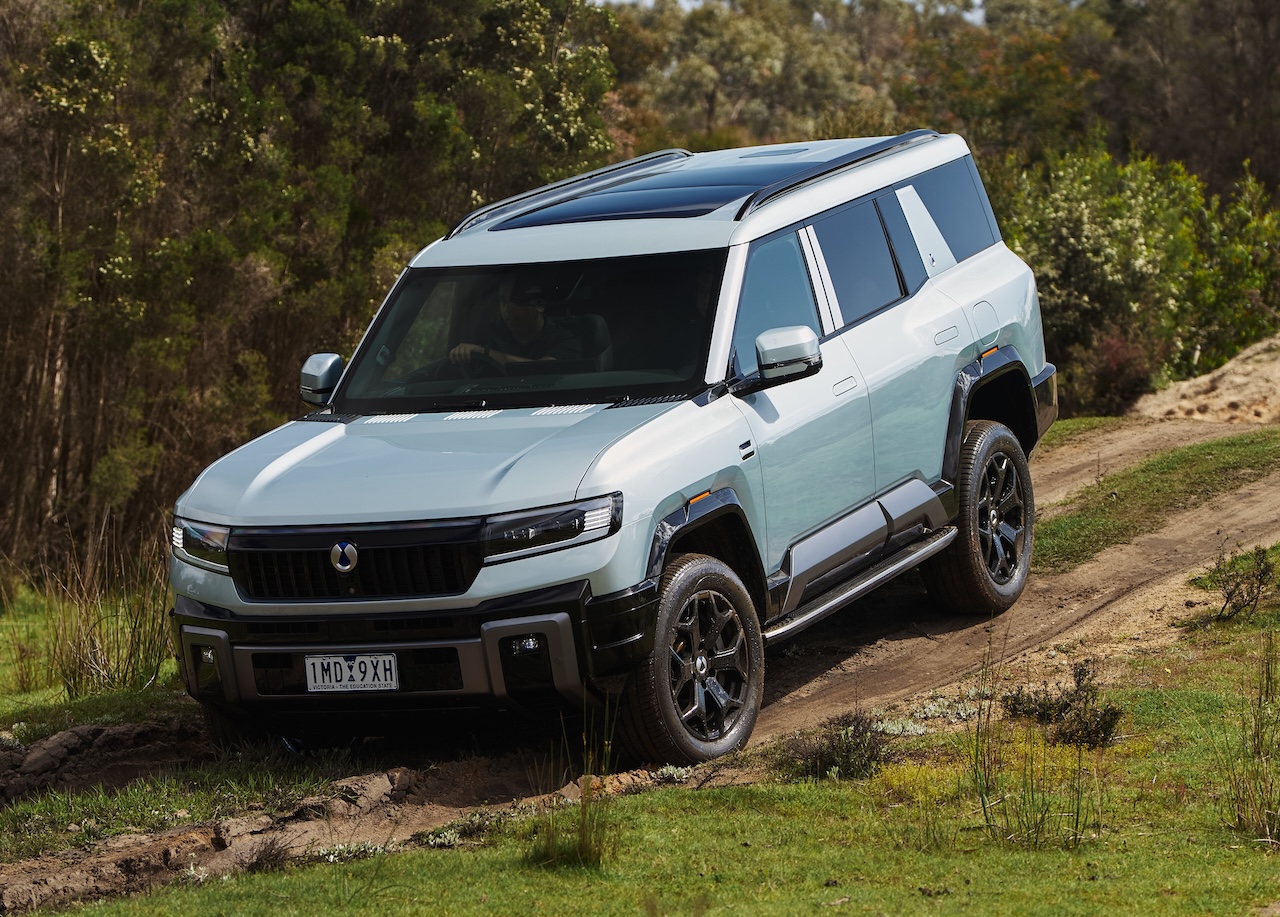
Disus-P can raise the ride from 220mm to 310mm. It delivers a maximum approach angle of 39 degrees, breakover of 27 degrees and departure of 35 degrees. The wading depth is as high as 890mm – more than the 850mm a Ford Ranger Super Duty offers.
The B8 also comes with e-motor-assisted off-road traction control tunes, mechanically locking front and rear differentials as well as a simulated locking centre diff and low range. Of course it simulated because there’s no actual mechanical connection from front to rear-end of the vehicle.
The suspension has been tuned for Australia over the last 12 months via local testing and feedback to the factory.
One key upgrade for Australia has been a 3500kg braked towing capability. Payload is also upgraded to 702kg for Australia.
By the way, the expectation is the B8 powertrain and its towing capability will pop up in a heavy duty version of the Shark 6 before long.
And so to the extensive equipment list. Standard gear includes 20-inch alloy wheels (including a full size spare) shod with 275/55 Michelin Pilot Sport EV rubber, tri-zone ventilation, heated steering wheel, two 50W wireless phone chargers, onboard fridge, electric adjustment for all three rows of seats, heated/ventilated/massaging front seats and heated and ventilated middle row seats.
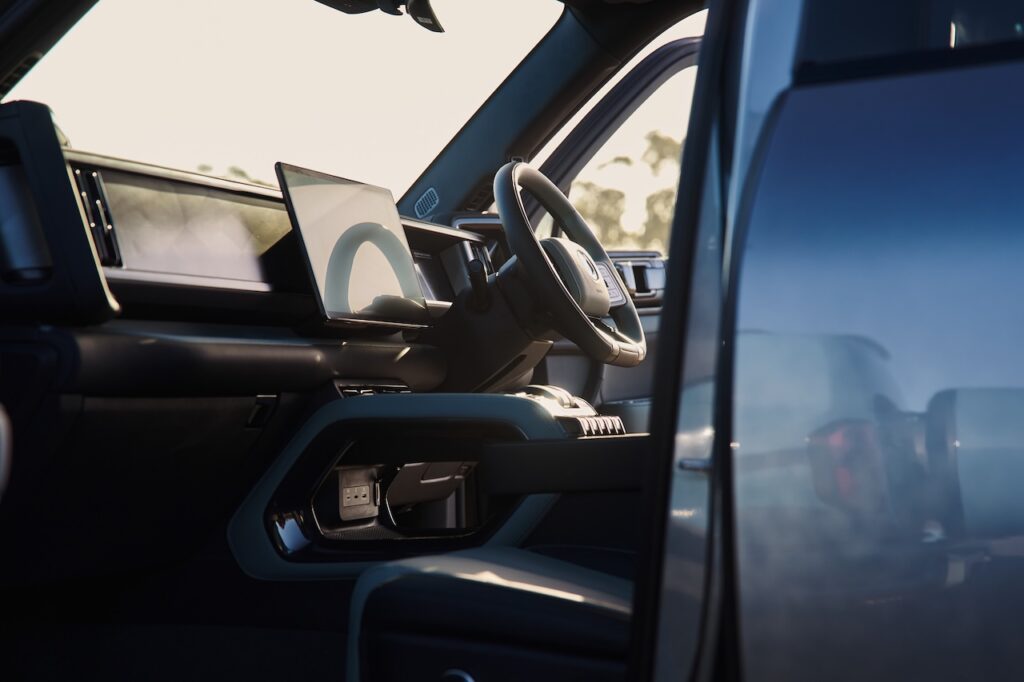
Plus there’s an 18-speaker Devialet (it’s French) sound system, 12.3-inch digital instrument cluster and 17.3-inch central infotainment unit incorporating wireless Apple CarPlay and Android Auto.
The six-seater adds Nappa leather trim, a head-up display, middle row massaging seats, digital rear vision mirror, night vision camera and ambient lighting for the middle row foot space to complement the ambient lighting elsewhere throughout the cabin.
Safety systems include a 360-degree camera, 14 airbags (including curtains that extend to row three) and a suite of driver assist systems. A night vision system displays in the screen to help the driver discern hazards in poor light.
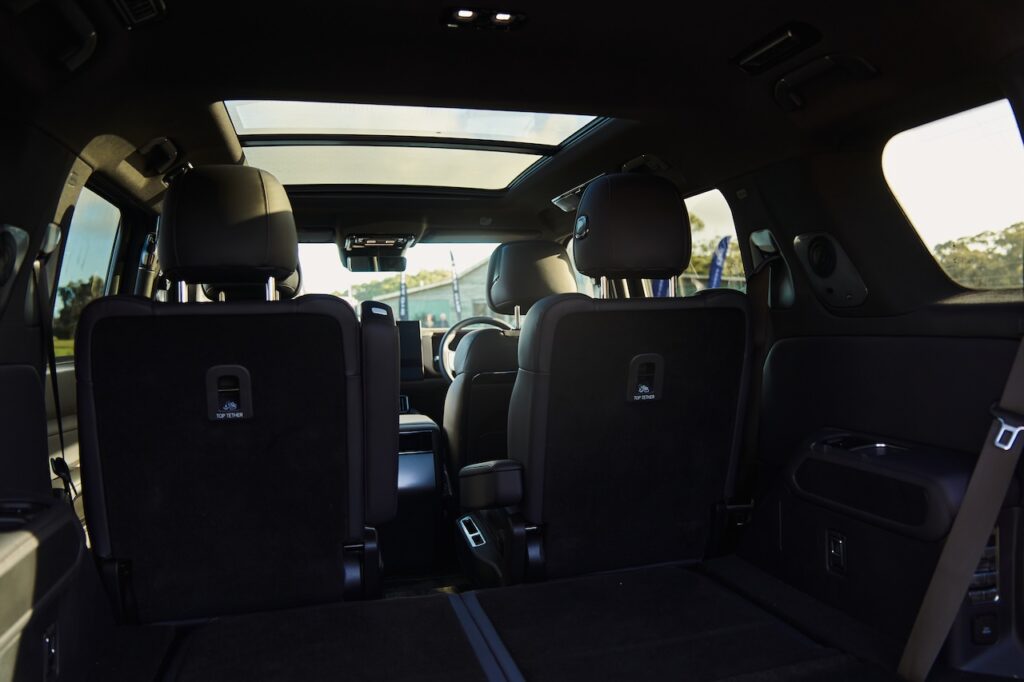
If you opt for the 6S there are only two child seat top tethers, but the 7S gets three because of its bench middle row. Denza is looking into adding tethers to row three as well.
While not yet confirmed, a five-star ANCAP rating is the target.
2026 Denza B8 6S: What we think
We’re not gonna kid you and claim our first drive of a pre-production Denza B8 6S was comprehensive. It wasn’t. It was at the former Holden Lang Lang proving ground in Victoria where we got a small sampling of various facets of its performance.
This thing goes a bit overboard when it comes to driving modes. There are 16 of them for on- and off-road duties, including one called ‘Rage’ that we are told might get renamed for the production car.
According to the explainer in the touchscreen Rage is for low-speed work such as climbing and “tugging”. We think they mean towing.
You have to confirm via a confirm button in the screen you want to switch it on, then it locks the rear diff, goes into low range and allows the least amount of slip.
Other modes include snow, mud, mountain, rock, wade, race, custom and U-turn, the latter being that painful crab walk that is performed by locking the inside rear wheel.
You can also tune the power and suspension comfort through three levels and steering, brake assist, regen braking, DiSus-P and cooling through two modes each.
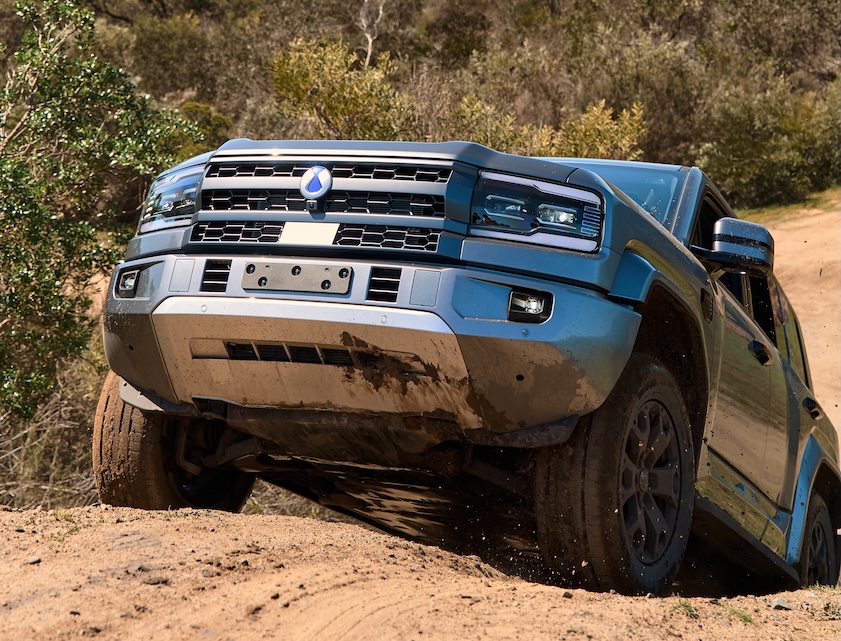
Off-road it all adds up to something that seems to have decent capabilities. We attempted a series of short climbs and descent, an articulation-testing set of yumps and some muddy water fording.
Apart from some minor wheelspin on one greasy slope or other in one of its many modes, it dealt with everything steadily and comfortably. It would lift wheels off the ground but transferred drive, kept moving and did not touch down. There’s solid under-body protection for the battery pack.
The only slight proviso was a rock garden, where the B8 needed a bit of throttle input to keep rolling. A diesel probably would have walked over it on compression alone.
A feet-free off-road cruise control can be engaged to resolve that issue if you like. Hill decent control operates silently off regenerative braking , which makes it nice and smooth. Camera views assist with what’s ahead of this big vehicle with its protruding bonnet.
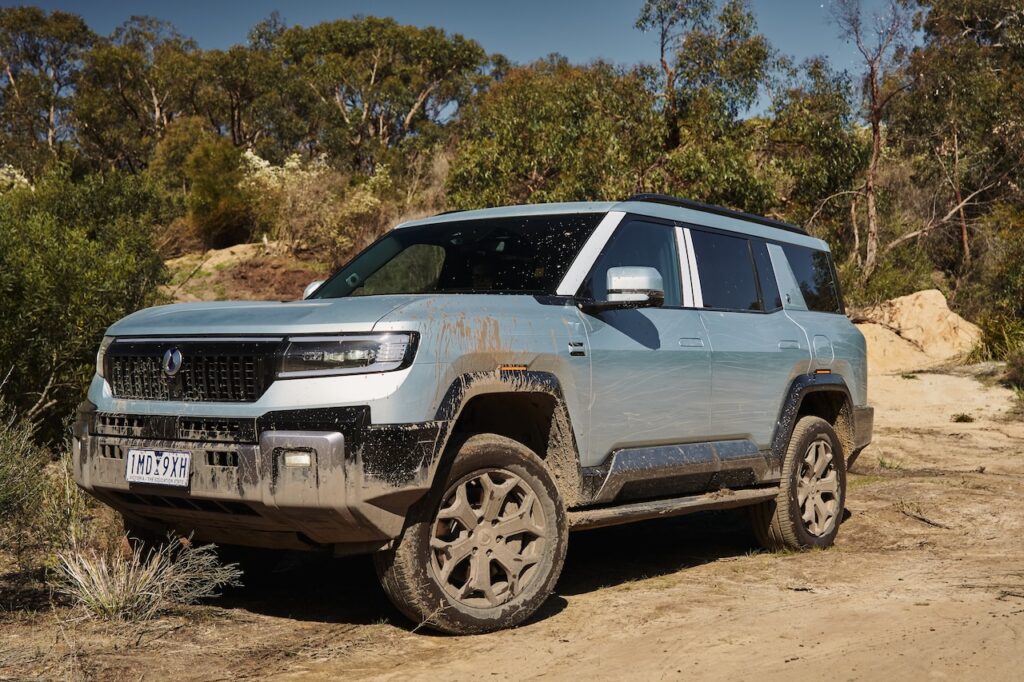
But the question remains: What it would be like blasting across a gibber plain on a rutted road for a day … well, the verdict on that’s gonna have to wait.
Jumping straight out of the smaller B5 into the B8 revealed a vehicle that felt softer and more ponderous.
The BYD tech boffins on hand confirmed this was intentional, the idea being to make its travel experience more rounded and luxurious, while the B5 is sportier and sharper. The gap can be narrowed by winding up the modes, but not fully eradicated.
The B8 backs up that basics character by being very quiet in the cab, even at speed.
No doubt the B8’s weight does not help its handling capabilities. It’s a big and high vehicle and you’re always aware of that. It didn’t feel especially tractive in the front-end in some medium speed (60-80km/h) gravel sweepers.
The electric-assist steering weight also didn’t quite work for me, feeling a bit heavy and rubbery.
All that weight doesn’t hurt the powertrain too much though. It’s got heaps of acceleration for such a heavy vehicle. That quiet and instant low speed e-motor running will no doubt be great in town.
On-test at Lang Lang at the end of a long couple of days the B8 6S trip computer was showing 10.5L/100km fuel consumption and 13.4kWh/100km energy consumption. Not bad at all, but don’t take it to the bank as gospel.
The B8 is a nice place in which to ride. There’s a clear family link to the Shark 6 for the driver via the chunky controls in the centre console. You can adjust air-con via a combination of screen and physical air-con controls.
Sadly, at this stage anyway, you have to drill into the controls to turn off steering wheel-grabbing lane keeping and so on.
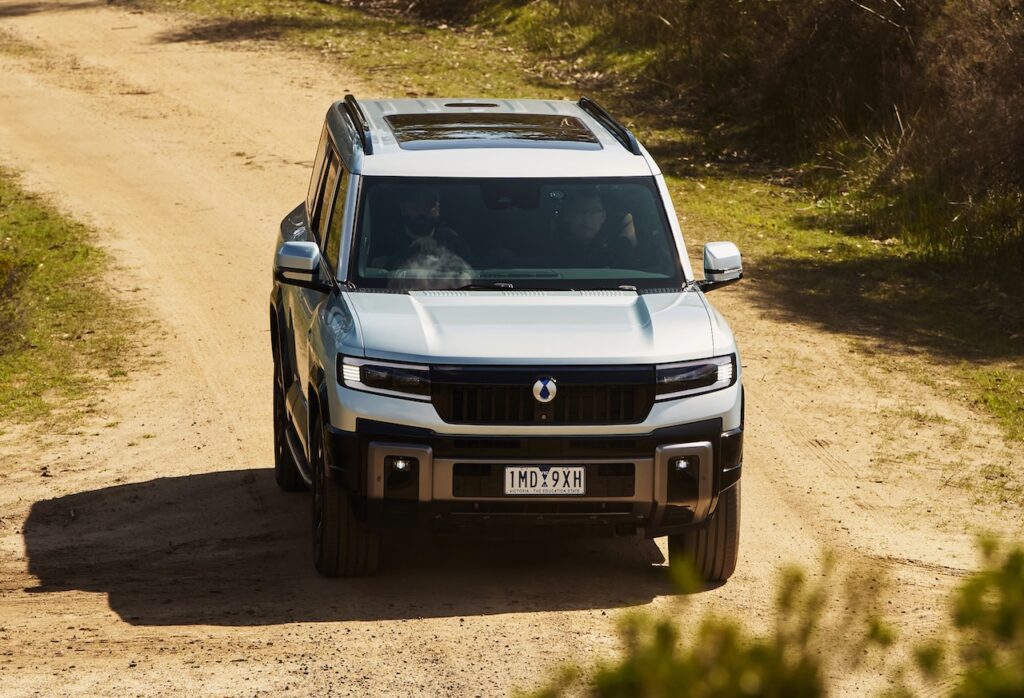
The gear level pops up when the ignition is turned on, a button opens the doors from the inside and they are pop-out flush-mounted externally.
The further you get from the steering wheel the more that connection drops away. The trims, materials and appointments exude premium.
Row two is spacious, there are digital air-con controls, roof-mounted air vents, small door pockets, small map pockets and storage and USBs in each chair.
Row three has cupholders and overhead vents and lights. Being a six-seater access is easier and space more generous, but it’s still more for kids than adults.
Power switches in the boot allow these seats to be remotely raised and lowered and the height of the floor to be lowered to aid loading.
2026 Denza B8 6S: Verdict
There is no doubt the 2026 Denza B8 family offers a true threat to large premium and luxury 4×4 wagons including the mighty Toyota LandCruiser 300 Series.
It’s got price and performance as key selling points. What we don’t know yet how it will stand up to the day-to-day school commute, let alone the challenge of towing a big caravan across Australia.
But even with plenty of unknowns to consider, the Denza B8 has to be taken seriously if you’re in the market for a big go-anywhere wagon.
SCORE: 4.0/5
2026 Denza B8 6S specifications
Price: $97,990 (plus on-road costs)
Basics: EV , 6 seats, 5 doors, SUV, AWD
Range: 100km EV only (WLTP)
Battery capacity: 36.8kWh LFP
Battery warranty: Eight-years/160,000km
Energy consumption: kWh/100km
Fuel consumption: 9.89L/100Km Combined (NEDC, battery SOC under 25 per cent)
Powertrain: 2.0-litre four-cylinder, 145kW/350Nm
Motors: 1 front 200kW/360Nm, 1 rear, 300kW/400Nm.
Combined output: 425kW and 760Nm
charging: 11kW, Type 2 plug
DC charging: 120kW, CCS combo plug
0-100km/h: 4.8 seconds