Audi reveals big NVES impact: Cheapest Aussie PHEV has been priced to woo buyers from in-house ICE rival!
The impact of Australia’s new NVES CO2 emissions laws have been starkly illustrated by launch pricing for Audi’s cheapest plug-in hybrid model.
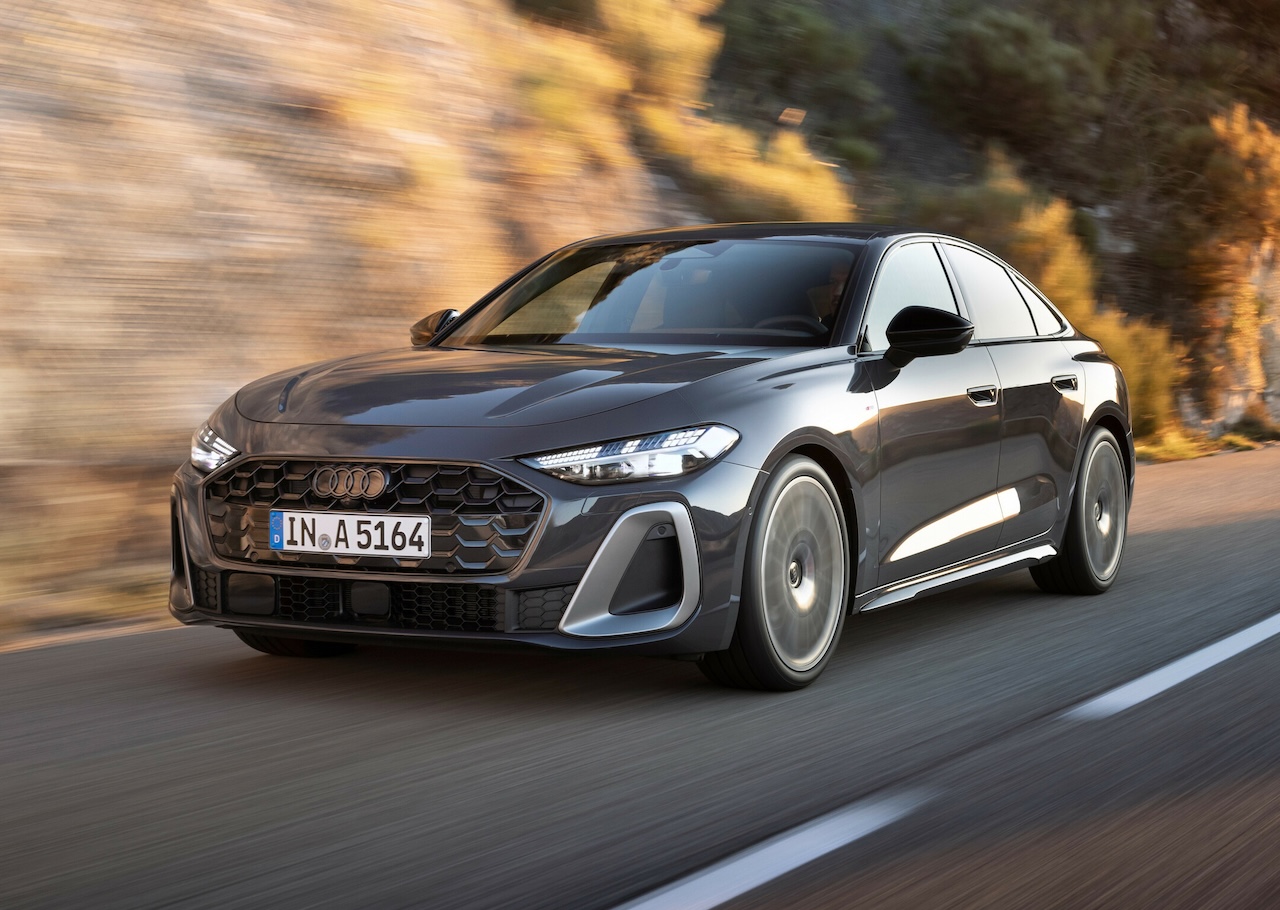
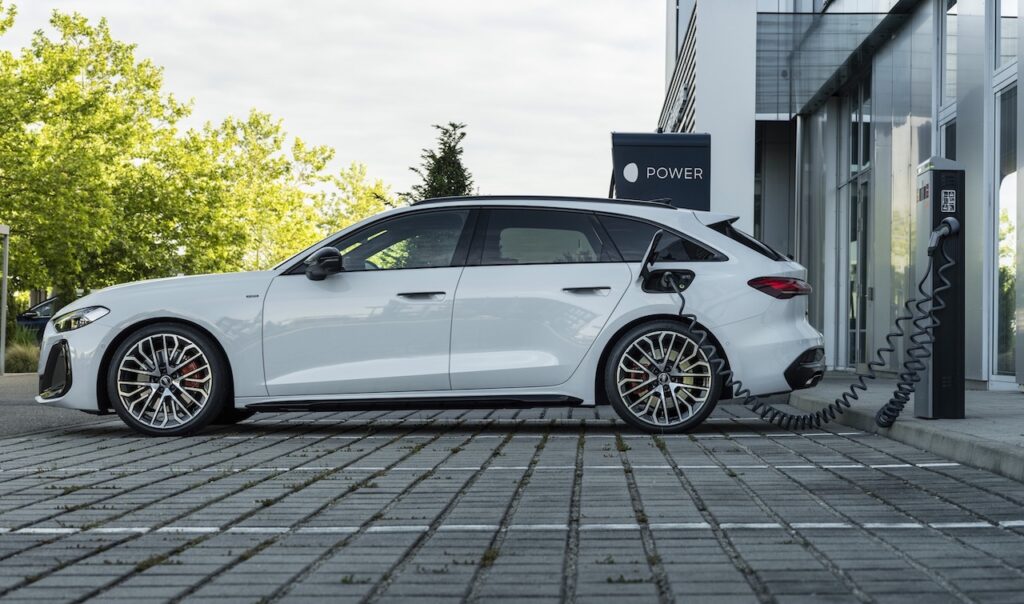
The A5 Sedan and Avant e-hybrid quattro PHEVs will go on-sale at an equivalent price and at the same time as the turbo-petrol A5 TFSI 200kW quattro Sedan and Avant in the fourth quarter of 2025.
That pricing will be equivalent despite the added performance and equipment offered by the PHEV, indicating just how much Audi wants buyer to embrace the petrol-electric model.
READ MORE: Sneak peek! China-only AUDI E5 previews Aussie-bound MG IM5
READ MORE: About turn on 2032 promise: Audi joins the rush to abandon EV-only commitment
READ MORE: 2025 Audi Q6 e-tron Review: Audi platforms up with its best real-world EV yet
That’s because the New Vehicle Efficiency Standard started accruing fines and credits for every new passenger vehicle sold in Australia from July 1, based on CO2 emissions.
“NVES is why we have positioned the PHEV as strong as we possibly can to offer value,” said Audi Australia national product manager Matthew Dale.
“It’s quite a value proposition from a customer perspective.”
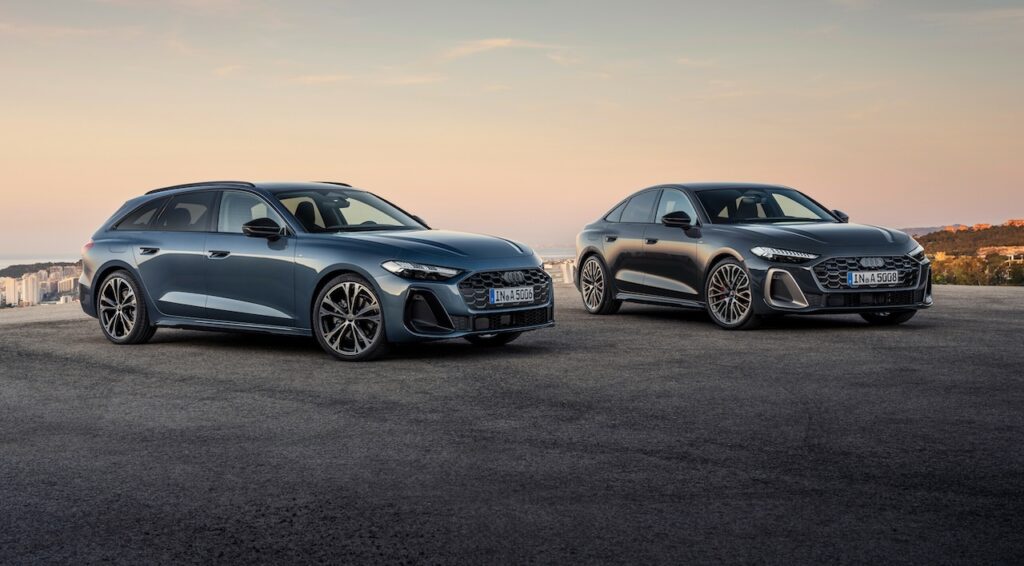
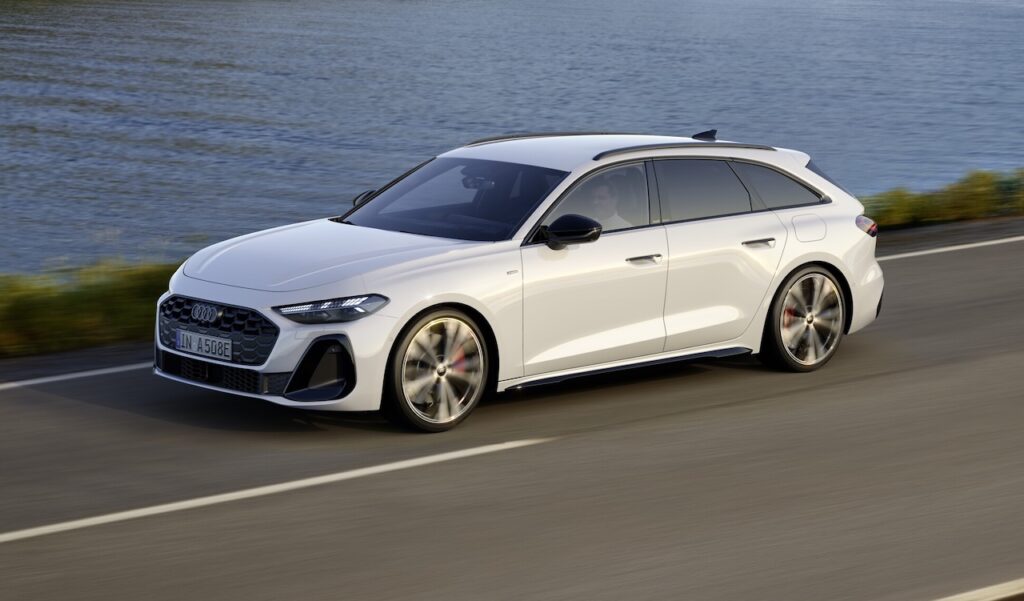
In both cases the Sedan (actually a five-door hatch) is priced from $89,900 and the Avant (wagon) is priced from $92,900.
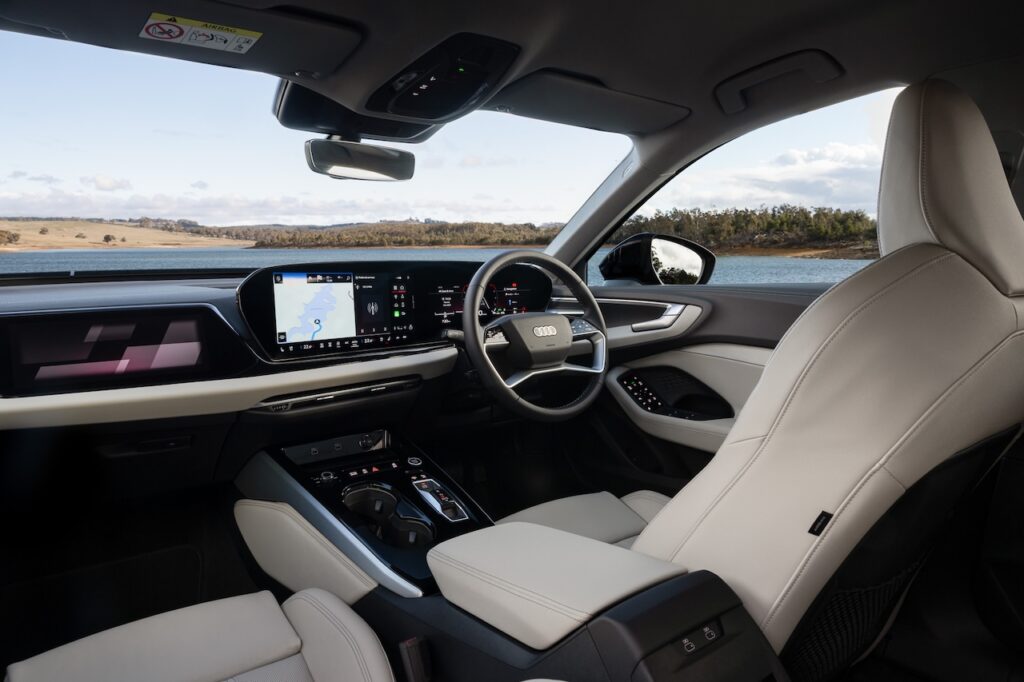
These two powertrains join the launch line-up comprising an entry-level $79,900 150kW four-cylinder A5 Sedan and the sports-focussed $114,900 S5 Sedan and $117,900 S5 Avant. Sandwiched between them are the $99,900 S5 Sedan and $102,900 Avant edition one that are only on-sale for a few months.
The new A5 line-up is actually an amalgam of the old Audi A4 /S4 sedan and Avant line-up and A5/S5 range, which included a five-door Sportback, coupe and cabrio. The last two body shapes have now been dropped.
The traditional big seller in the A4/A5 powertrain line, the four-cylinder TFSI in its new iteration makes 200kW/400Nm and accelerates from 0-100km/h in 5.9 secs.
The A5 e-hybrid makes 270kW/500Nm, claims an 87km EV-only range and accelerates from 0-100km/h in 5.1 secs.
Fuel consumption claims have yet to be confirmed for Australia, but based on European figures the e-hybrid will likely officially average between 2.0-3.0L/100km and the TFSI between 7.0 and 8.0L/100km. That’s a decisive NVES advantage for the PHEV.
Additional e-hybrid equipment beyond the powertrain compared to the TFSI include sports suspension, 20- rather than 19-inch alloy wheels, red brake callipers and privacy glass.
“Traditionally about 50 per cent of our sales mix has been in the 200kW TFSI, or what was badged the 45 TFSI quattro,” Dale explained.
“We are keeping that [TFSI 200kW] for the more traditional buyer. So if they are not tech-savvy and tech-focussed to go to PHEV and want to replace their 45 TFSI then we have a product for them.
“The market will determine how long that [TFSI 200kW] remains in parallel to the PHEV.”
The A4 name was dropped as part of an Audi naming convention to badge EV models with even numbers and internal combustion models with odd numbers.
Thanks to negative feedback and Audi’s decision to backtrack on a commitment to go all-EV by 2033, the odds and even naming convention has been abandoned.
But too late to save the A4, one of Audi’s best known and most successful nameplates, although it may come back in some form.
“Never say never in terms of the history of the A4 nameplate,” said Dale.