2026 XPeng G6 and G9 set fast charging records up to 525kW, trumping Porsche and Lotus at a fraction of the price
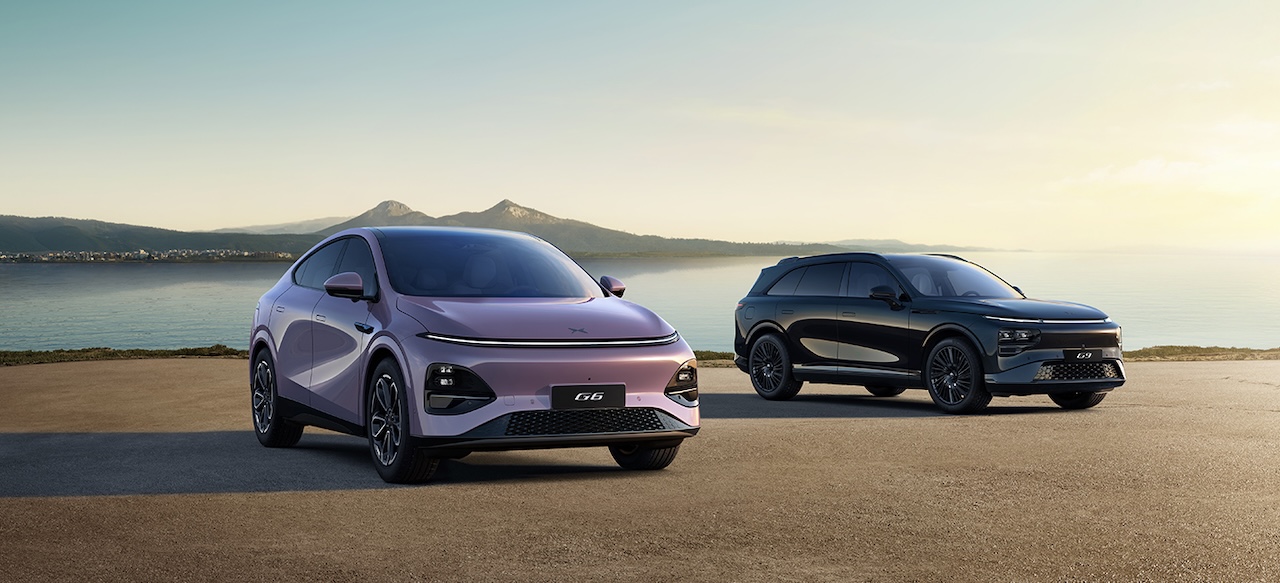
Chinese EV startup XPeng has released more details of its G6 and G9 models, revealing they’ll be among the fastest-charging cars in the world when they launch in early 2026.
Despite already revealing pictures and most details for the refreshed pair, XPeng hasn’t until now announced charging rates. The brand is claiming 451kW for the smaller G6 SUV coupe and an astonishing 525kW for the larger G9.
If you can find a powerful enough 500kW charger, both mid-size SUVs are capable of a 10 to 80 per cent top-up in just 12 minutes, a big reduction from the already near class-leading 20 minutes for the current car.
READ MORE: XPeng G6 Long Range seven day test… I think I want one!
READ MORE: XPeng G9 SUV and X9 people mover locked in for Australia
READ MORE: XPeng model rush! Including performance specials, people mover and Tesla Model 3 rival
At those charging speeds, XPeng says a 10-minute top-up adds up to 450km range.
Already on sale in Australia, the current XPeng G6 has a claimed charging rate of between 215kW to 280kW, but the new speeds mean both models now overshadow rapid-charging EVs like the Porsche Taycan (320kW) and inbound MG IM5 sedan and MG IM6 SUV (396kW).
Unlocking this mega quick charging is XPeng’s next generation 5C Supercharging lithium iron phosphate (LFP) battery tech.
Combined with an 800-volt electrical system, both G6 and G9 can cope with far higher charging rates than today’s batteries, while a chemical composition that eliminates the need for both cobalt and nickel without compromising performance means they’re friendlier to the planet too.

Designed to be more durable too, the new powerpack can withstand temperatures up to 1000°C and a side impact equivalent to 80 tonnes of pressure.
Even in cold temperatures, charging speeds barely trail off with a top-up in -30°C taking just 15 minutes.
Introducing mildly updated looks, the new G6 gets a full width ‘Starlight Wing’ LED light bar that integrates the indicators, while at the rear there’s a new diffuser.
Designers also overhauled the cabin with up to 60 per cent of the interior all-new.
Updates include heated and cooled massage seats with lumbar support, larger 10.25-inch digital instrument cluster, and a wider 15.6-inch infotainment system (up from 14.9
inches), the latter benefitting from a more powerful Qualcomm 8295 processor.

Other tweaks include a new pattern for the speaker shrouds, while the steering wheel has been redesigned with new capacitive buttons.
Fresh tech include a digital rear-view mirror and trick ambient lighting.
XPeng says it will roll out AI-powered infotainment, and upgraded driver-assist that could feature Level 3 (hands off, eyes off the road) autonomous cruise control.
While battery sizes for Europe and our market have yet to be confirmed, in China the G6 Standard Range’s 66-kilowatt-hour battery has been swapped out for a larger 68.5kWh lithium iron phosphate power pack that, as well as unlocking faster charging, returns an extra 45km of range (on the Chinese CLTC test cycle), suggesting an increase on the current car’s claimed 435km driving range (WLTP).
The larger 87.5kWh battery, meanwhile, has been downsized to an 80.8kWh battery that drops the Long Range CLTC range by 25km, which should see a small fall on the current version’s ability to travel 570km in the WLTP test cycle.
Following the updates, the G6’s single motor produces 218kW and 440Nm – 28kW more for the Standard Range (torque remains unchanged) and 8kW more for the Long Range.
Performance for the rear-drive versions doesn’t change for the G6 Standard Range (which accelerates to 100km/h in 6.6 seconds), but the Long Range takes a brisker 5.9 seconds to hit 100km/h from rest – 0.3 seconds quicker than before.
There’s no word on what’s happened to the Performance 358kW/660Nm dual-motor version, but expect more power and for it to be part of the Australian lineup when the refreshed XPeng G6 is introduced later this year.

Arriving in late October 2024 via distributor TrueEV, the XPeng G6 was priced from $54,800 plus on-road costs (ORCs) for the entry-level Standard Range.
Boosting its appeal, the updated XPeng G6 will benefit from a 10-year local warranty.
The XPeng G9, meanwhile, is already scheduled to be launched here later this year.
Headline news for the SUV wagon is its punchier 258kW/465Nm single e-motor and a dual-motor all-wheel-drive variant with 423kW and 695Nm.
Chinese models come with either a 79kWh or a 93.1kWh battery, providing a claimed range of 625km to 712km, depending on variant.
From launch, the G9 should come with XPeng’s latest Turing AI intelligent driver-assist tech that is said to remove the need for a LiDAR binnacle – not that it lacks sensors.
The G9 still comes with 11 cameras, three millimetre-wave radars and 12 ultrasonic radars. Thanks to the greater processing power and new AI software, the G9’s visual perception distance has been increased by 125 per cent over the outgoing LiDAR-equipped G9.

A powerful on-board computer is claimed to recognise moving and stationary objects on the road ahead up to 40 per cent quicker than existing tech, buying more time to react.
Within, the G9 shares most of its in-car tech with the smaller G6, benefiting from the larger screens and faster processing times.
In China the 2026 XPeng G9 is priced from 263,900 Chinese yuan, which equates to around $55,000 in our money.
Despite inviting buyers to register their interest on XPeng’s local website for the G9, exact timing for the G6 sibling has yet to be officially announced by local importer, TrueEV.