2026 Suzuki e-Vitara Review: Japanese brand’s first EV has some familiar traits, but lacks the price focus of BYD, Jaecoo and MG
Suzuki is stepping into the electric era with the 2026 e-Vitara, a model that signals a shift for a brand long associated with affordable, no-nonsense petrol SUVs.
This isn’t just the brand’s first EV, but Suzuki attempting to stay relevant in a rapidly evolving market.
In a world of CO2 emissions regulations that’s never been so important.
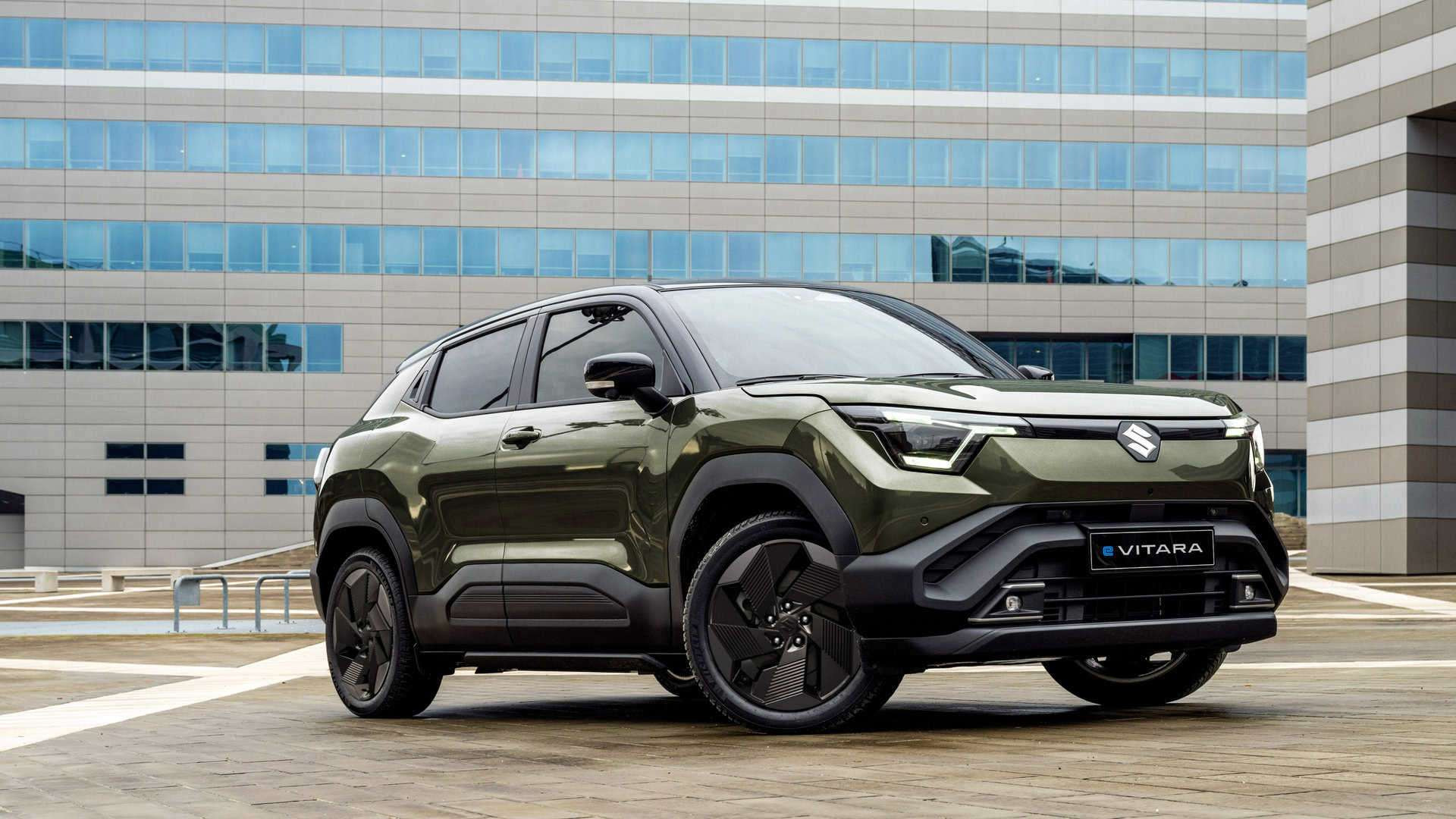
Built on a new dedicated EV platform and shared with Toyota – the car is sold overseas as the Toyota Urban Cruiser – the e-Vitara is a compact electric SUV aimed at city buyers wanting simplicity, efficiency and a familiar badge.
READ MORE: Suzuki e-Vitara Australian details announced: Two EV models on sale by June 2026
READ MORE: Suzuki’s Aussie electrified overhaul! Cheap mild-hybrid Suzuki Fronx coming soon, electric Suzuki Vitaras will be here in 2026
READ MORE: First EVer: 2025 Suzuki eVitara is the brand’s first mass-produced EV. Watch out MG ZS EV, Hyundai Kona Electric and BYD Atto 3 if it gets the green light for Australia!
Other than the name, it shares nothing with the regular Vitara.
But in a market segment that’s swelling with impressive new entrants, it’s going to need more than just a competitive price.
We’ve had an early look at what the e-Vitara brings to the table – and whether it has what it takes to stand out in Australia’s increasingly crowded EV landscape.
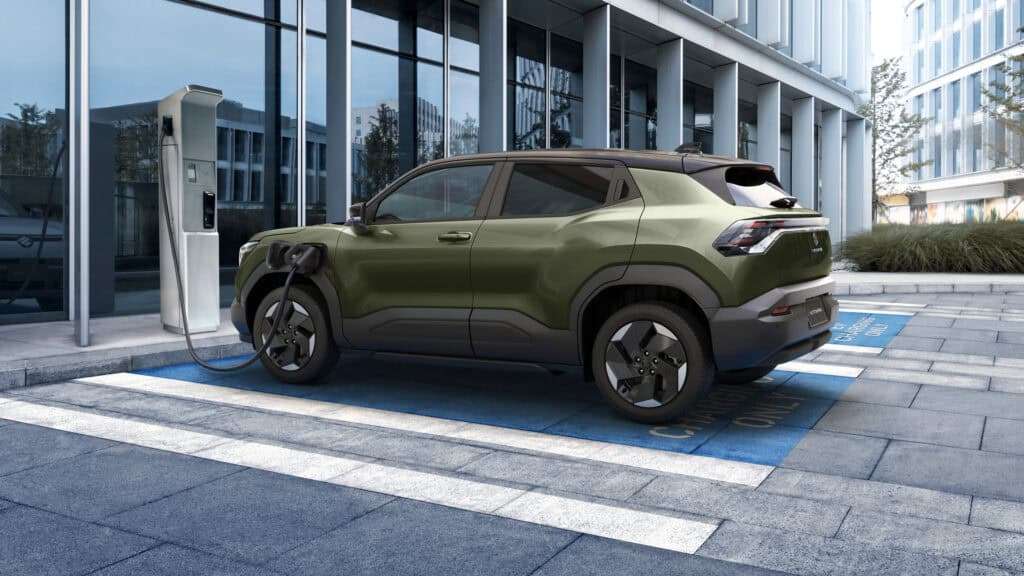
The car doesn’t hit dealerships until mid-2026, so some details – including pricing – are yet to be finalised.
2026 Suzuki e-Vitara price and equipment
Suzuki Australia hasn’t locked in final pricing yet, but expectations are that the e-Vitara will kick off somewhere between $45,000 and $50,000.
That’s north of the sweet spot of the growing budget EV SUV battleground, which includes the likes of the BYD Atto 2, Jaecoo J5, MG S5, Geely EX5, Leapmotor B10, Kia EV3 and Hyundai Kona EV.
There are two e-Vitara models, the entry-level being the Motion with a 49kWh battery and single 106kW/193Nm electric motor driving the front wheels.
The Ultra adds a rear motor and ups the output to 135kW/307Nm and pairs it with a 61kWh battery.
Neither has a standout driving range. The Motion is good for a WLTP claimed 344km and the Ultra 395km.
Charging isn’t road-trip friendly; a 10-80 per cent top up – as little as 240km of range – taking about 45 minutes
Standard gear only covers the basics, including single-zone ventilation, smart key entry, ambient lighting, 360-degree camera, blind spot warning, auto braking and 18-inch alloy wheels. There’s nothing like the vast spread we’re getting accustomed to in Chinese EVs.
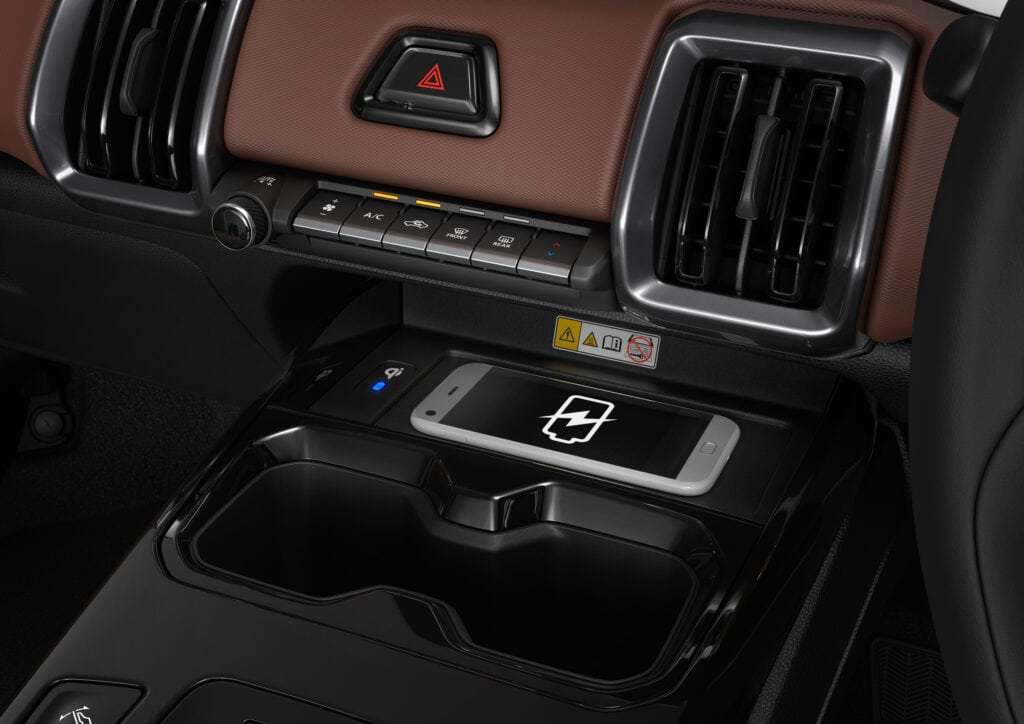
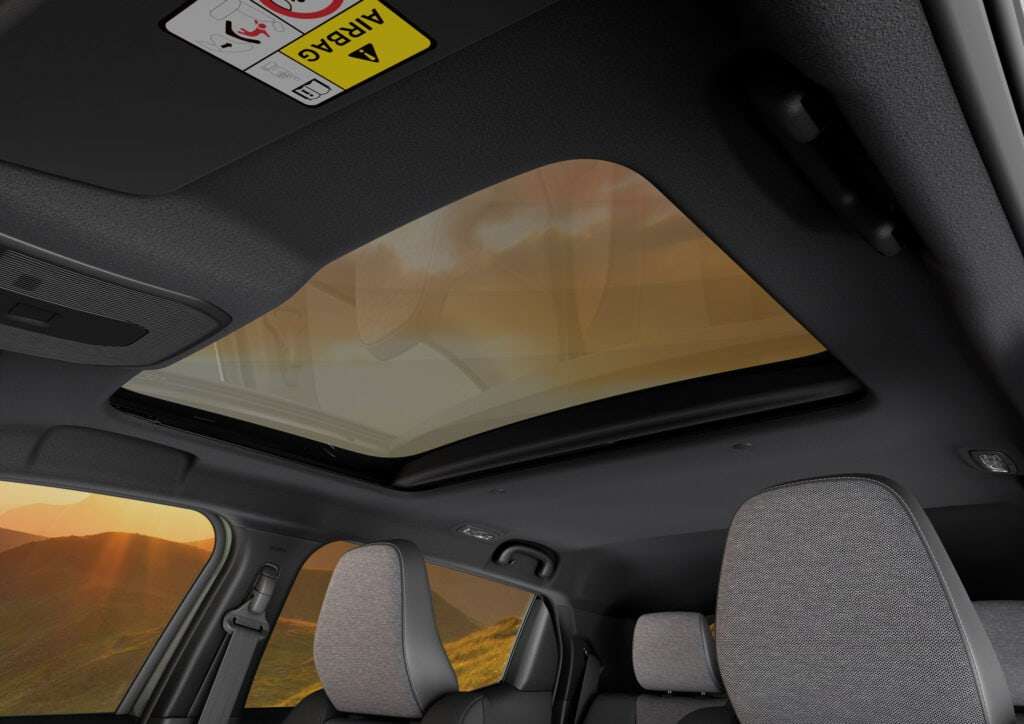
The Ultra picks up some faux leather trim, a sunroof, Infinity sound system, fog lights, wireless phone charger, auto high beams, power-adjusted driver’s seat and heated front seats.
There’s also a 10.25-inch digital instrument cluster and 10.1-inch central infotainment screen with wireless Apple CarPlay and Android Auto.
2026 Suzuki e-Vitara: What we think
The e-Vitara is Suzuki’s first tilt at the growing EV market, so there’s a bit riding on it.
From the outset it’s clear it’s best suited to city driving duties.
Between the compact dimensions, modest EV range and sub-par fast charging credentials it’s the sort of car that will work best zipping around the suburbs and being charged at home.
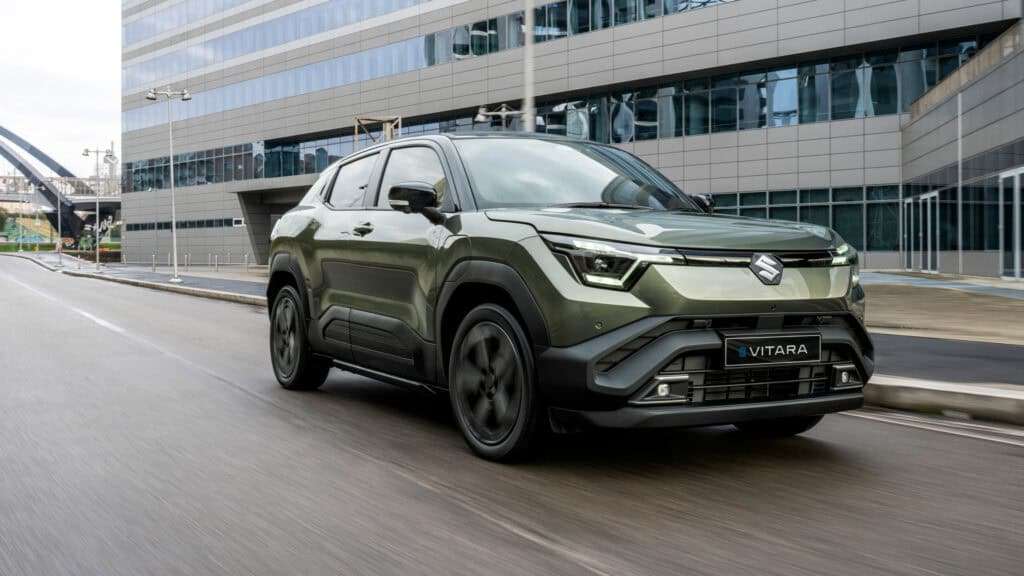
That’s not unusual for an EV of this size and stature, although at the anticipated $50K-ish price tag there are plenty of EVs that will go further.
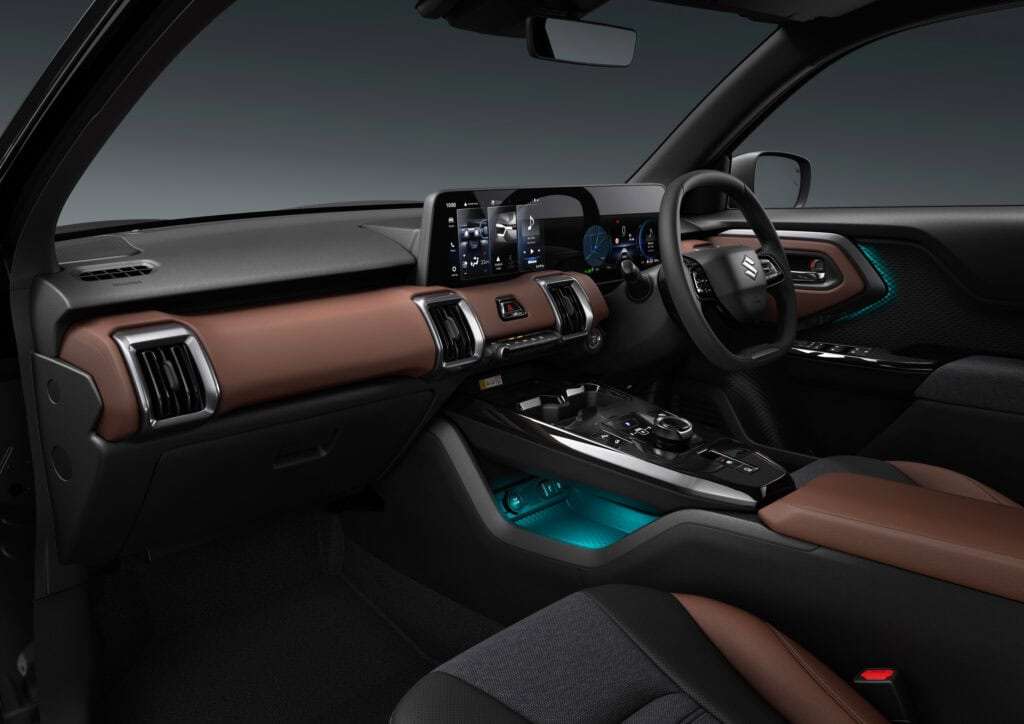
Inside, the cabin looks modern and adventurous with some bold angles and touches on the dash.
There are some hard plastics that show it’s more about the visuals than tactility, but it’s nonetheless inoffensive.
There’s also the occasional Toyota touch, such as the rotary drive selector and surrounding buttons that are borrowed from the bZ4X.
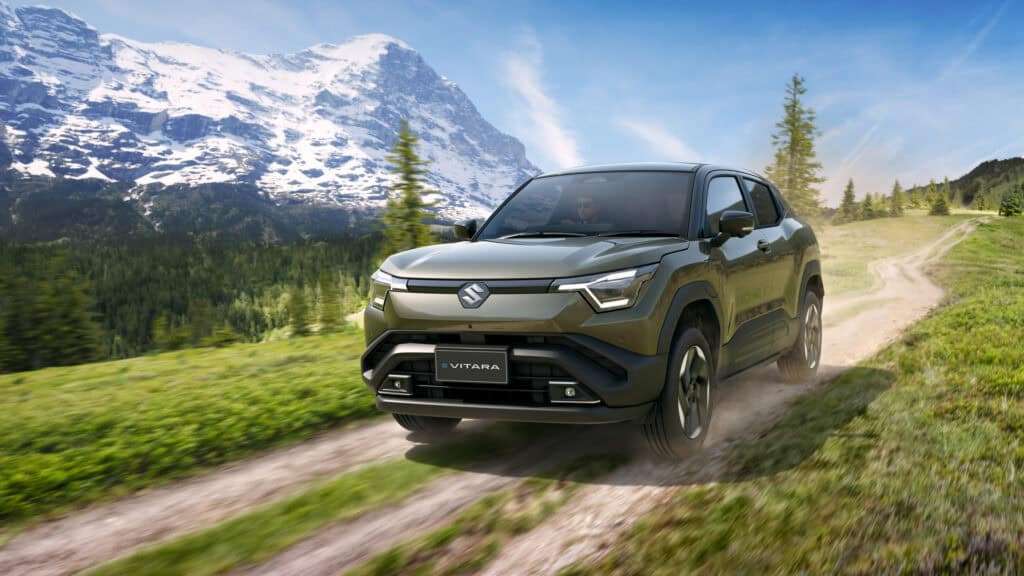
Space is decent for what is a compact machine, nicely leveraging the bespoke EV architecture.
The boot is modest, though, at just 238 litres. At least there’s a 40/20/40 split-folding back seat that allows for long items to be poked through to the seating area.
Our first taste was very brief, but incorporated some off-roading that showed the AllGrip all-wheel drive system does a decent job of apportioning power to the wheels with the most grip.
That’s for the Ultra model, which makes a combined 135kW and 307Nm for a claimed 0-100km/h time of 7.4 seconds.
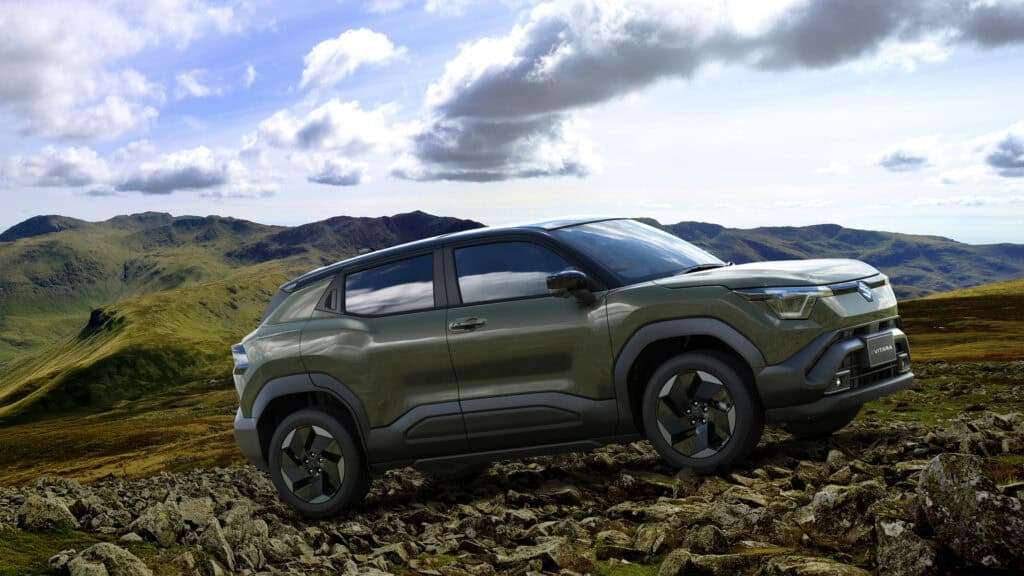
It’s zippy on regular roads, although it’s not the sharpest thing to drive, with some cushiness to the suspension and an on-road manner that’s more sensible than exciting.
The single e-motor in the Motion makes just 106kW and 193Nm for a claimed 0-100km/h time of 9.6 seconds.
But in true EV style it feels more generous than that, leveraging the easily accessible torque to make for easy around-town progress.
2026 Suzuki e-Vitara: Verdict
The Suzuki e-Vitara feels like a sensible, measured step into EVs rather than a bold leap.
That could work for Suzuki’s loyal customer base – it believes buyers will be tempted by a known brand and the back-up of a broad dealer network – but it may struggle to excite buyers looking for something more cutting-edge.
The challenge is obvious. This segment is no longer short on options, many of them far sharper priced than where Suzuki is suggesting the e-Vitara will land.
It’s straightforward and sensible without rewriting any EV rules.
Still, in a fast-moving EV market, playing it safe can be a double-edged sword.
Consider the e-Vitara a promising and somewhat cautious first step into electrification.
Score: 3/5
2026 Suzuki e-Vitara Motion price and specifications
Price: From $45,000 – $50,000 (estimated)
Basics: EV, 5 seats, 5 doors, SUV, FWD
Range: 344km (WLTP)
Battery capacity: 49kWh
Battery warranty: TBA
Energy consumption: 14.9kWh/100km
Motors: 1 front 106kW/193Nm
AC charging: 11kW, Type 2 plug
DC charging: NA (10-80 per cent charge in about 45 minutes), CCS combo plug
0-100km/h: 9.6 seconds