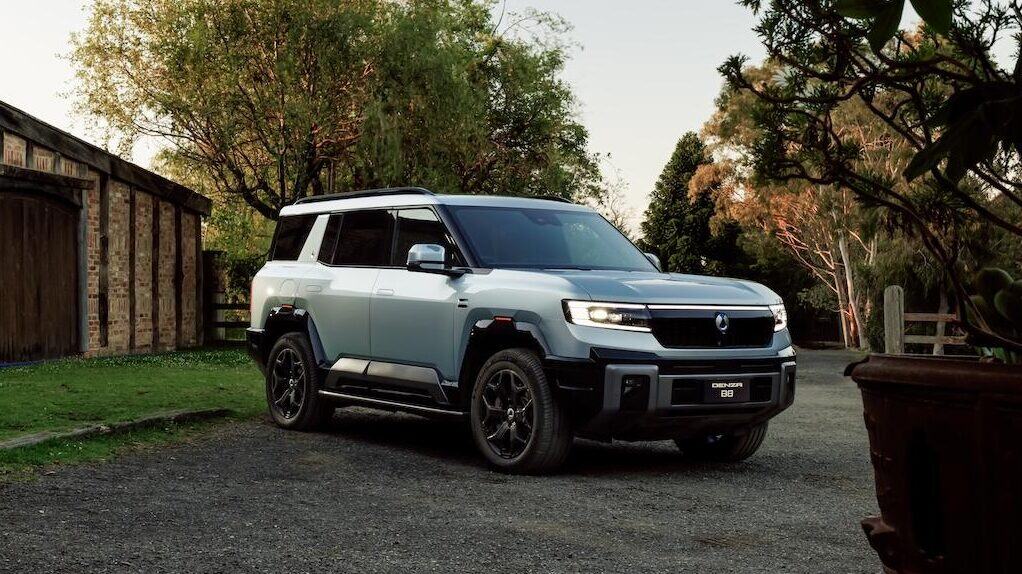
2026 Denza B8 PHEV Review: LandCruiser challenger arrives as Australia’s heaviest SUV. Will it make a dent?
“In the blue corner, weighing in at… three thousand, two hundred and ninety kilograms (!), it’s the ‘Cruiser Crusherrrrrr. Hailing from BYD in China… Ladies and Gentlemen, the Denzaaaaa Beeeyeeee Eight-a!”
A ring-announcer-in-the-style-of Michael Buffer introduction is entirely appropriate to welcome the arrival of BYD’s luxury brand Denza into Australia.
And this newbie’s a proper heavyweight. A very, very punchy one.
Denza launches with a brace of biggies, both plug-in hybrid 4x4s. The Toyota Prado-sized five seat B5, and this, the B8 upper large SUV with seating for six or seven, hoping to snare market share from the LandCruiser 300 Series and Nissan Patrol.
That’s shots fired right into the heartland of Aussie icons.
READ MORE: 2026 Denza B8 6S Review: Full-size Chinese PHEV 4×4 takes on LandCruiser.
READ MORE: 2026 Denza B5 Leopard Review: Toyota should be worried, this plug-in hybrid could redefine the Australian 4×4 wagon market
READ MORE: Plug-in hybrid GWM Tank 500 Hi4-T launched in Australia.
And Denza’s top brass unashamedly want premium brand scalps too, offering high levels of luxury and tech while dramatically undercutting the likes of a Lexus GX, Land Rover Discovery and BMW X5 / X7.
As our ring announcer would bellow: “Let’s get ready to rumble!!”
And rumble this B8 will. At that mega mass of 3290kg, it’s the heaviest passenger vehicle on sale in Australia.
You could take seven giants from the Wallabies’ scrum (average weight 115kg per man) and load them into a LandCruiser GX before you’d get mass parity with the lardy Denza.
After our initial pre-production B8 test last year, this was our first chance to get some meaningful road and off-road kilometres in this mega PHEV.
2026 Denza B8 price and equipment
Prices starts from around $97,000 drive-away for a seven seat B8 7S, or $104,000 on the road for a six seat B8 6S, the latter including a pair of ultra-fancy captain’s chairs for the middle row.
Chunky, but similar money buys only entry-level versions of a LandCruiser or Patrol, while Denza’s chucked all the features and kit in its B8s.
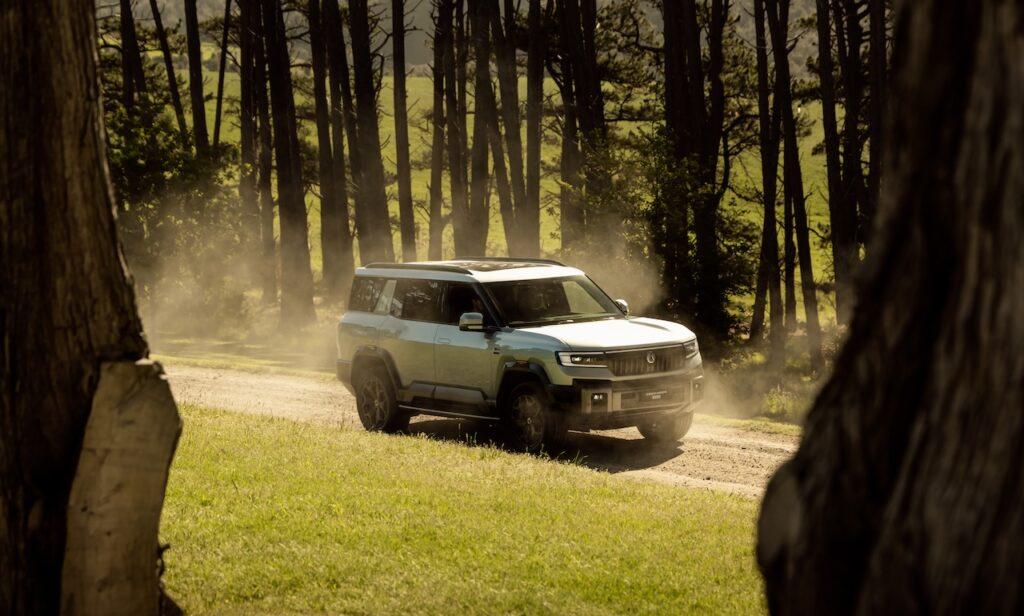
It uses a 2.0L turbo petrol engine and an e-motor on each axle, combining for a healthy 425kW and 760Nm.
Despite that road-cracking 3300kg kerb weight it somehow claims 0-100km/h in under five seconds. Our test – pinning it after selecting “Race” mode – suggested it’s not really possible. Although it does shift along quickly for such a big barge.
There’s BYD’s 36.8kWh Blade LFP battery integrated into the steel chassis, delivering 100km EV range. There’s regen braking and bi-directional V2L capability to power external appliances.
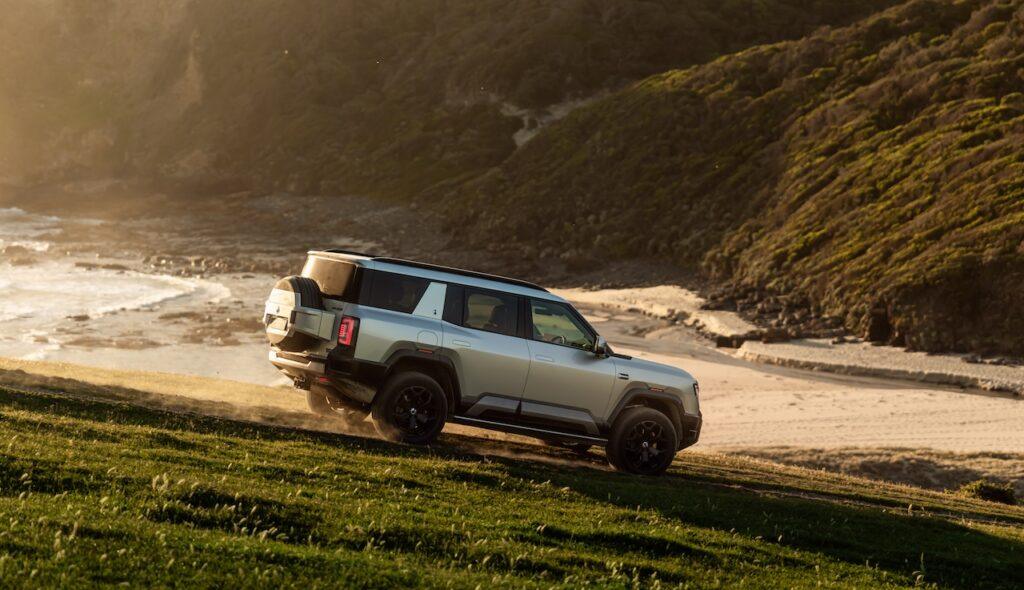
This 5.2-metre long B8’s off-road credentials look good on paper.
There’s 3500kg towing with drawbar and hitch receiver included and, thanks to standard-fit adjustable suspension (DiSus-P intelligent hydraulic suspension), there’s self-levelling capability. Ideal with your van hitched on.
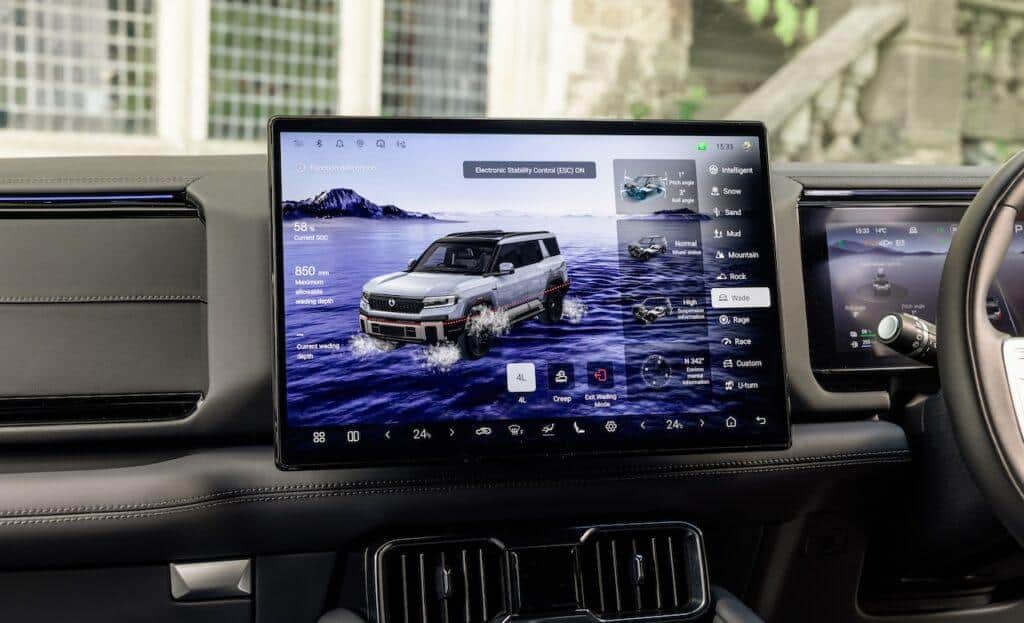
When suspension’s set to maximum height it wades up to 890mm and ground clearance goes from 220mm to a mighty 310mm.
Meanwhile, it delivers a maximum approach angle of 39 degrees, breakover of 27 degrees and departure of 35 degrees.
There are mechanical locking front and rear diffs in the B8 6S (no front one in the 7S), a simulated locking centre diff (there’s no true mechanical connection from front to rear of the vehicle), low range and e-motor assisted off-road traction control modes.
There are a ludicrous 16 drive modes: useful stuff like Sand, Mud and Rock mixed in with your less understandable Sport+ and Race modes.
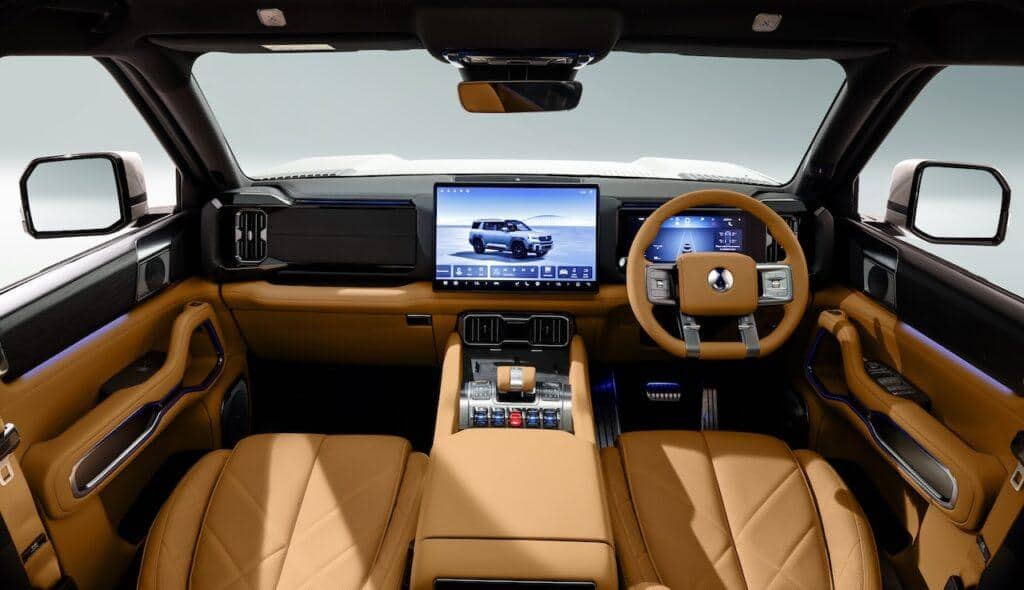
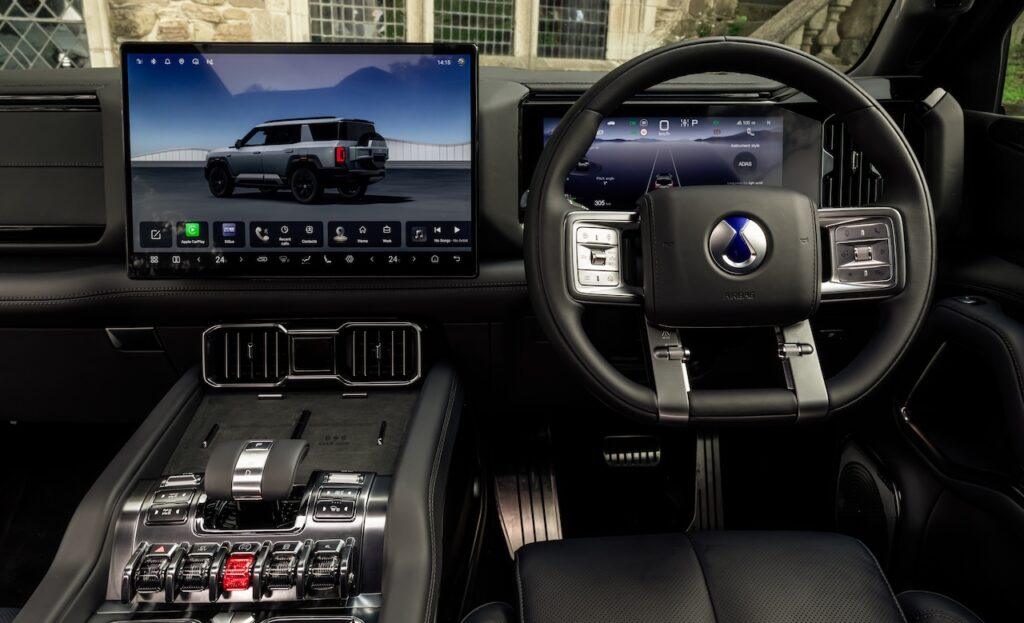
The B8 7S features seven seats in genuine leather, power front seats with heating, ventilation, massage and memory, soft close doors, seven-litre cooler/hotbox (which goes down to -6C) in the centre console, 17.3-inch touchscreen, 12.3-inch digital driver display, 18-speaker Devialet audio, six USB outlets, twin wireless charging pads and three-zone climate control.
Rear seats, to spoil the little ‘uns, are power, heated and ventilated too, while the third row rises and falls (far too slowly) electrically.
The six seat versions have some exclusive kit. That locking front diff, two roomy seats with arm rests in the centre row, Nappa leather trim, more electric adjust for front seats including leg rests, digital rear vision mirror and extra underbody cameras.
All B8s have 20-inch alloys, matrix LED auto headlights, opening electric sunroof and a fixed side step. You must open the side-opening tailgate yourself, however, and it’s hinged – unusually – on the passenger’s side. Blessedly for a PHEV, there’s a full size spare on that tailgate, but it’s hardly the prettiest of designs.
It’s been awarded a five-star ANCAP, comes with with 13 airbags and the full compliment of driver assist kit, including useful stuff like 360-degree camera, blind spot monitor, front and rear collision warning, front and rear cross traffic alert and intelligent cruise control.
Now, here comes the serious stuff for anyone planning on hauling and towing stuff in a B8.
Kerb weight is 3290kg and gross vehicle mass 3992kg, offering a 702kg payload – comparable to a LandCruiser 300 Series.
Gross combination mass is 7174kg, so if you plan on lugging up to 3500kg, with the ball weight taken into account, you’ll have to be well across your occupants and cargo weights.
Cargo space is a not-much 147L with all seats up, but a decent 920L with the third row flat.
2026 Denza B8 PHEV: What we think
Imposing? Yes. Pretty? No.
Denza’s smaller B5 is the real looker of the pair… the D8 is somehow a bit generically bland, despite its blend of sharp profile edges, boxy arches and unmemorable visage. It should just look a bit meatier. Tougher.
But the cabin is rather superb overall. It’s a rung down on the layout and loveliness of a big Land Rover or BMW, but it’s not far off at all. The Nappa leather-dripping six-seater, in particular, is a wonderful, cosseting and comfy place to be.
Cabin touchpoints are mainly excellent. The gear selector gracefully rises from the centre console on start up (lovely tech until it goes wrong), but crystal-like buttons have a slightly Christmas cracker aesthetic. But all’s forgiven when you see the red start/stop button pulsing like The Terminator’s exposed robot eyeball. Try not loving that.
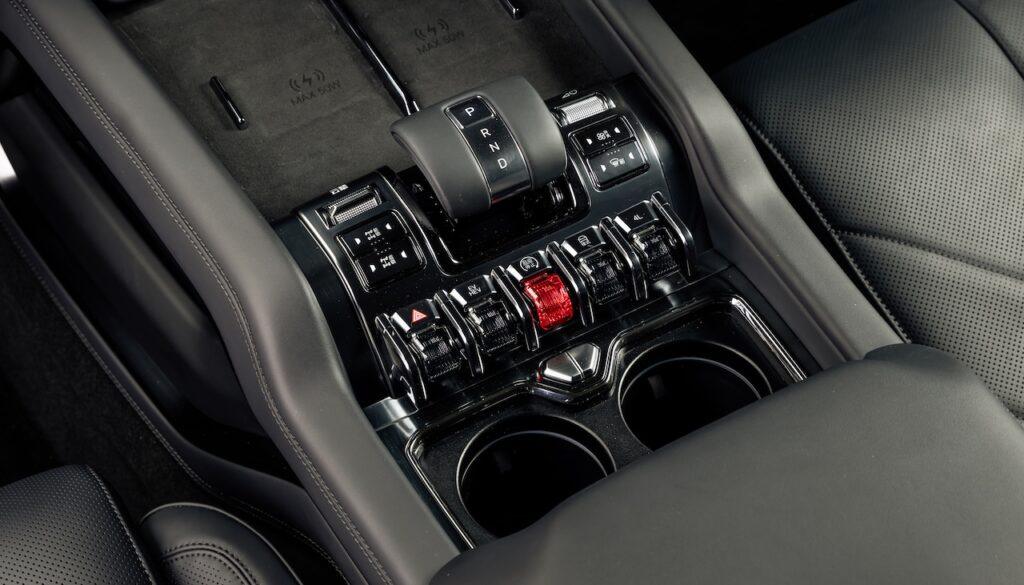
The giant central screen is, if anything, too over-the-top. Unnecessarily big for my liking, and while Apple CarPlay/Android Auto mirroring is superb, the billion-odd menus and sub-menus take serious learning.
The second row space is mighty for leg and head oom, while there’s a strong sense of luxury with digital air con controls, vents in the roof and separate access to the fridge/hotbox. Kids love that stuff.
Go the six seater and the two captain’s chairs bring almost business class-like travel. It also makes walking through to the third row far more palatable.
As is often the case with electric-folding seats, things move glacially and you’re begging for manual control to hurry things along. Opting for the six seater means there’s less faff in doing this.
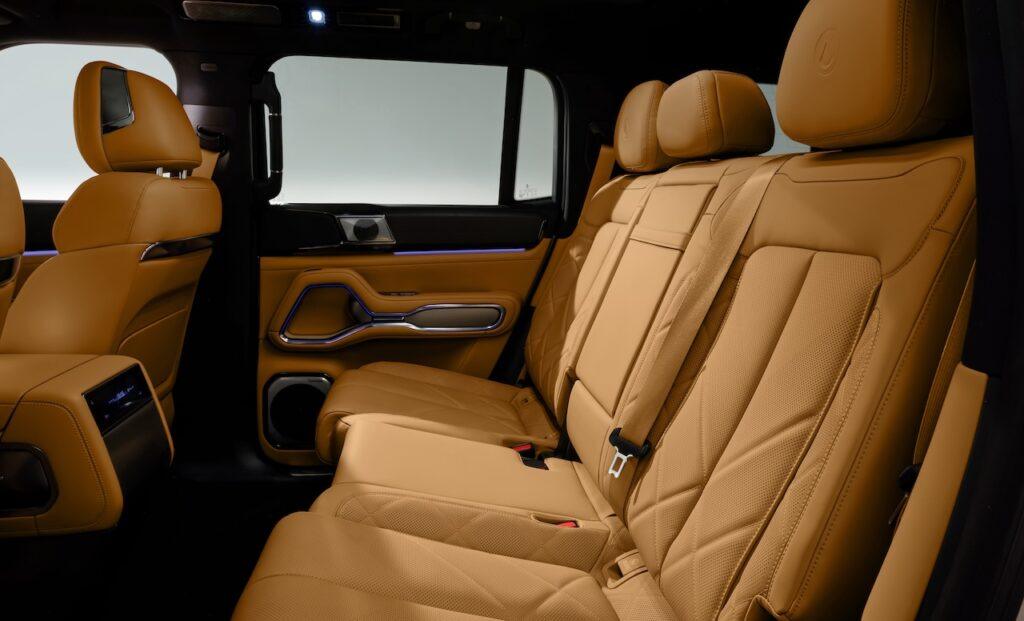
The third row also impresses. More roof vents, cup holders, USB ports and survivable space for adults show the rearmost pair are not neglected. Lovely soft seat bases too, especially if you go the Nappa treatment.
Our South Australia on-road/off-road test first covered around 400km of bitumen adventure.
The big B8 wafts along the highway in a sumptuous manner; the cabin quietness, seat comfort and practically zero engine noise nor rumble make for a relaxing, classy cruise.
Nannying driver aids spoil the serenity, showing once again that poor calibration can turn a lovely drive into a bonging, scalding nightmare. No car should be annoying, so the B8’s driver monitor, lane keep assist and speed sign warnings had to be turned off to preserve sanity.
What this lump can’t do is hide its weight when the road becomes choppy or bumpy. It feels surprisingly crashy on road imperfections, taking some shine off the luxo barge experience. Interestingly, the smaller B5 we tested at the same time handled such roads in a more composed manner.
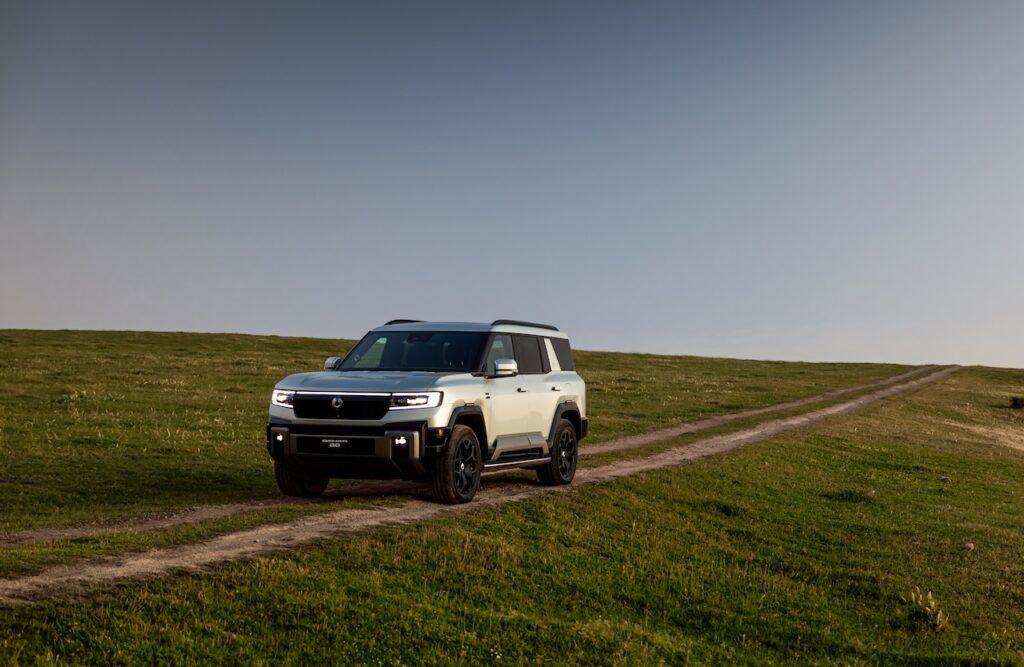
Low speed in town the B8’s also not the smoothest, although kudos for reasonable handling and grip when thrown into a corner with a bit of gusto. It feels safe and planted, although we didn’t have the chance to test its wet road performance.
Speaking of performance, this B8 hustles along with serious speed. From standstill, throttle response proved very lazy – no matter the drive mode – so we couldn’t get close to the sub-five second acceleration time.
But good grief it has serious rolling acceleration, with the twin e-motors hauling this brute along with unrelenting force. Brakes are up to the job of slowing it down, but could use a bit more finesse. In town, they’re very much off then suddenly on.
Full EV mode brings silent progress that you’d find impossible in a diesel, and its clever PHEV system means it’s more of a range extender EV, using petrol to generate battery power. Importantly, as long as you’ve got petrol, you won’t lose the electric motors when towing.
Economy wise, with the engine needing to boost the 36.8kWh LFP battery, fuel use moved between 8L and 11L/100km – similar to diesel large SUV drinking.
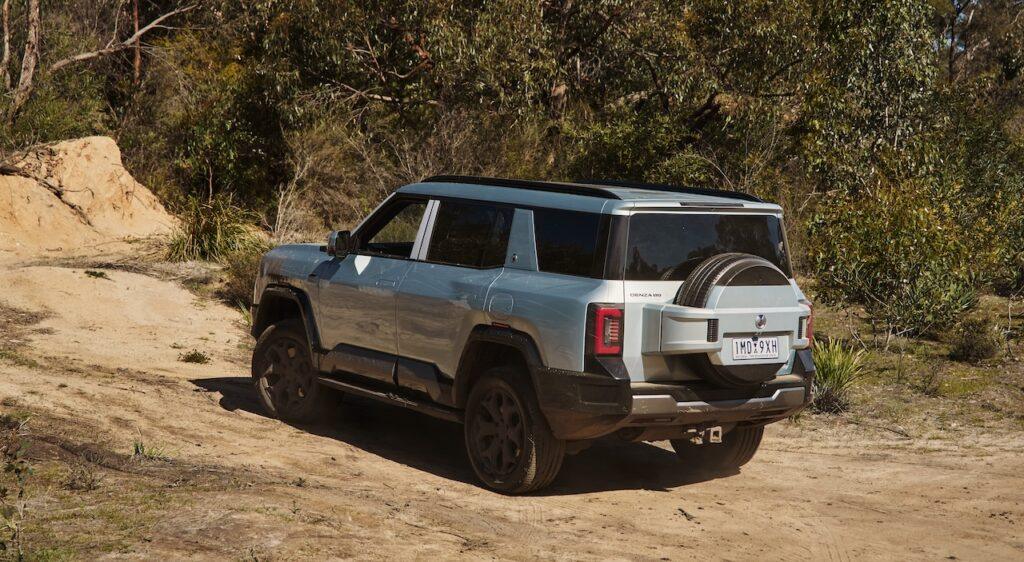
The B8’s technology and drive experience feels very much a generation ahead of the current diesel large SUV crop. Many Aussie will die on the diesel hill, and that’s just fine, but the Denza PHEV set-up feels remarkably more advanced. And that matters to many premium buyers.
As for off-roading, we were assured the B8 (and the B5) 4x4s had already conquered Queensland’s infamous Beer O’Clock Hill – the Everest of the social media 4×4 tribe.
Our test wasn’t quite as gnarly, but it was lengthy.
Through rocky Outback climbs the B8, to its credit, felt largely unstoppable. The locking diffs are a get-out-of-jail-free card, but even when we started struggling for traction, you simply dive into the menu and try a different drive mode.
Hardly for the 4×4 purist, but if you’re patient, there’s normally a setting that will climb you out of most holes without breaking a sweat.
Having it all happen in utter serenity – windows down, only e-motors working and the sounds of rocks being crushed under the 20-inch tyres – is all rather lovely.
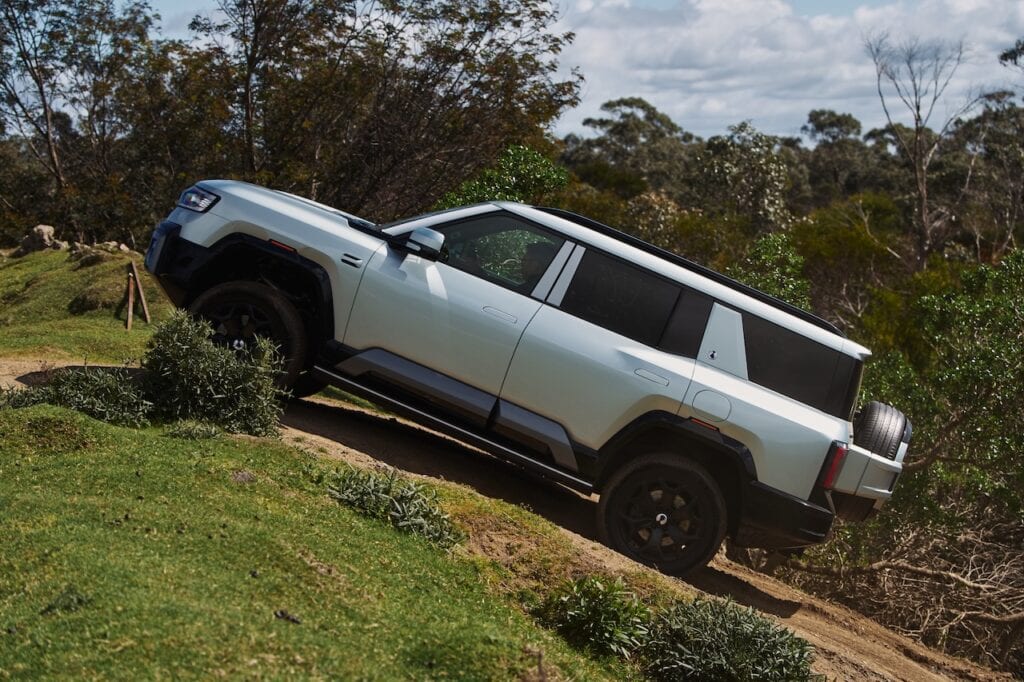
But again it appears the sheer mass of this car works against it in terms of ride comfort. Granted, we still had 40psi in the tyres, but every small drop off a rock or ridge meant this colossal would smash rather than caress the ground.
I recall experiences driving LandCruisers and Nissan Patrols on the rough stuff to be altogether smoother. Perhaps the clever adjustable suspension, along with the 3.3-tonne kerb weight, count against the big Denza when off-roading.
2026 Denza B8 PHEV: Verdict
Denza’s cracked the first nut: getting buyers’ attention.
There’s no question the D8’s keen pricing for such a massive, luxury-packed and capable 4×4 has raised eyebrows from LandCruiser shoppers, plus those who’d normally drop $20, 30, or 40+ grand more on a big SUV from the established prestige set.
But this is targeting a savvy shopping set. Toyota, above all, has done the hard decades of building trust, proving reliability and offering good aftersales support with dealers everywhere. Non-negotiables for many heavy towing and touring on- and off-road.
Denza’s making positive noises to such ends, but trust isn’t built overnight, no matter how appealing the price.
But the D8 is not a 4×4 you can ignore. The PHEV drivetrain with 100km pure EV range offers an experience and smoothness (and potential fuel saving) simply not found in a big diesel.
This B8 has impressive chunks of power and torque, does luxury and features very well, and could make for a magnificent large family car with the ability to go deep off-road.
Its weight, driver assist and occasional choppy ride count against it, but there’s no question the D8 is a compelling vehicle with which to announce the Denza brand down under.
SCORE: 3.5/5
2026 Denza B8 specifications
Price: From $91,000 (plus on-road costs)
Basics: EV, 6 or 7 seats, 5 doors, SUV, AWD
Range: 100km EV only (WLTP)
Battery capacity: 36.8kWh LFP
Battery warranty: Eight-years/160,000km
Energy consumption: 24.4kWh/100km
Fuel consumption: 9.89L/100Km Combined (NEDC, battery SOC under 25 per cent)
Powertrain: 2.0-litre four-cylinder, 145kW/350Nm
Motors: 1 front 200kW/360Nm, 1 rear, 300kW/400Nm.
Combined output: 425kW and 760Nm
AC charging: 11kW, Type 2 plug
DC charging: 120kW, CCS combo plug
0-100km/h: 4.8 seconds